
Divas in Transit
Stories of extraordinary international performers in Australia from the J.C. Williamson Collection

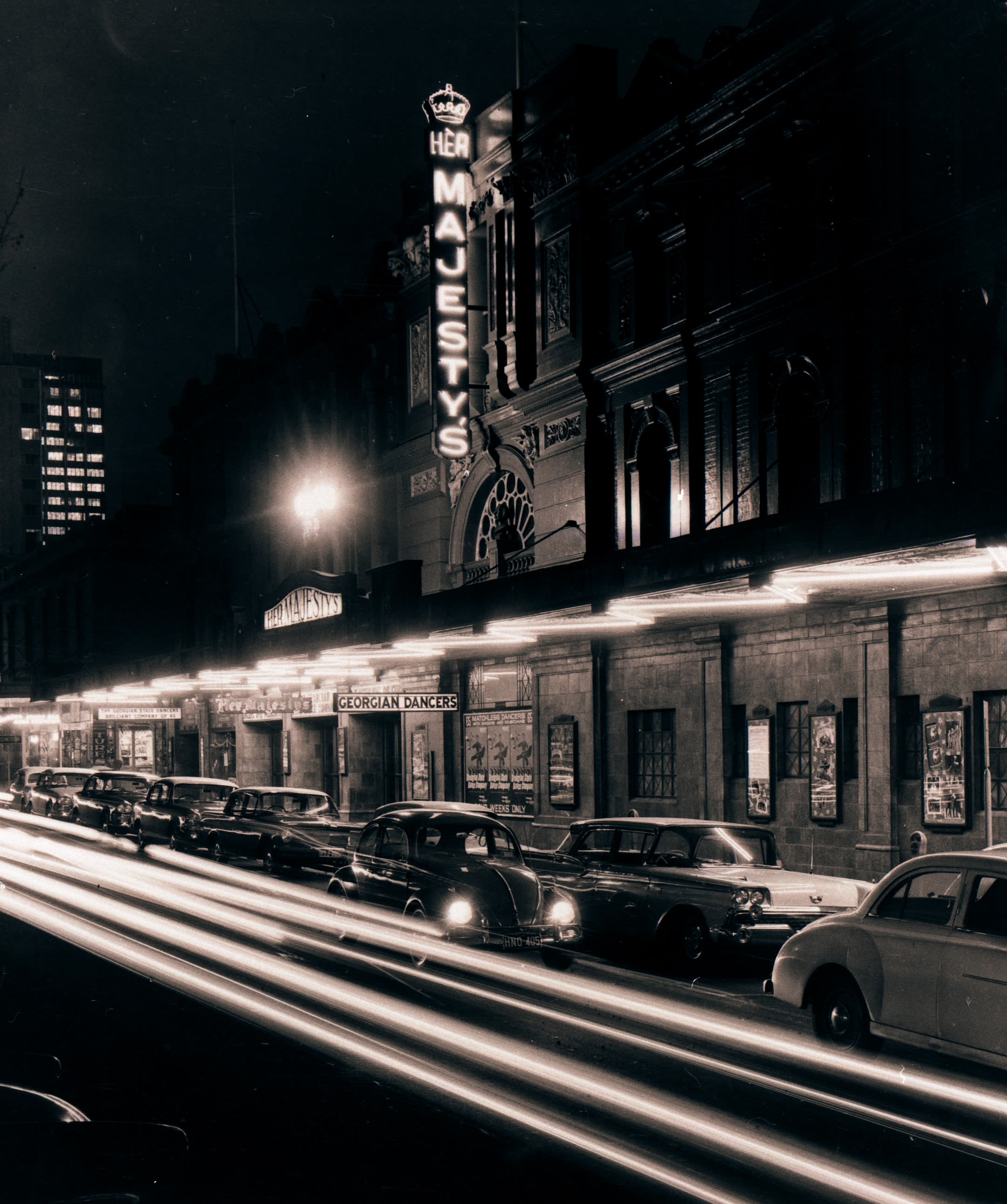
In 1976, the final curtain fell on the last performance staged by J.C. Williamson Theatres Ltd. Named after its founder, American actor and theatre entrepreneur James Cassius Williamson (1845–1913), for almost a century this was one of the largest commercial theatre empires in the world.

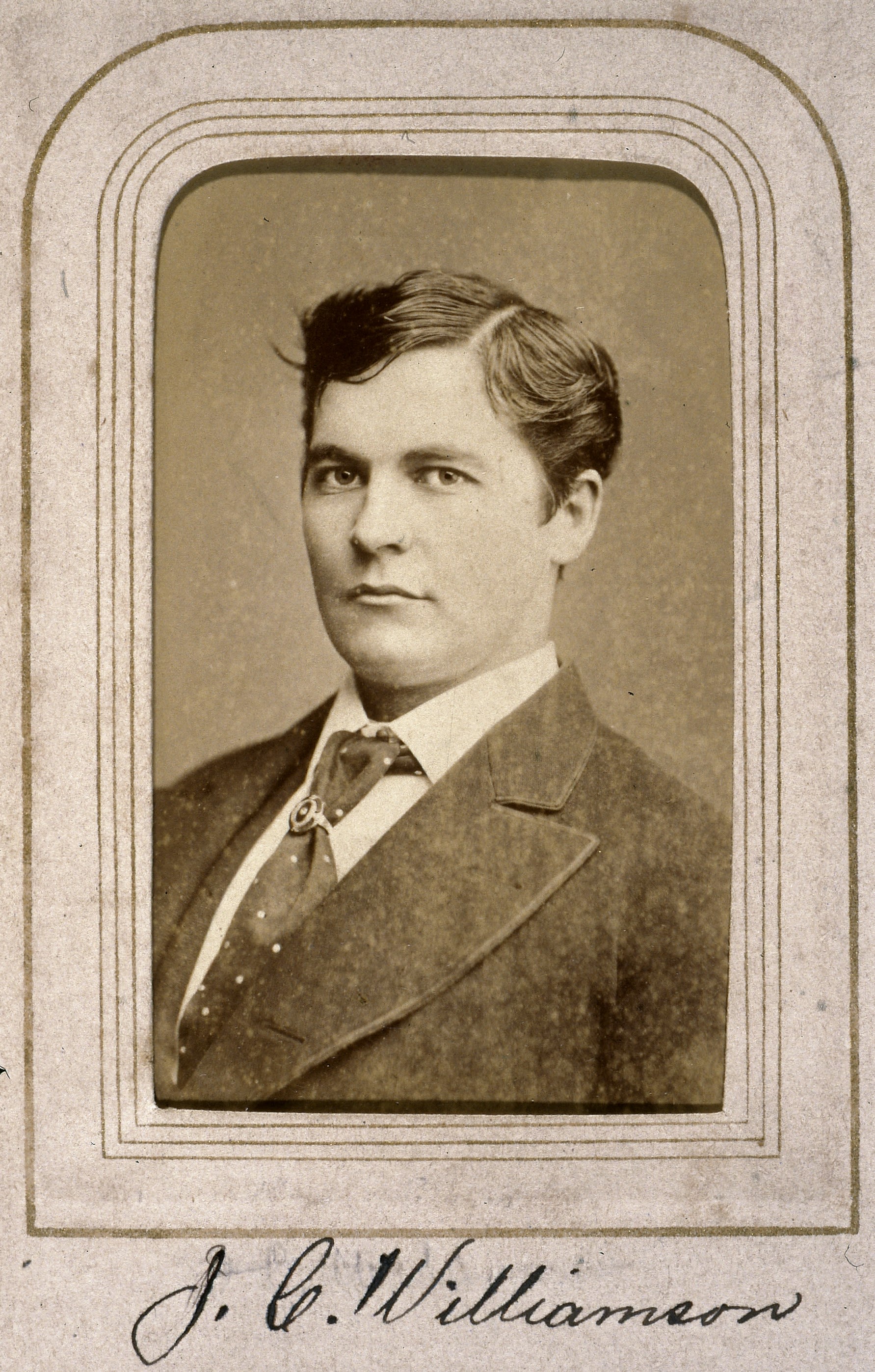
J.C. Williamson, c.1874
J.C. Williamson, c.1874
After Williamson's death in 1913, five Australian brothers took the reins when concert and film promotion company J. & N. Tait merged with J.C. Williamson Ltd in 1920. Together the Taits - Charles, John, Nevin, E.J. and Frank - solidified the status of J.C. Williamson Ltd as the dominant theatrical management in Australia and New Zealand. Known affectionately as 'The Firm', the company owned or leased many major theatres including the Comedy Theatre in Melbourne, and Her Majesty’s Theatres in Melbourne, Sydney and Adelaide. A London arm of the business provided access to the latest productions and leading performers, enabling the company to contract international acts and extravagant shows for crowded Australian theatres.
Following the closure of J.C. Williamson Ltd in the 1970s, thousands of items were rescued from the Melbourne offices at the Comedy Theatre and old stores behind Her Majesty's Theatre. With the support of Lady Viola Tait (1911–2002), former soprano and wife of Sir Frank Tait, these records were donated to the Australian Performing Arts Collection. This archive laid the foundation for the Collection, and holds many stories of the people and productions in Australian performing arts history.
Since the initial donation, descendants of the Tait brothers have generously contributed towards the preservation of this vast and significant company collection.

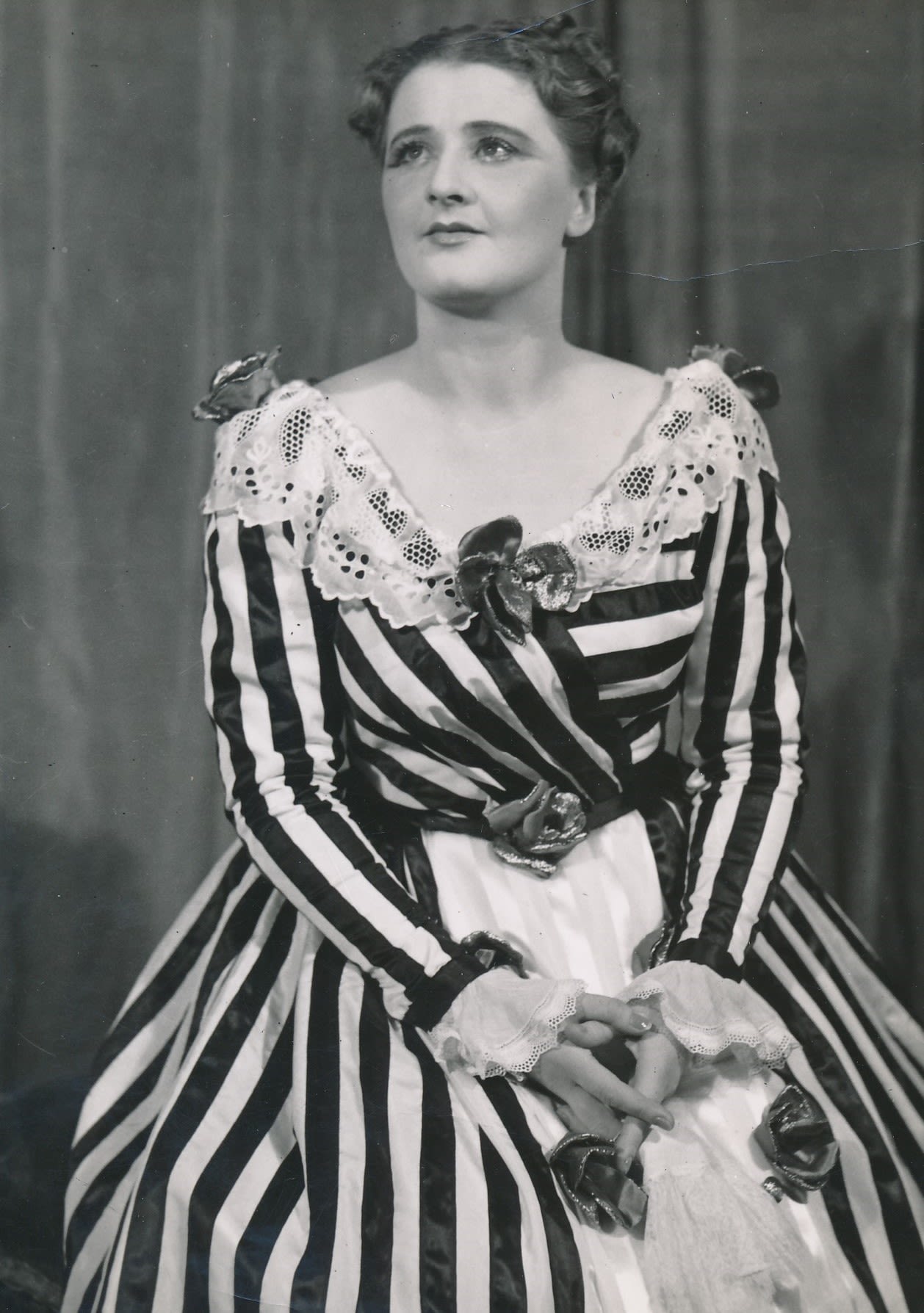
Lady Viola Tait (née Wilson) as Josephine in 'H.M.S. Pinafore', c.1940
Lady Viola Tait (née Wilson) as Josephine in 'H.M.S. Pinafore', c.1940
The tours of international female stars are intrinsically tied to the company's legacy. These women were groundbreaking in their craft and behind the scenes, during a period when women had minimal power in society and in the theatre. They rose up through their determination and creative independence that captivated Australian audiences and performers alike.
Curator Bella Chwasta explores the stories of four performers who helped weave Australia's cultural fabric and inspired new generations of women to take to the stage.

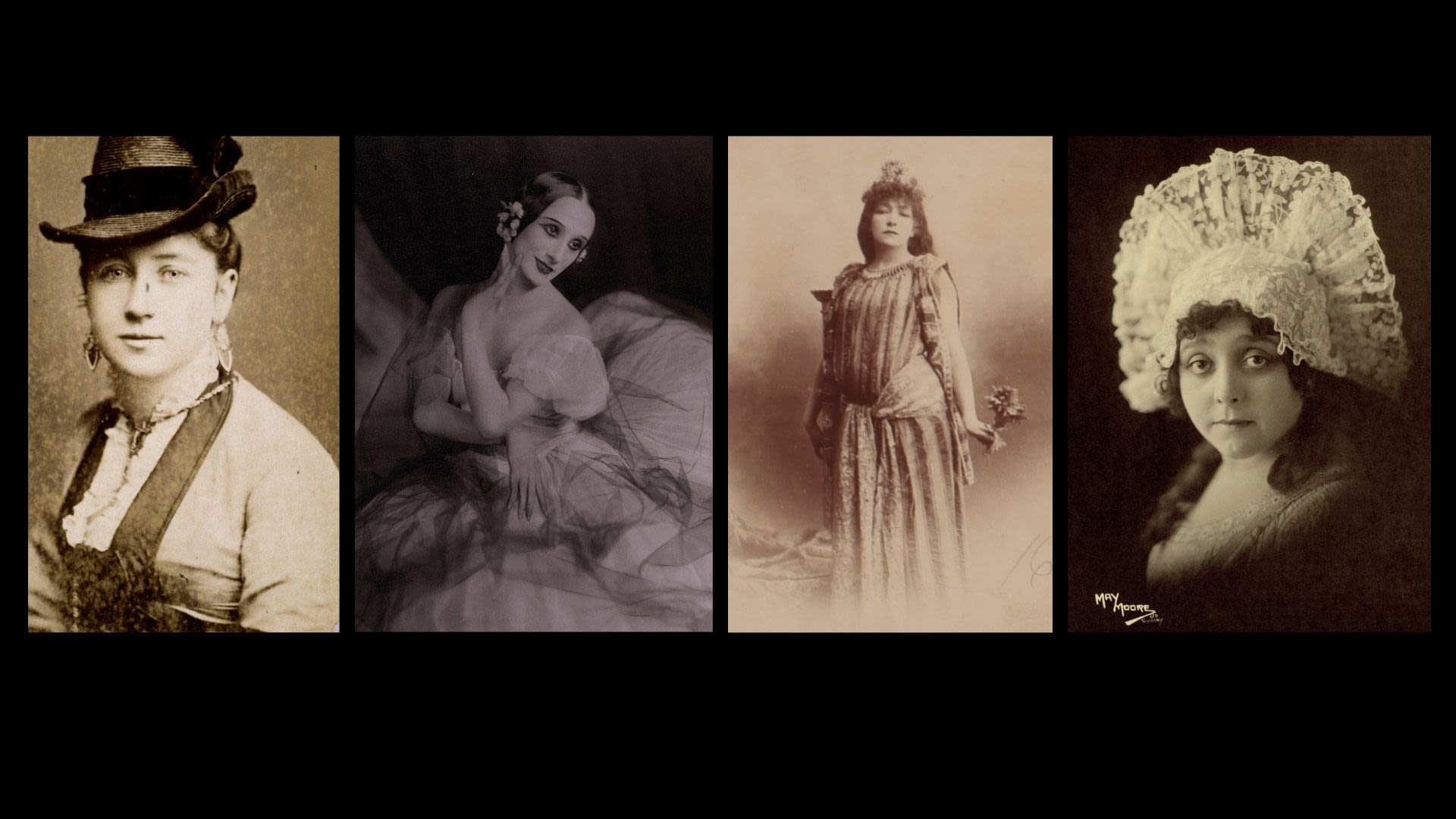
Dangerous Woman
Maggie Moore, J.C. Williamson and Struck Oil

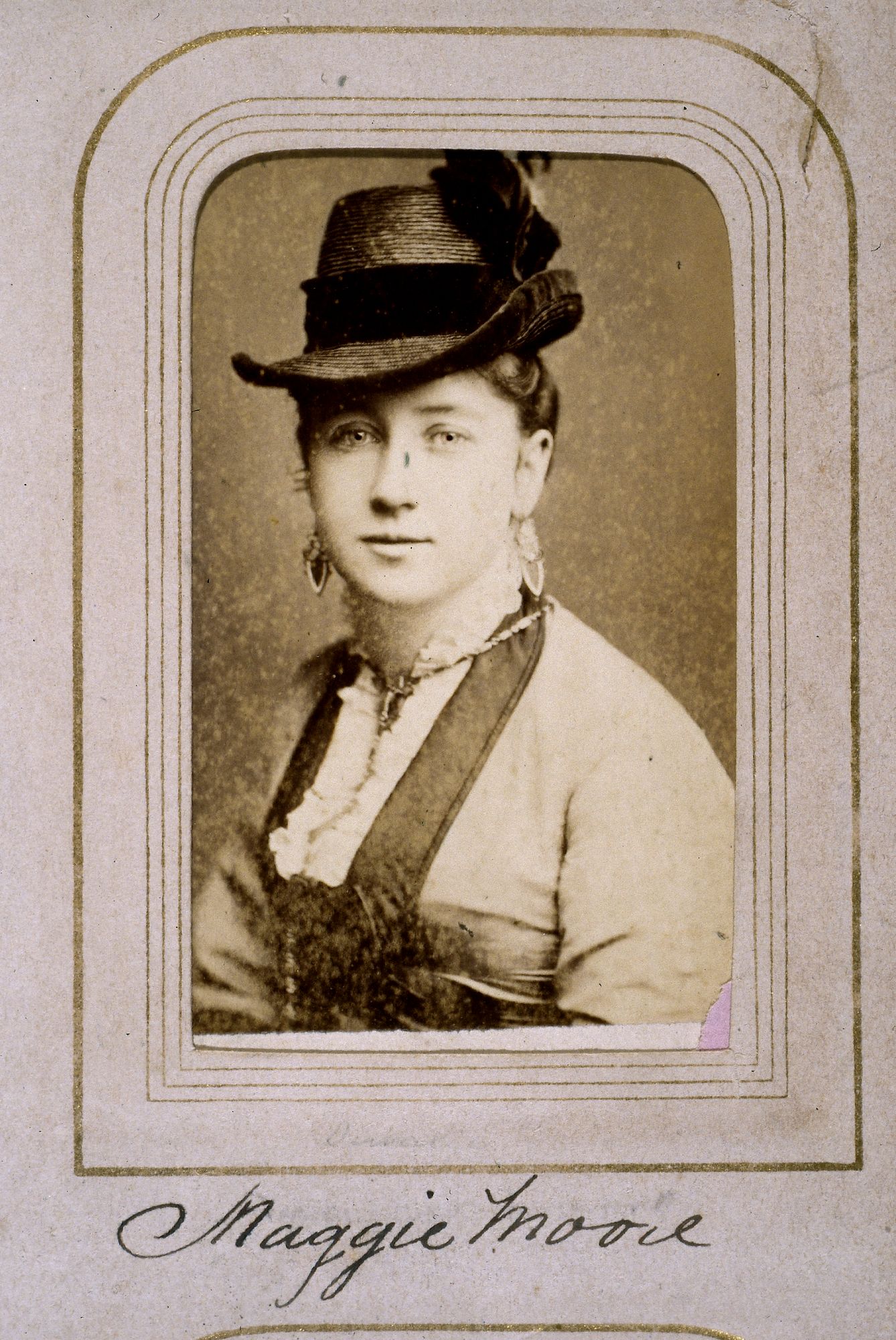
American actress, singer, and producer Margaret Sullivan (1851–1926), known by her stage name Maggie Moore, made a significant yet understated impact on Australian theatre. She was a versatile performer across drama, comedy, pantomime, and comic opera, who also had ambition for creative control.
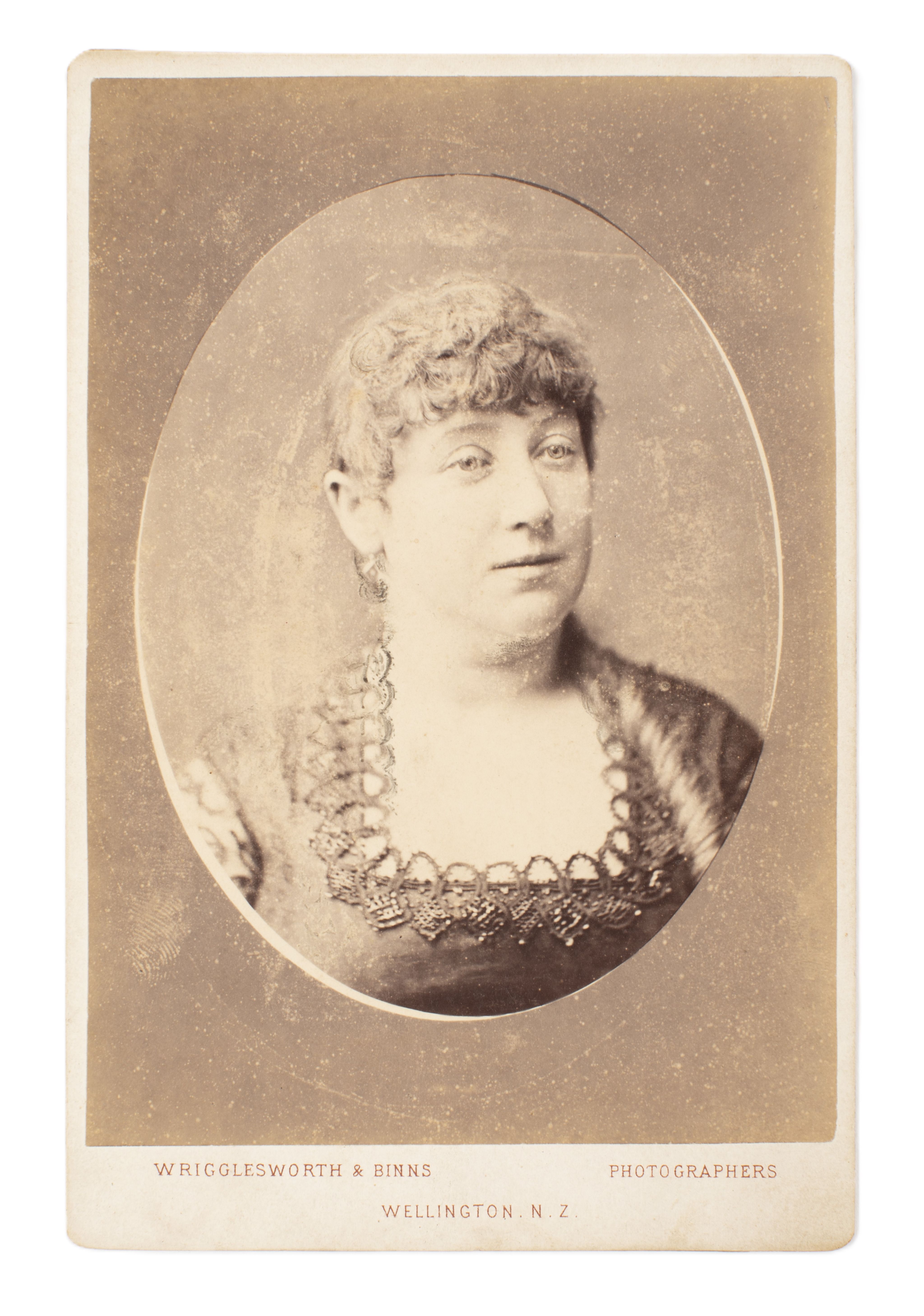
'…she could take the simplest songs and turn them by the magic of her art into seeming masterpieces of comedy or pathos.'
Born in San Francisco, Moore began singing at 8 years old and established a career in the booming American vaudeville era. In 1873, she married J.C. Williamson and the following year they were contracted by theatre entrepreneur George Coppin for an Australian tour of their new comedy-melodrama Struck Oil. The pair had already achieved considerable success with the prophetically titled play, so it seemed an ideal opportunity to try their luck on the other side of the world.

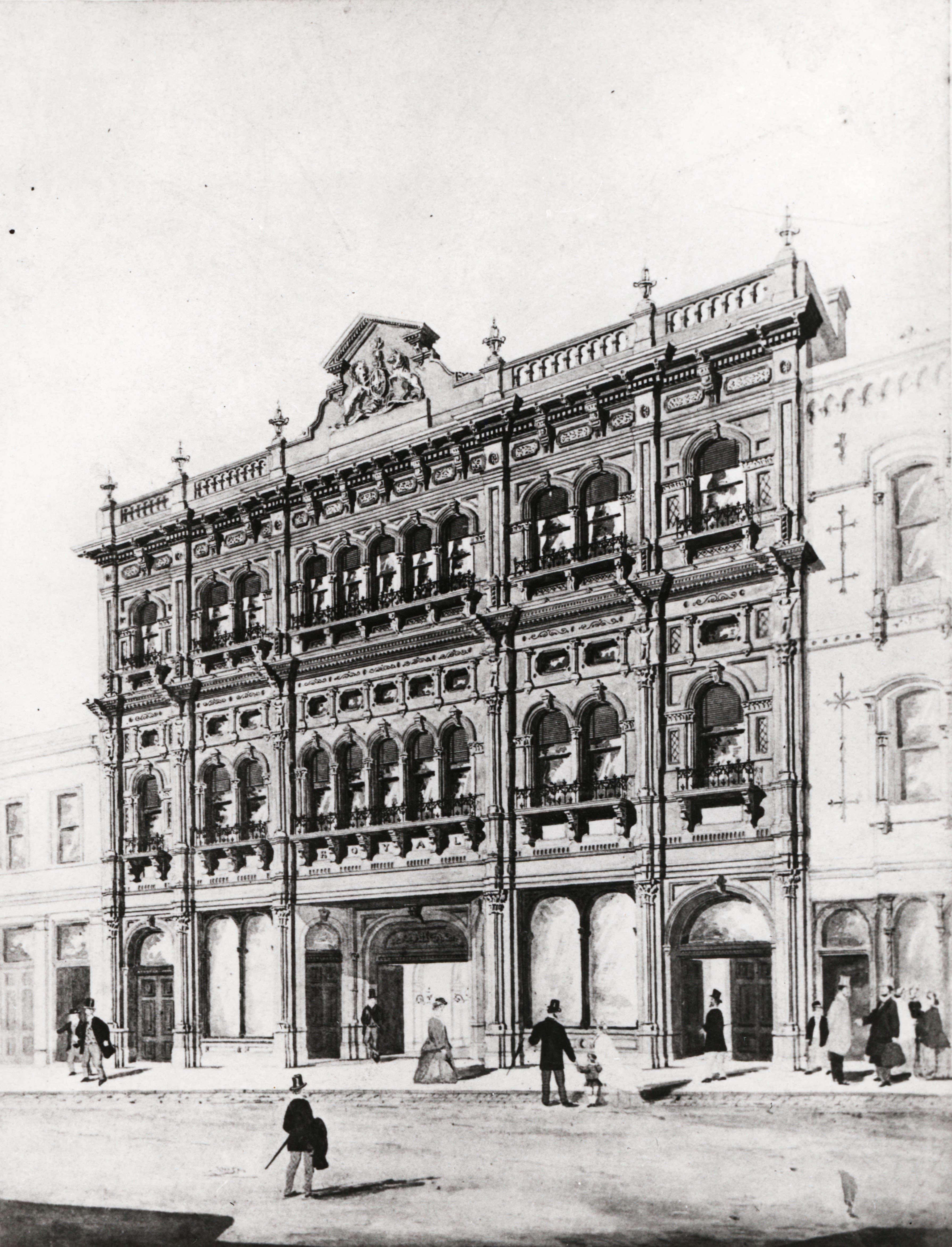
Illustration of the Theatre Royal, Melbourne, 1875
Illustration of the Theatre Royal, Melbourne, 1875
On 1 August 1874, the season opened at the Theatre Royal in Melbourne, followed by performances in Ballarat, Bendigo and Geelong, and over 40 nights at the Queen’s Theatre in Sydney. The duo were an instant hit, and the 12-week tour was extended to 15 months. Moore and Williamson then took the production to India, Egypt, and parts of Europe before returning home.

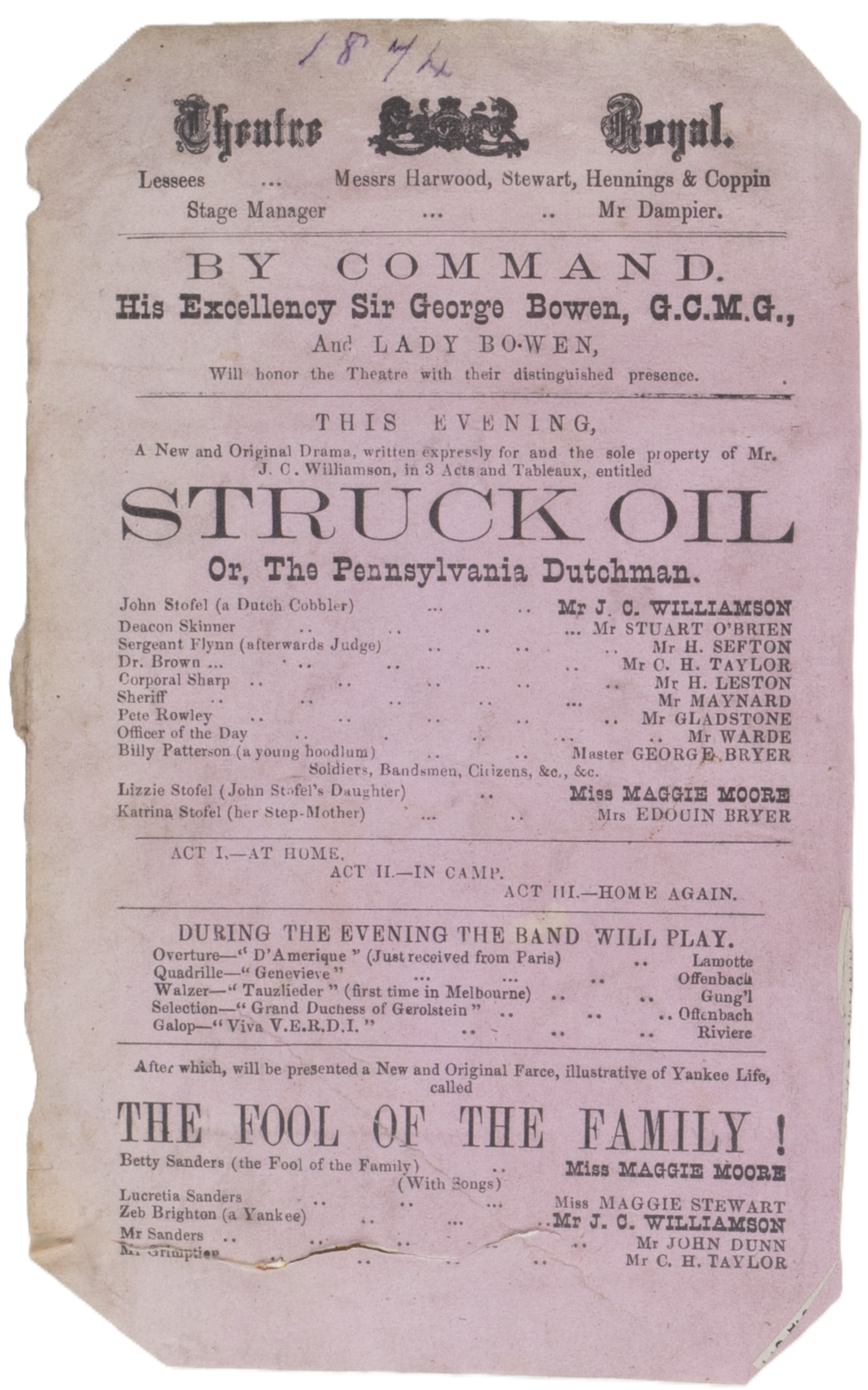
Programme for 'Struck Oil', Theatre Royal, Melbourne, 1874
Programme for 'Struck Oil', Theatre Royal, Melbourne, 1874
They returned to Melbourne in 1879 with the sole Australasian performing rights to H.M.S. Pinafore and later secured all other Gilbert and Sullivan comic operas. Moore performed many of the leading roles over the next decade, from Josephine and Buttercup in H.M.S. Pinafore, to Mabel in The Pirates of Penzance. These achievements cemented their status as leading figures in the colonial Australian theatre landscape.

Cabinet card featuring Maggie Moore, c.1880
Cabinet card featuring Maggie Moore, c.1880

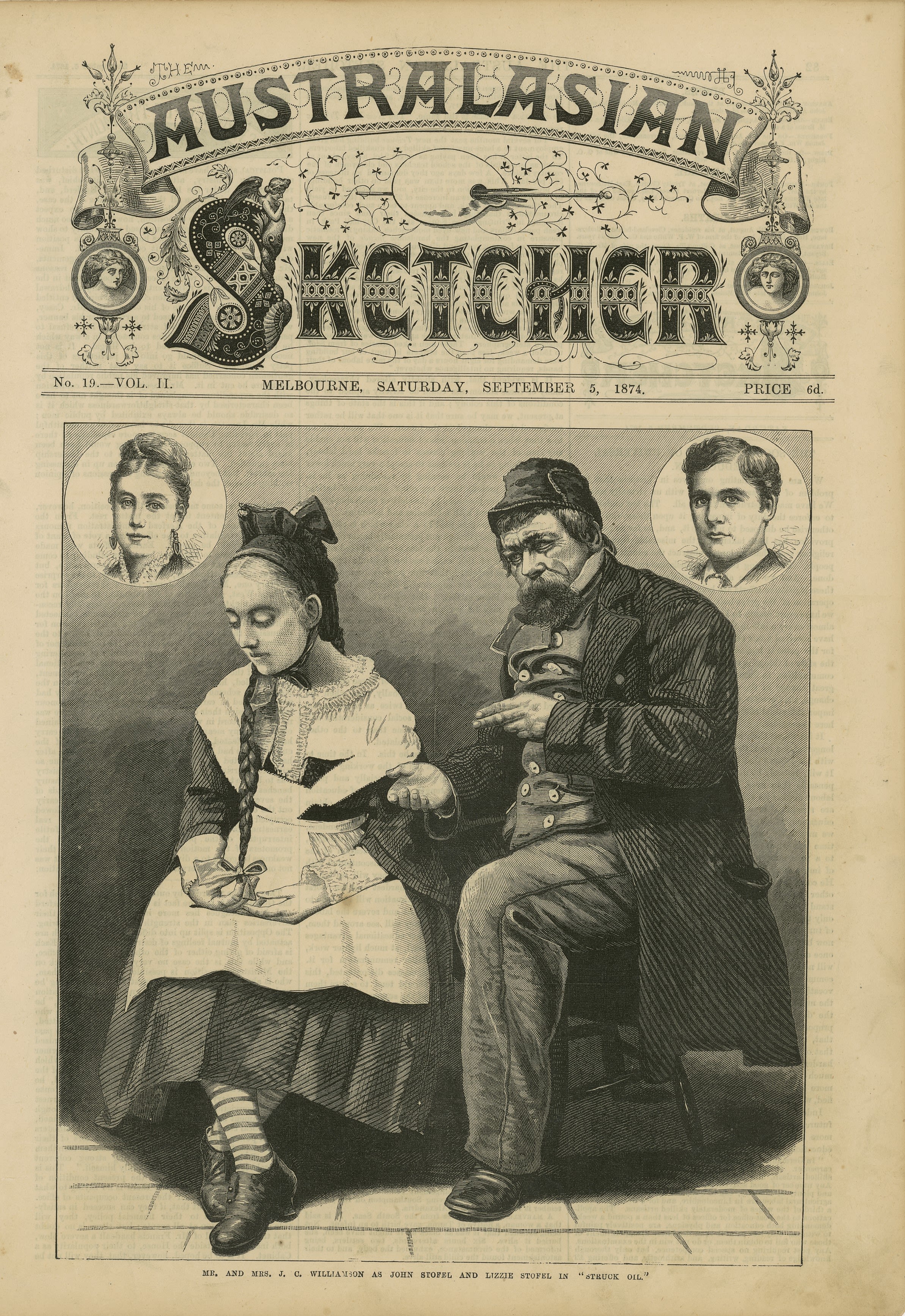
Newspaper illustration of Maggie Moore and J.C. Williamson in 'Struck Oil', 1874
Newspaper illustration of Maggie Moore and J.C. Williamson in 'Struck Oil', 1874
Newspaper illustration of Maggie Moore and J.C. Williamson in 'Struck Oil', 1874
Newspaper illustration of Maggie Moore and J.C. Williamson in 'Struck Oil', 1874

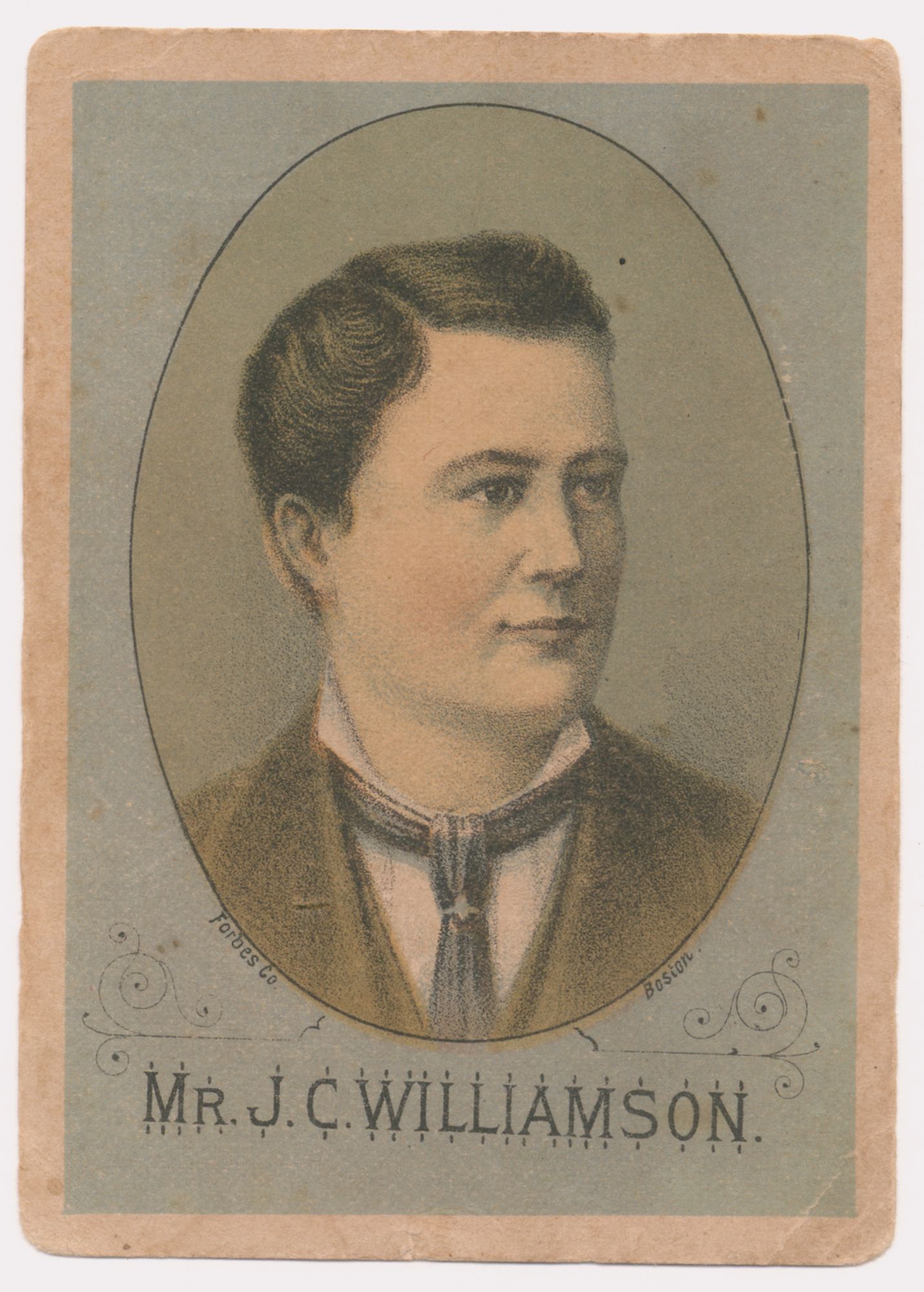
Trading card featuring J.C. Williamson, c.1878
Trading card featuring J.C. Williamson, c.1878

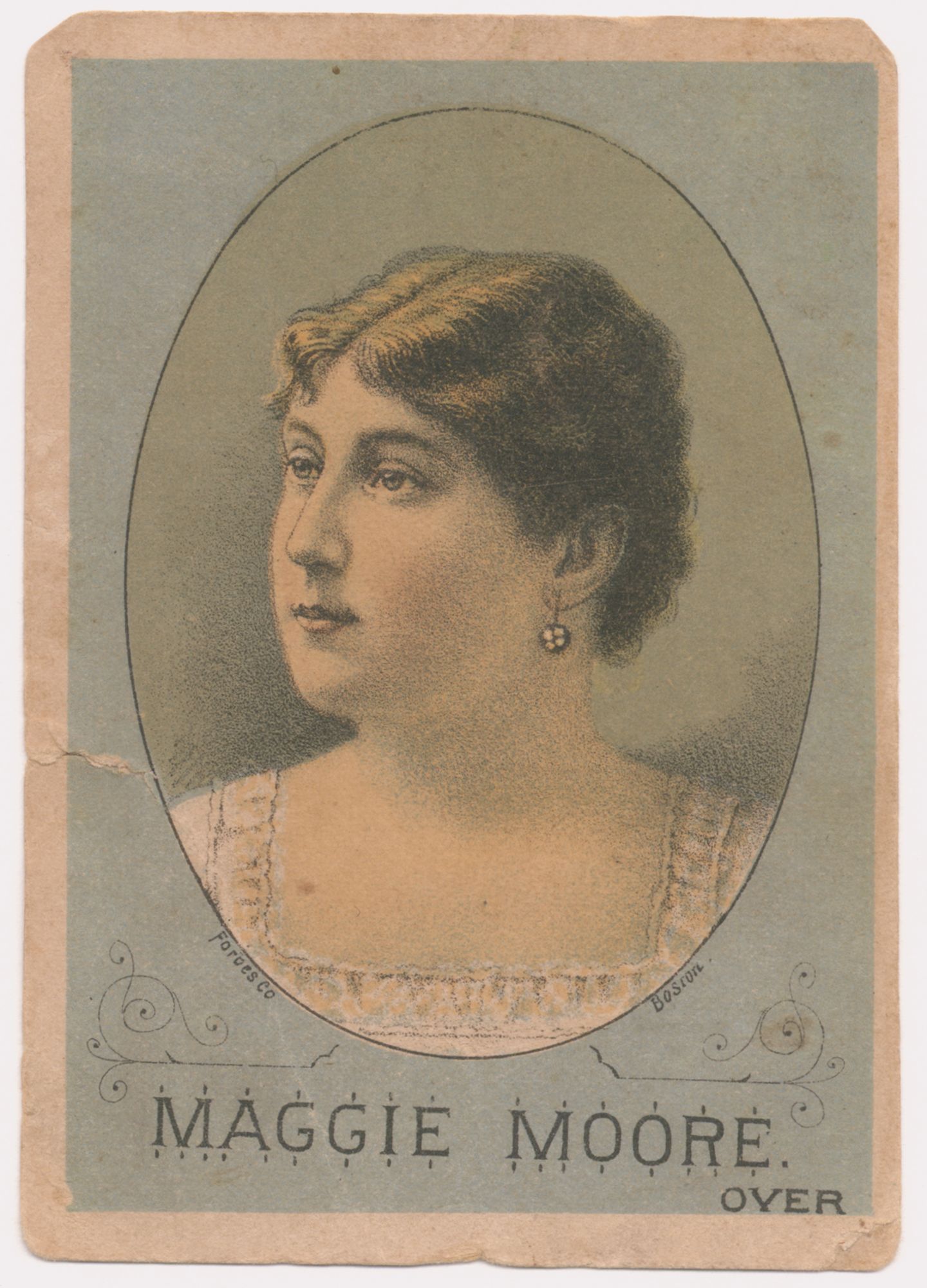
Trading card featuring Maggie Moore, c.1878
Trading card featuring Maggie Moore, c.1878
Moore is celebrated as a performer, but she is rarely recognised for her contribution to Williamson’s fortune and success. Her influence on the company that dominated Australian theatre for over a century has been written out of history. She was not mentioned once in Williamson’s autobiography, published posthumously in 1913.
'There is no question about it, Maggie Moore laid the foundation of Williamson’s fortune. Maggie was the draw every time.'
With no first-hand account from Moore recorded, the J.C. Williamson Collection only illuminates Williamson's side of the story. However, Moore's influence and legacy can be revealed between the lines.
'It is as Lizzie Stofel in 'Struck Oil' that Maggie Moore will be longest remembered.'

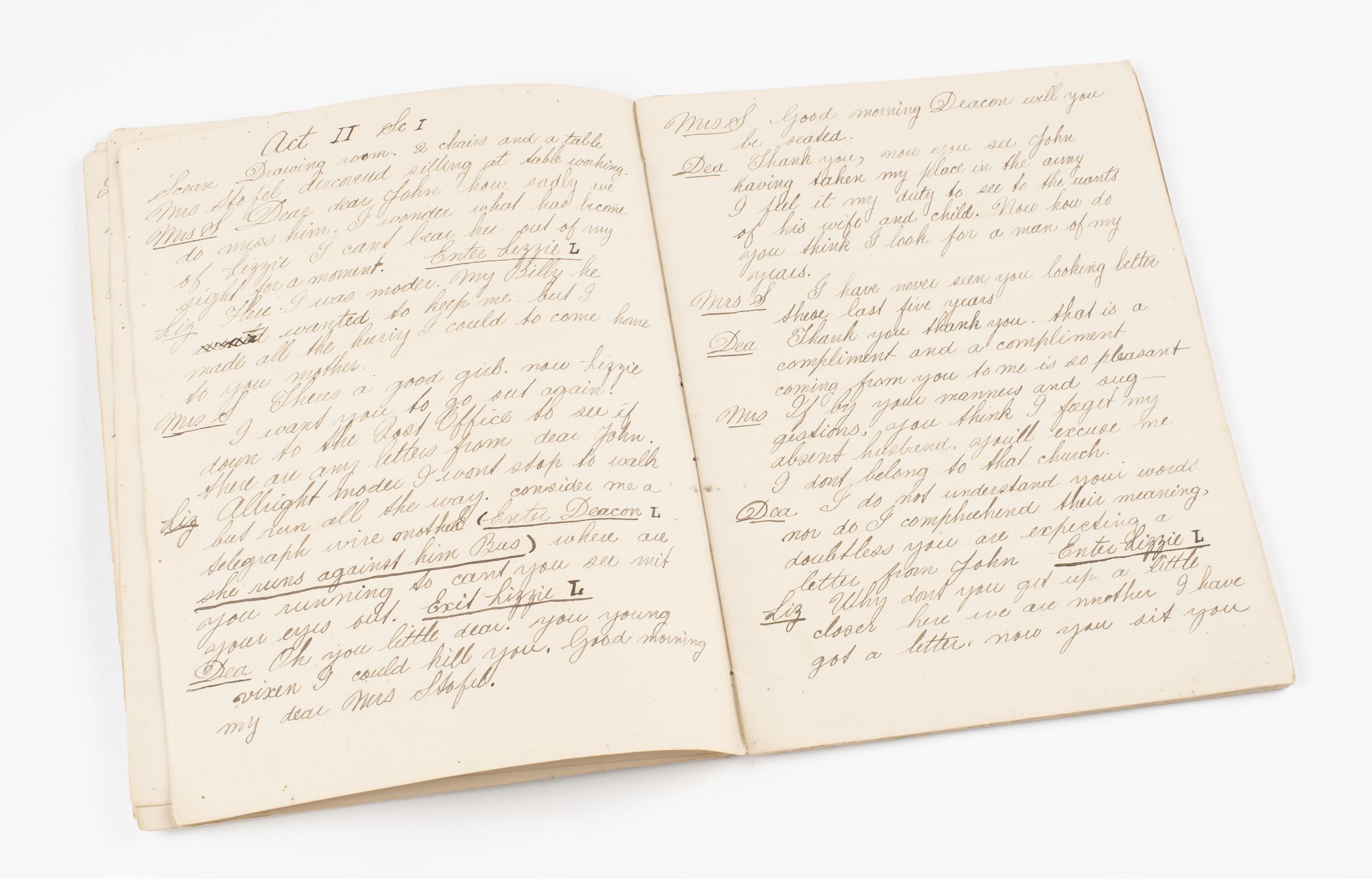
Maggie Moore's Lizzie Stofel
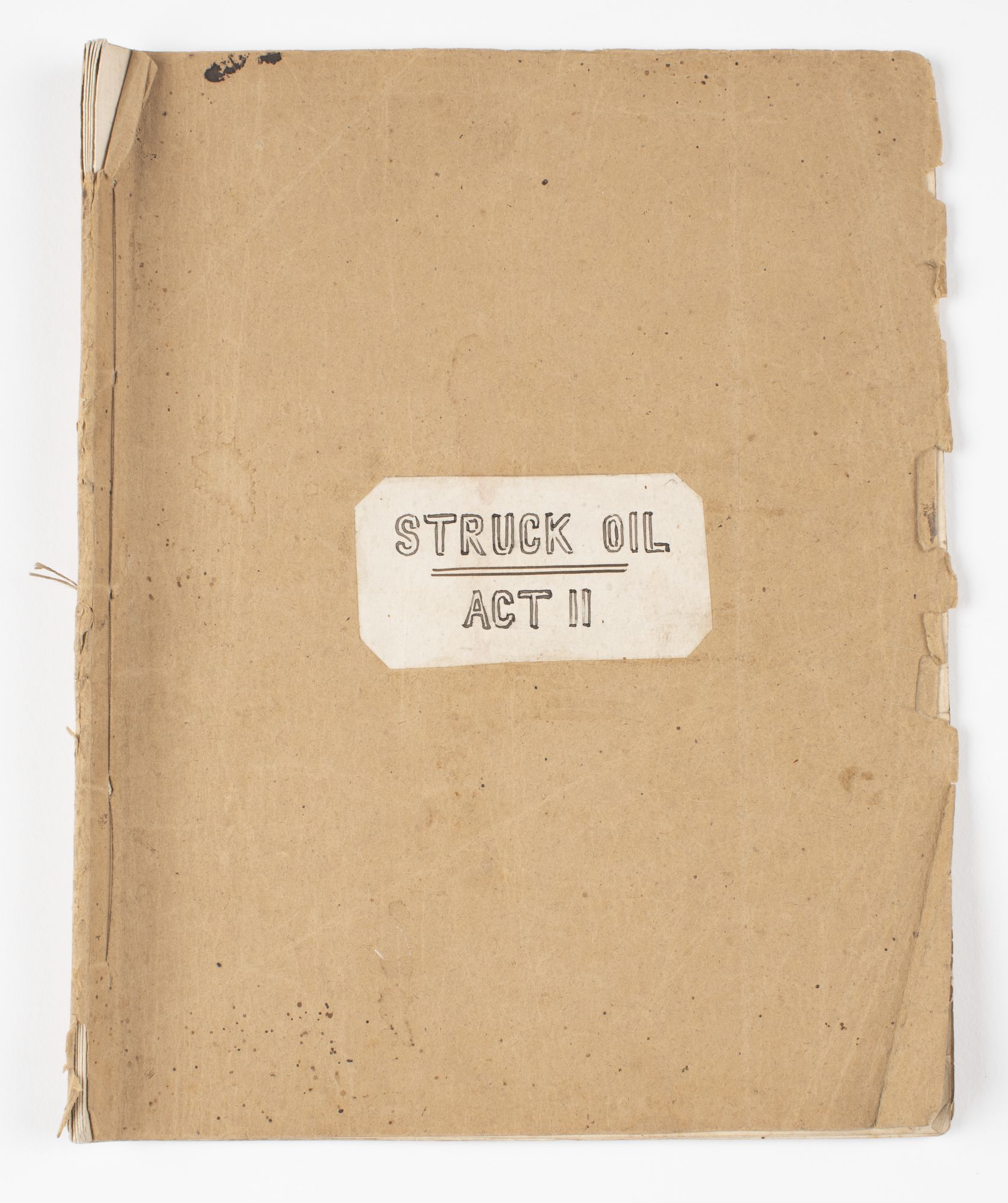
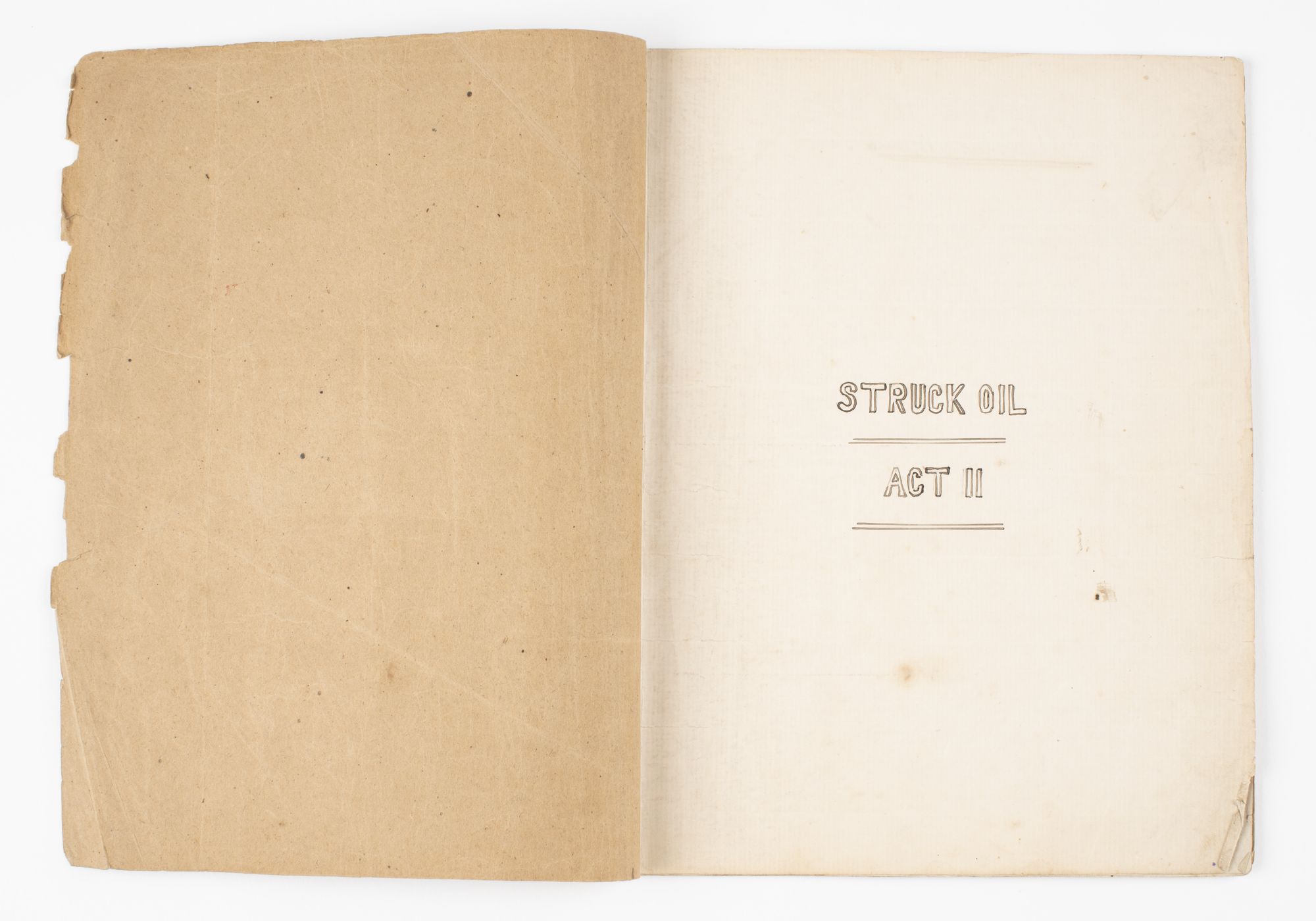
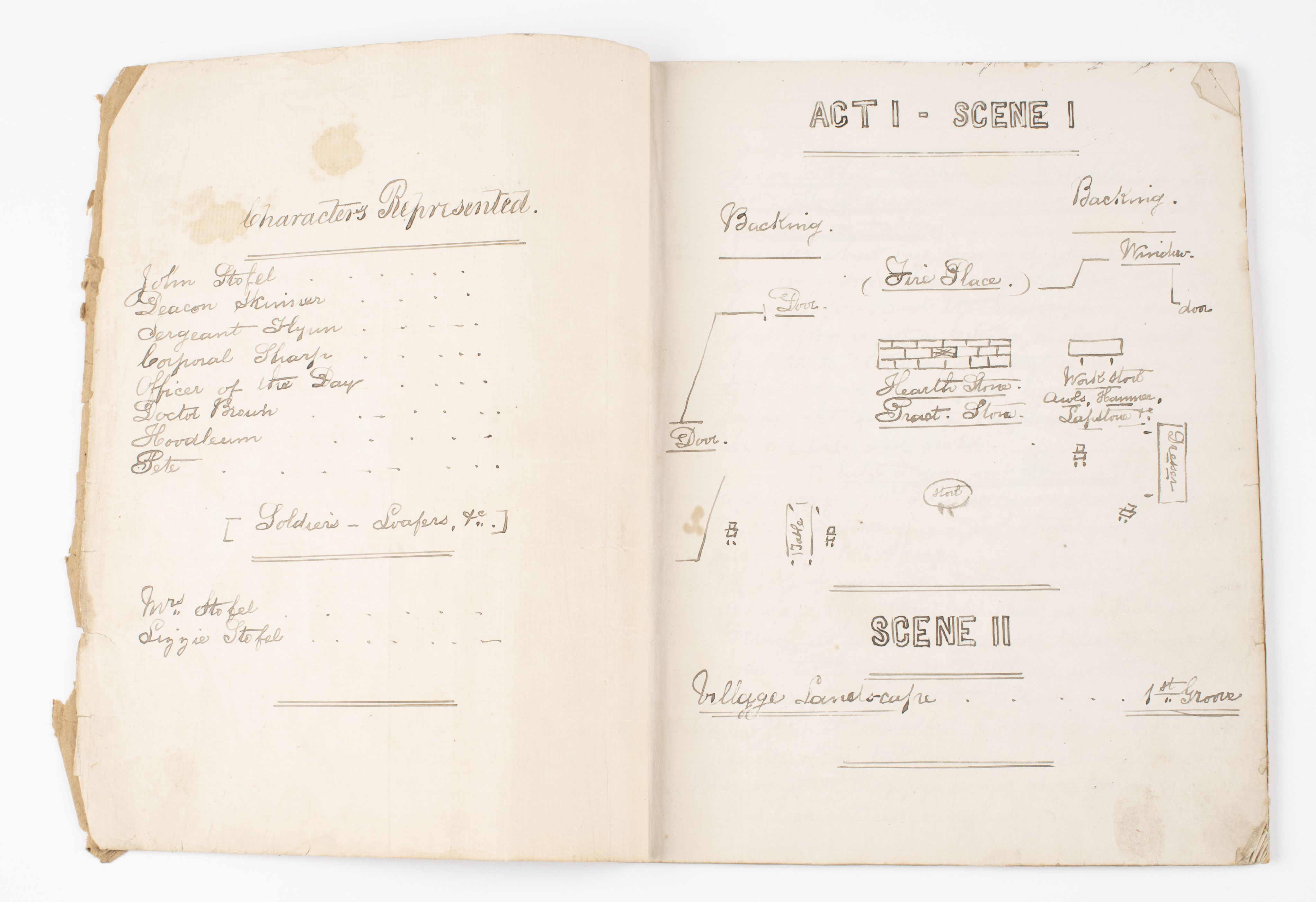
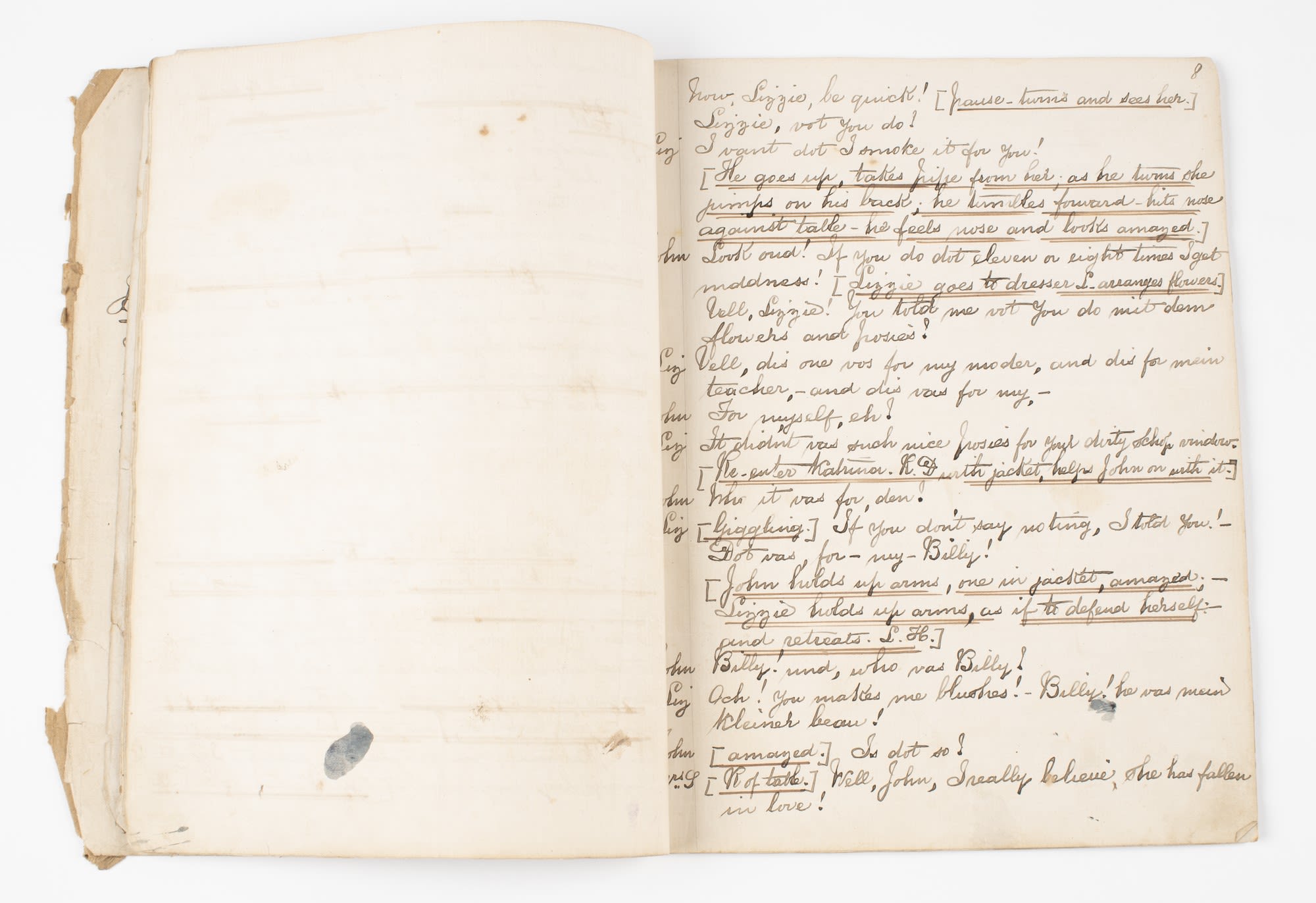
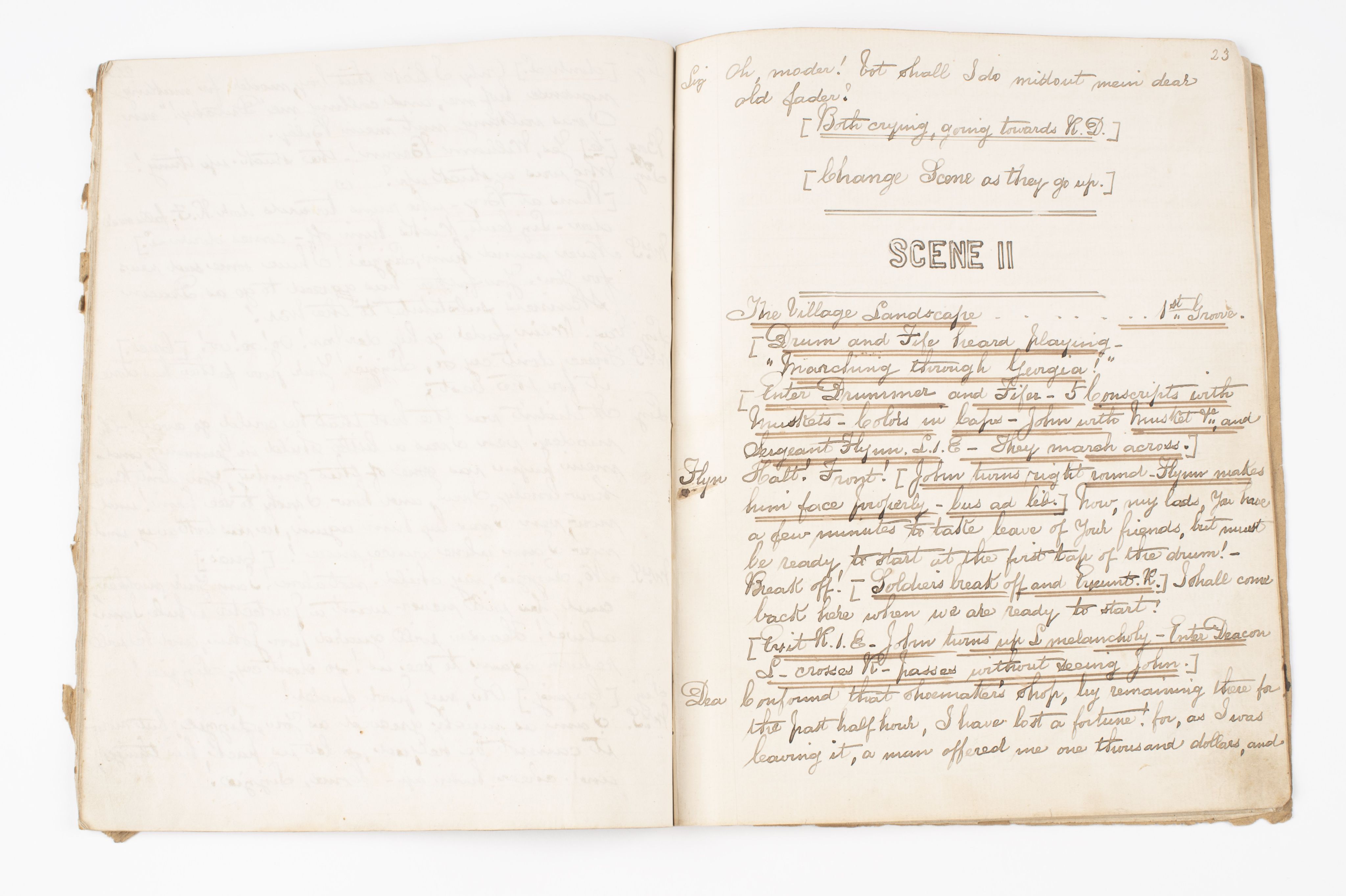
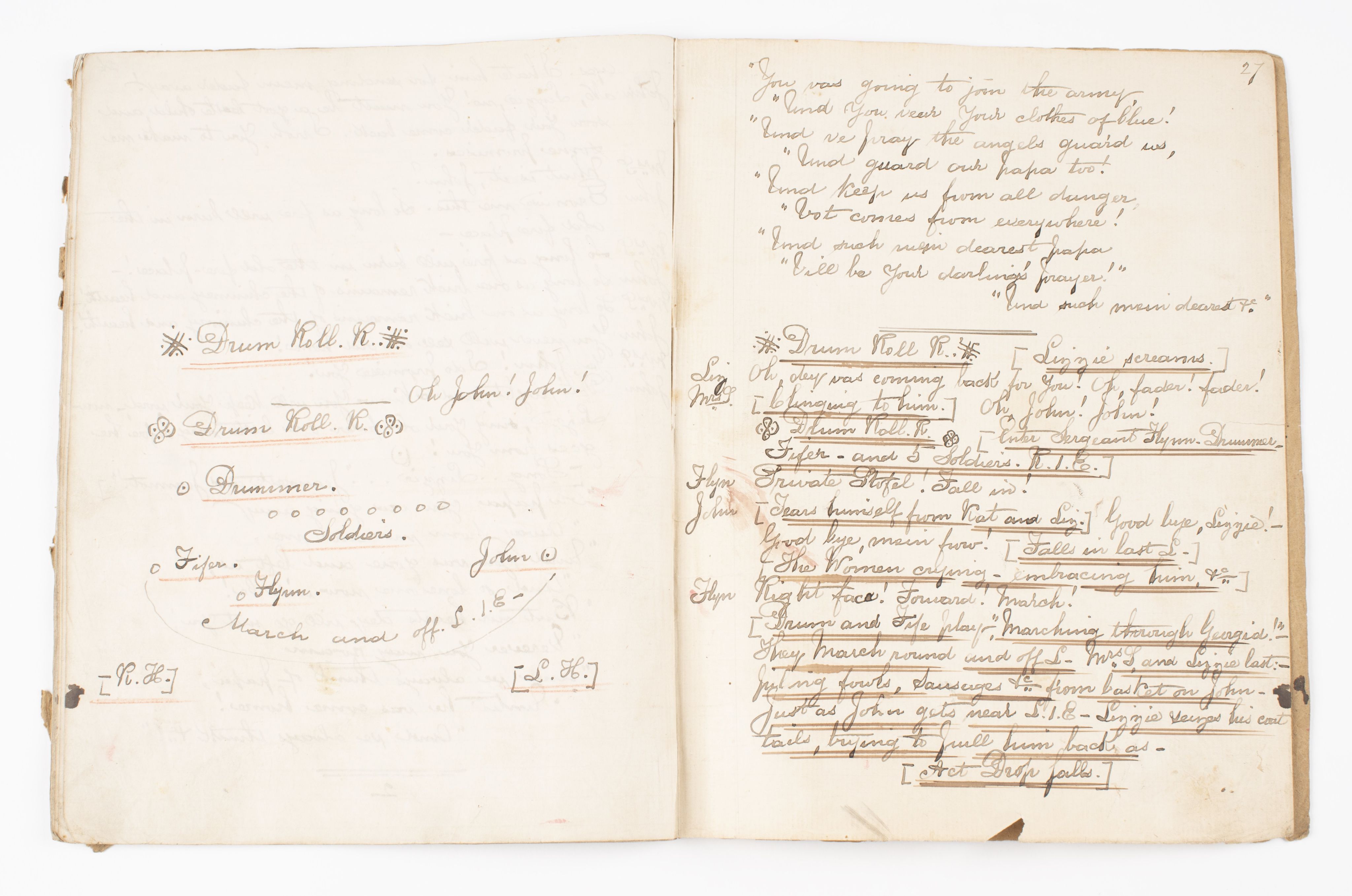
Struck Oil was originally a one-act play by Irish miner Sam Smith titled The Dead, or Five Years Away, or The Pennsylvania Dutchman. Williamson purchased the rights to the manuscript for $100. He rewrote the script with American playwright Clay M. Greene and turned it into a smash hit. This revision included a new character, Lizzie Stofel, the daughter of the male protagonist, John Stofel. These were the roles made famous by Moore and Williamson.
The script for Struck Oil has been primarily attributed to Williamson and Greene. While there is little tangible evidence of Moore’s influence on Struck Oil, interviews published in newspapers at the time illuminate that she constructed some of the dialogue and narrative. She was also instrumental in selecting the play for the couple's first tour, as she believed it would pander to the humour of Australian audiences.
On a return tour to Australia in 1918, Moore confirmed that the character of Lizzie Stofel was 'always my own creation'. By then, she had performed the role almost 9,000 times over a 50-year period, and the character had evolved with her theatrical career. Moore developed and performed new musical numbers throughout the play and the famous actress as Lizzie became a drawcard for audiences.






Struck Conflict
Less than 10 years after Moore and Williamson had established themselves as the most powerful theatrical couple in Australia, the duo's relationship soured and they separated in 1891.
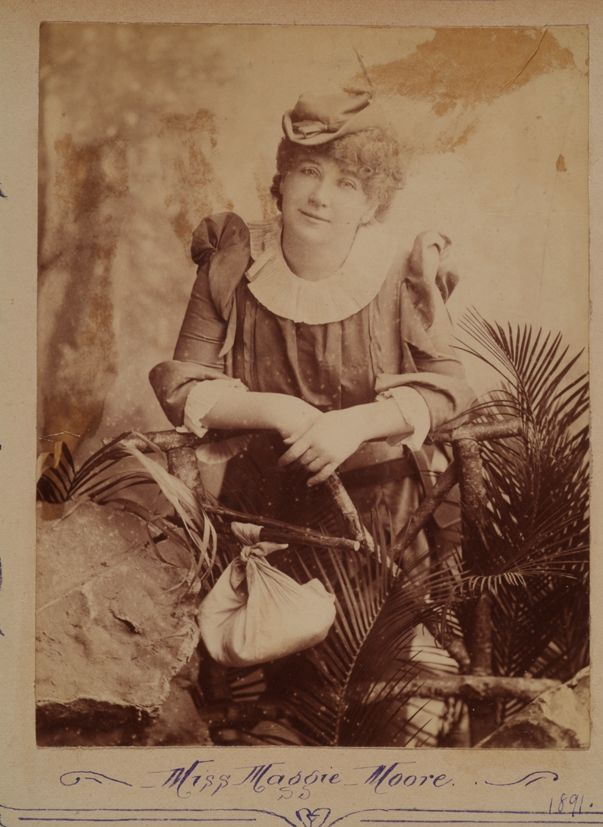
Moore formed her own company and continued to entertain Australian audiences with new interpretations of Shakespeare’s As You Like It, the popular melodrama The Silver King, and Gilbert and Sullivan classics.

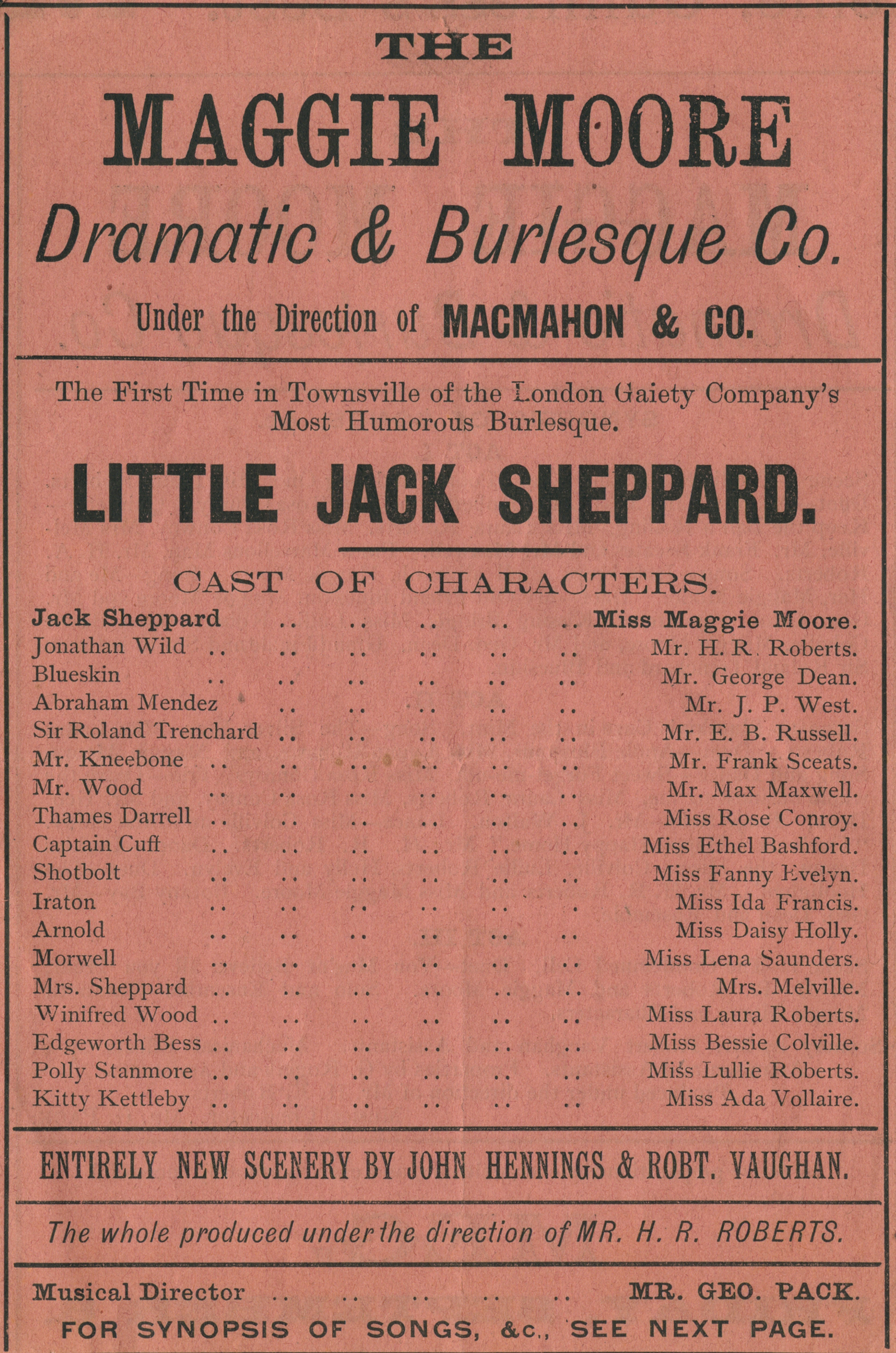
Programme for 'Little Jack Sheppard', The Maggie Moore Dramatic and Burlesque Company, 1894
Programme for 'Little Jack Sheppard', The Maggie Moore Dramatic and Burlesque Company, 1894
In 1893, Moore leased the Theatre Royal in Melbourne to stage a revival of Struck Oil. Enraged by Moore’s actions, Williamson was adamant that he had sole ownership of the production, and that Moore was violating copyright.
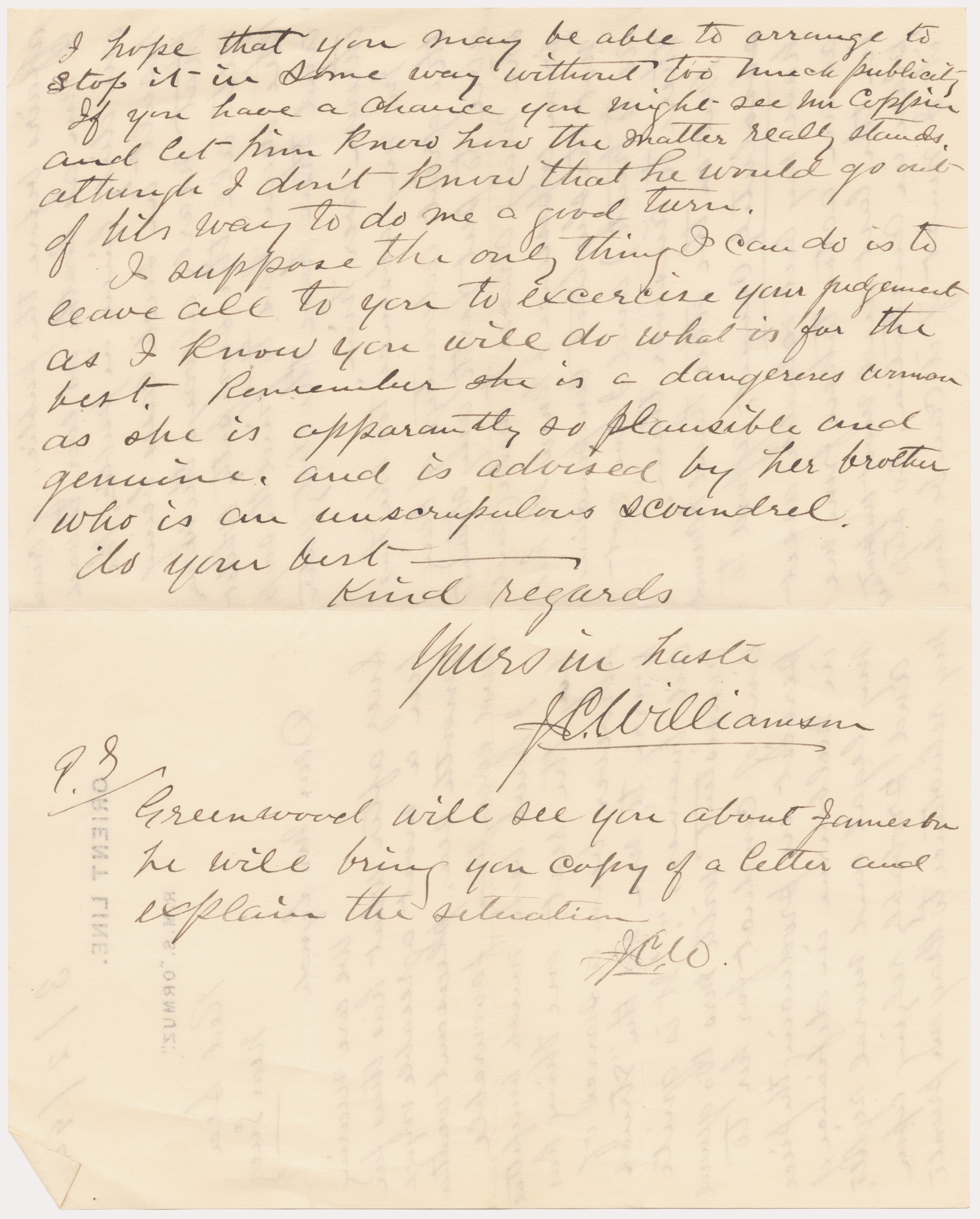
In February 1894, Williamson sent a letter to his solicitors, Lynch and McDonald, outlining his displeasure:
'It is quite consistent with Mrs W’s general line of conduct for her to persist in producing the piece in Melbourne in defiance of my legal and moral rights, and probably relying upon my reluctance to drag our private affairs before the public… I cannot, absolutely cannot, afford to have my last valuable asset as an actor taken from me'.

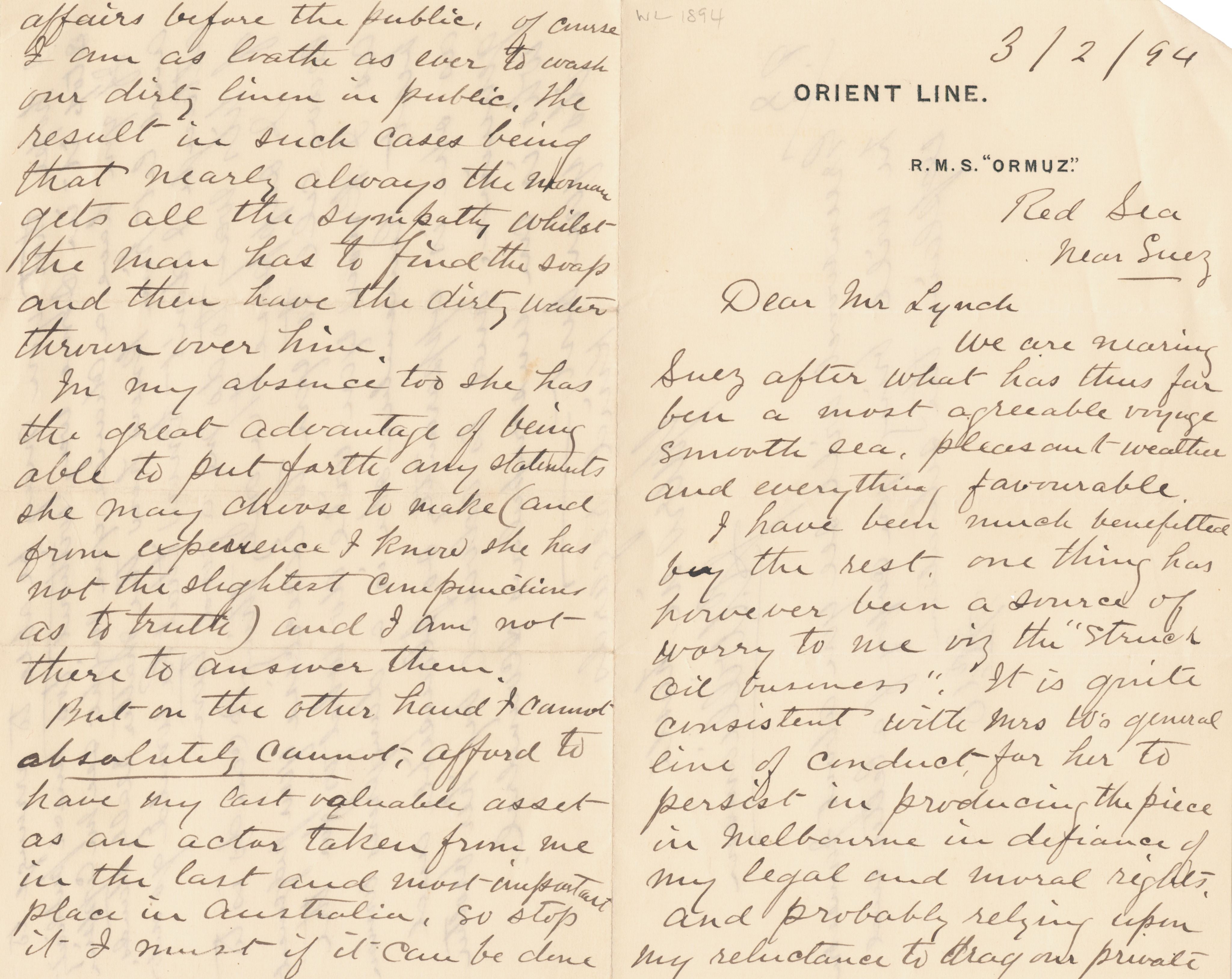
Letter from J.C. Williamson to Lynch and McDonald, 1894
Letter from J.C. Williamson to Lynch and McDonald, 1894

Maggie Moore, 1891
Maggie Moore, 1891

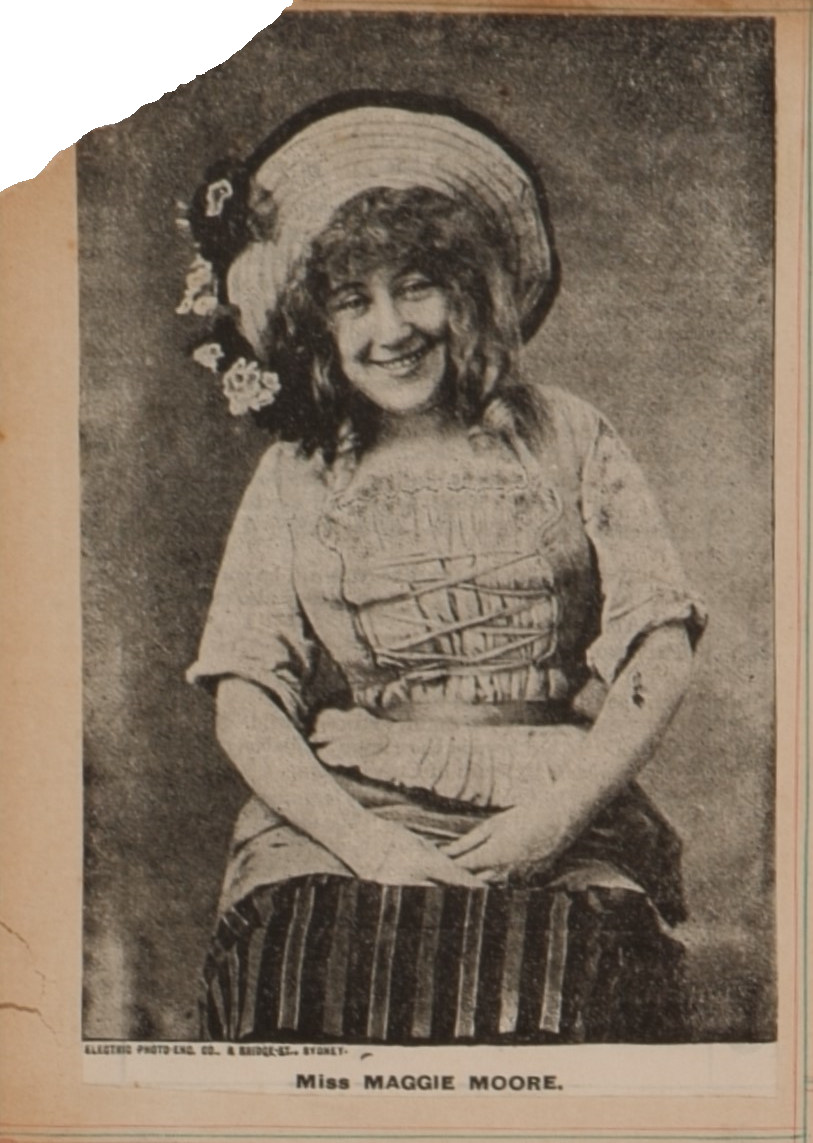
Maggie Moore, c.1890
Maggie Moore, c.1890
Williamson signed off this letter with a phrase that encapsulates his views towards his estranged wife:
'Remember she is a dangerous woman as she is apparently so plausible and genuine...'
However, there was doubt that Moore was defying Williamson's legal and moral rights.

Lynch and McDonald sent a letter to Moore requesting she withdraw advertising for the season. After a second attempt at contacting her with the threat of legal action, Moore replied with a short and cordial statement:
'Am sorry to have troubled you with writing me, but as I informed you at the office, I intend playing Struck Oil during my present season'.
Despite Williamson's reservations about publicising his private life, on 2 March 1894 his lawyers filed an interim injunction in Melbourne’s Supreme Court to prevent Moore from staging Struck Oil anywhere in Victoria. The very play that had established Williamson’s fame and fortune was now at the forefront of a legal dispute.
The injunction was denied by the Chief Justice. He argued that because the couple were still legally married, Moore did not have any separate property from Williamson and therefore could not be sued by her husband.
'The wife is nobody in the eye of the law unless she has property. The wife is the husband.'
In an era when women were stripped of all their individual rights once married, Moore turned the tables on Australian society's patriarchal constraints. Her marital status as Williamson's wife was paradoxically her creative and financial silver bullet.
Moore proceeded to perform Struck Oil to a full house at the Theatre Royal and received applause as rapturous as when she first performed there almost 20 years earlier.
Although Williamson registered copyright ownership of the script in Victoria in September 1894, Struck Oil and the role of Lizzie Stofel ultimately belonged to Moore. She divorced Williamson in 1899 and continued to perform the play to adoring audiences until her final performance in Australia in 1924. Williamson never staged the play again.
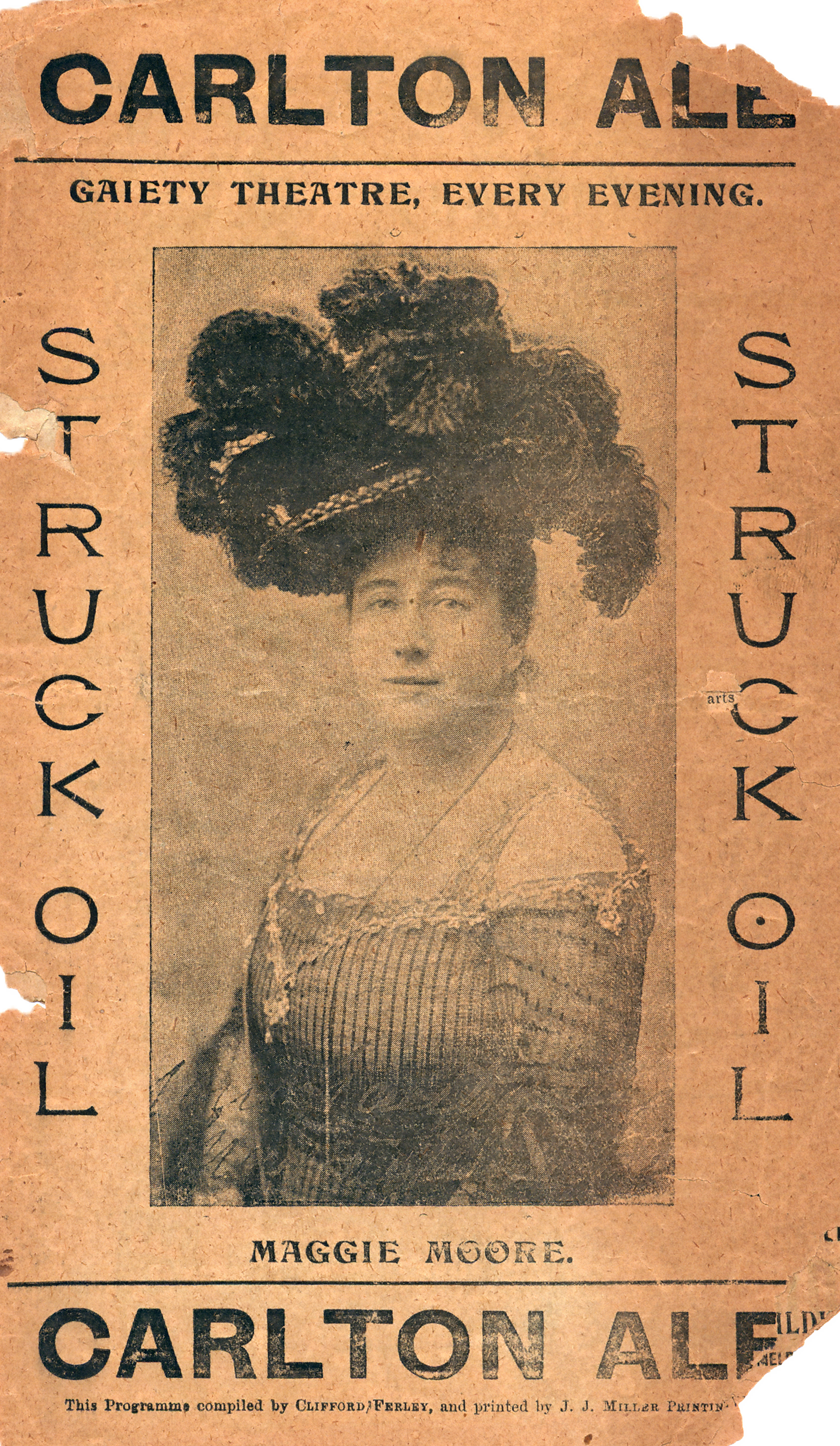

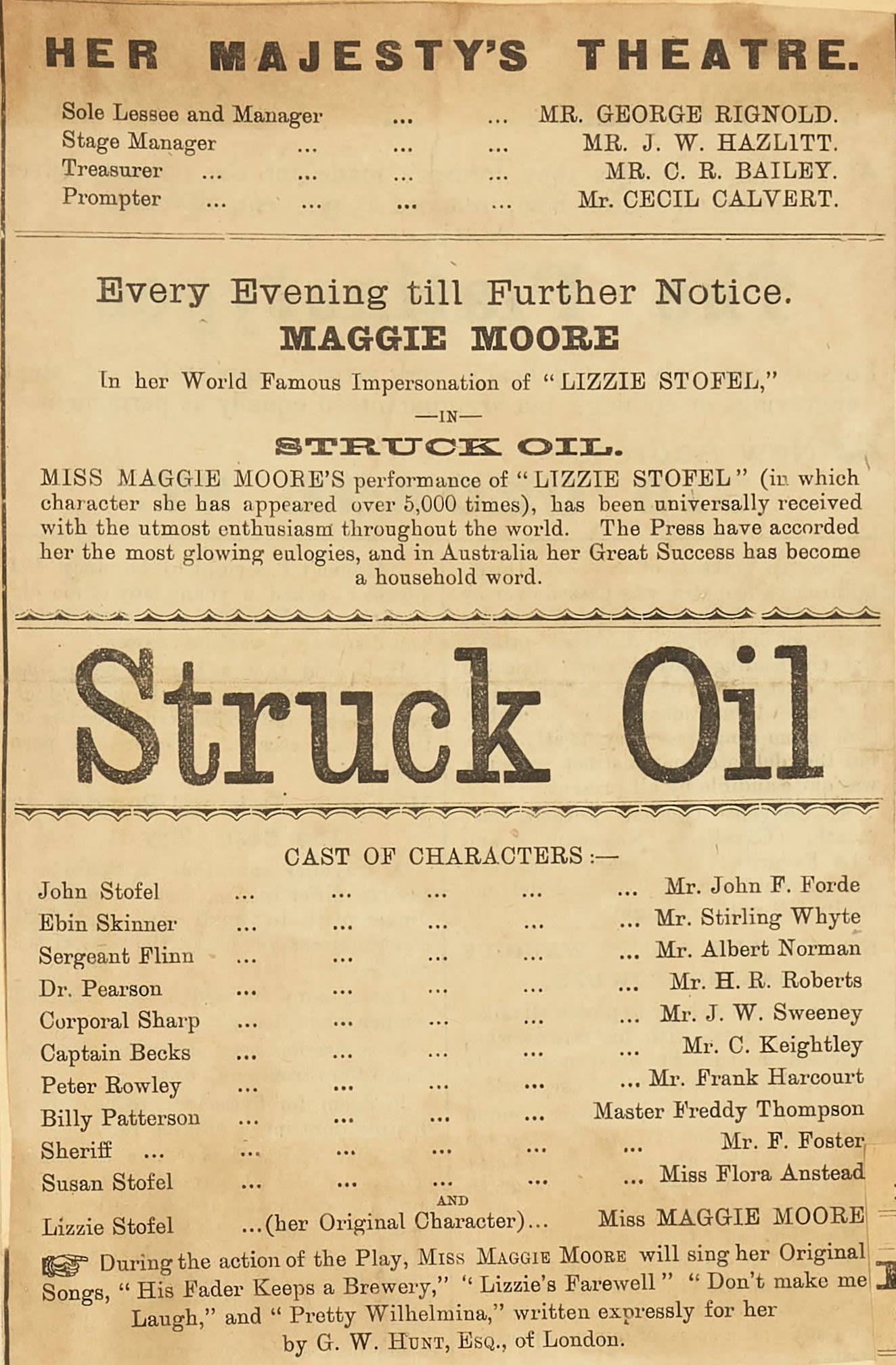
Programme for 'Struck Oil', Her Majesty's Theatre, Melbourne, 1893
Programme for 'Struck Oil', Her Majesty's Theatre, Melbourne, 1893

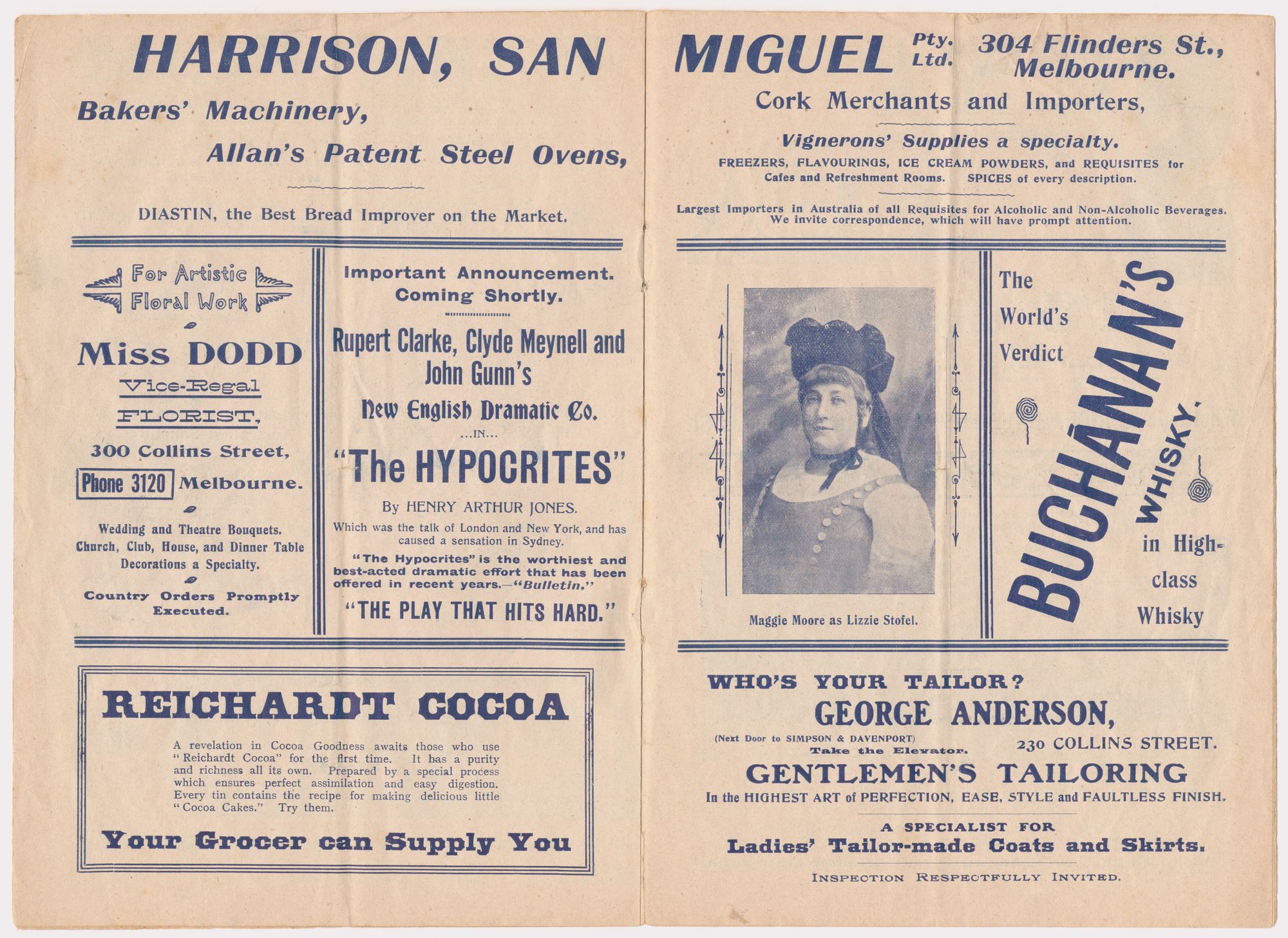
Programme for 'Struck Oil', Gaiety Theatre, Melbourne, 1902
Programme for 'Struck Oil', Gaiety Theatre, Melbourne, 1902
'Struck Oil and Miss Maggie Moore are perennial and inseparable.'

The Divine Sarah
Sarah Bernhardt's 1891 Australian tour

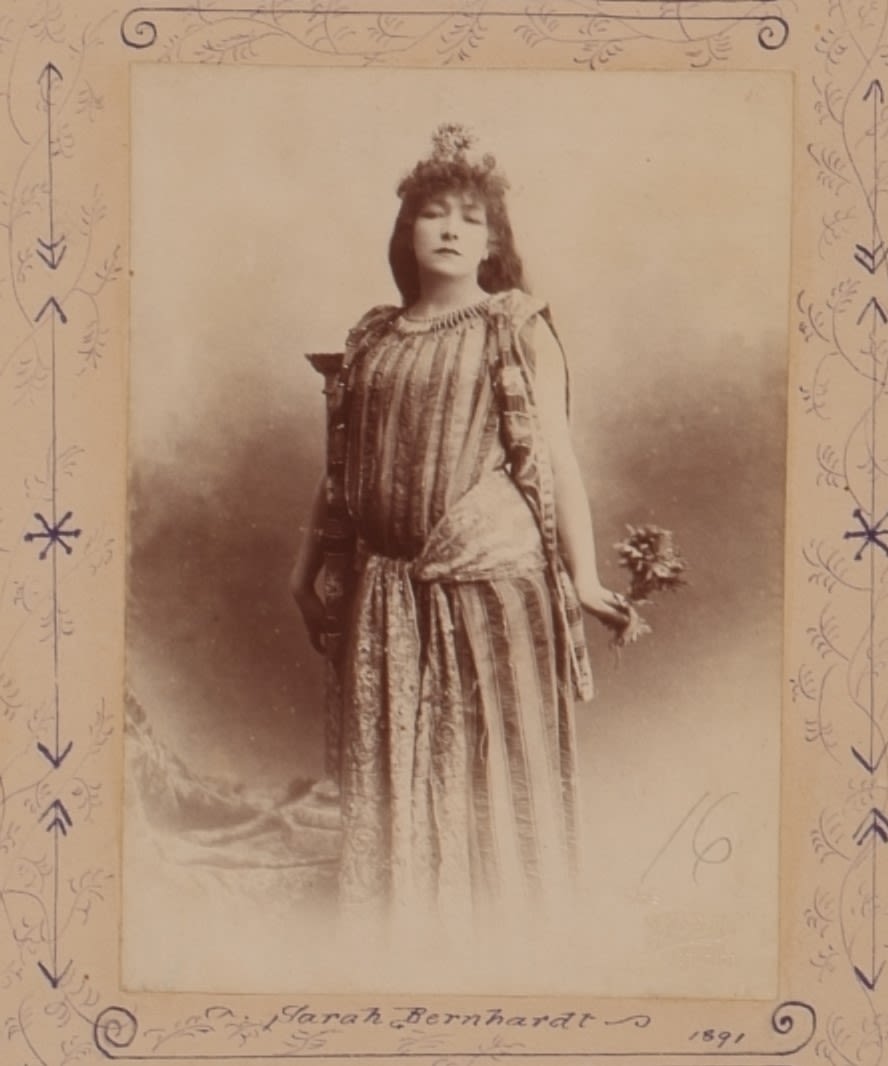
French actress and producer Sarah Bernhardt (1844–1923) was one of the most famous performers in the world when she arrived in Australia in 1891. With the nickname of 'The Divine Sarah' bestowed on her by Oscar Wilde, Bernhardt played a pivotal role in increasing the artistic freedom of women on stage in the 19th century. She remains one of the most influential stage performers in history.
Born Henriette Rosine Bernard in Paris, the diva made her stage debut in 1862 and rose to fame through her melodramatic, gender-bending performances. Known for her scandalous lifestyle and electrifying talent, Bernhardt charmed audiences all over the world with her eccentricities both on and off the stage. Her career spanned over 50 years and outlasted all of her contemporaries. She was involved in all facets of theatre-making, including set supervision and costume design for her productions.
Brought to Australia by Williamson and his business partner at the time, Arthur Garner, Bernhardt was one of the first internationally recognised and innovative female performers to set foot on Australian shores. She pioneered new and exciting interpretations of characters, which were both embraced and rejected by audiences.
Bernhardt's most celebrated roles were tragic heroines such as Marguerite Gautier in La Dame aux Camélias (The Lady of the Camelias or Camille) by Alexandre Dumas, which she made famous on the stage and screen. The title roles of Fedora and La Tosca were written especially for her by French playwright and dramatist Victorien Sardou. Bernhardt also regularly played traditionally male roles and became the first female actress to perform Shakespeare’s Hamlet on film in 1900.
At 47 years old, Bernhardt was booked to tour Melbourne, Sydney and Adelaide for 11 weeks. Despite rumours of illness that cast doubts on her arrival, Bernhardt docked in Sydney on 27 May 1891 aboard the R.M.S Monowai, along with the 40 members of her company, almost 200 tonnes of luggage containing costumes and scenery, and her pet dogs. This excess was just one part of her idiosyncratic personality; she reportedly travelled with a coffin that, supposedly, she slept in.
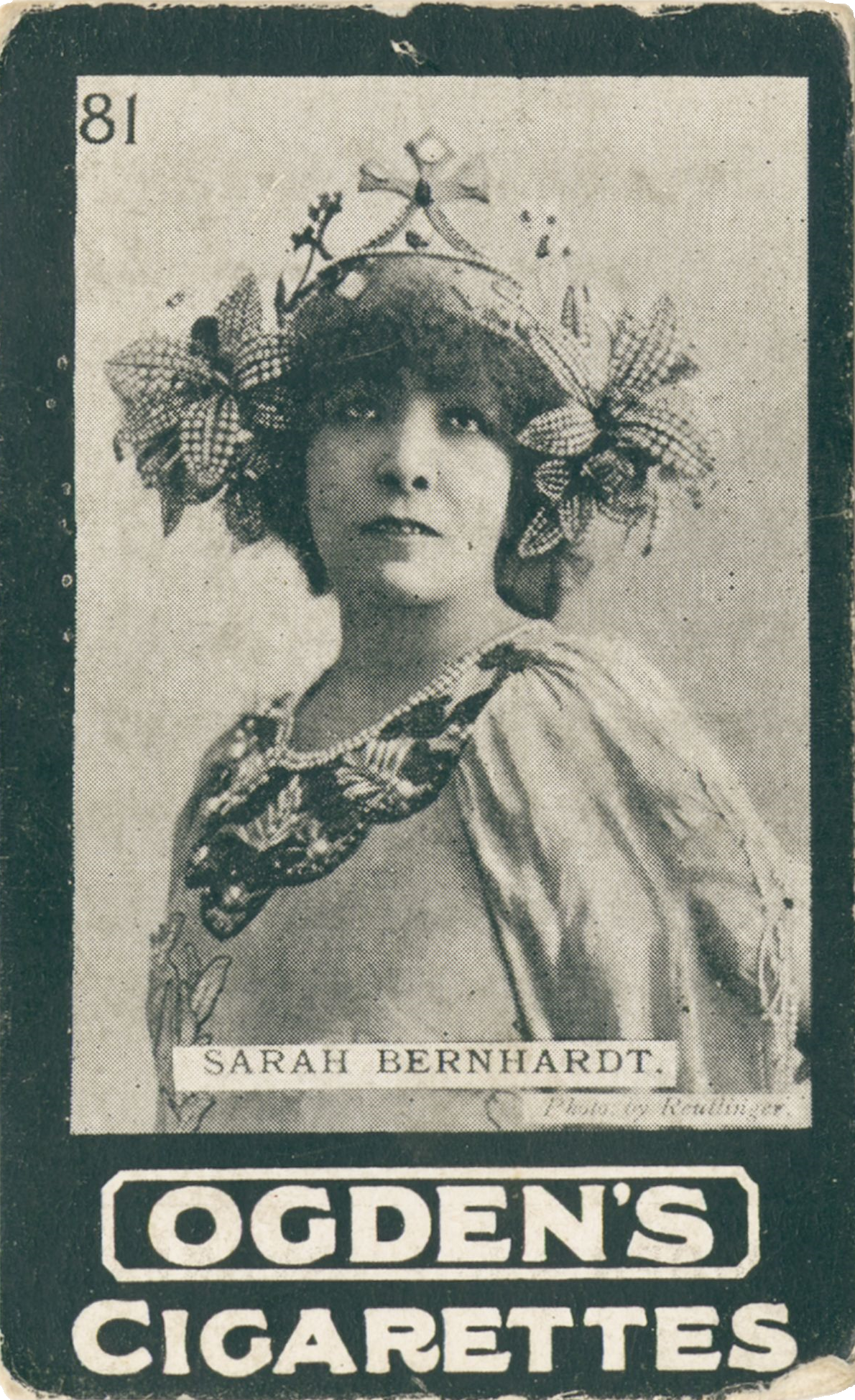
Bernhardt received a warm welcome with baskets of flowers and exquisite bouquets, and champagne, followed by an extravagant event held at the Sydney Town Hall hosted by the Mayor. When asked about her politics in front of several hundred guests, she replied: '… an artiste has no politics. I leave such matters to the consideration of men'.
Despite this comment, Bernhardt was influential politically through her transgressive performances on stage and her impact on the rise of celebrity culture.

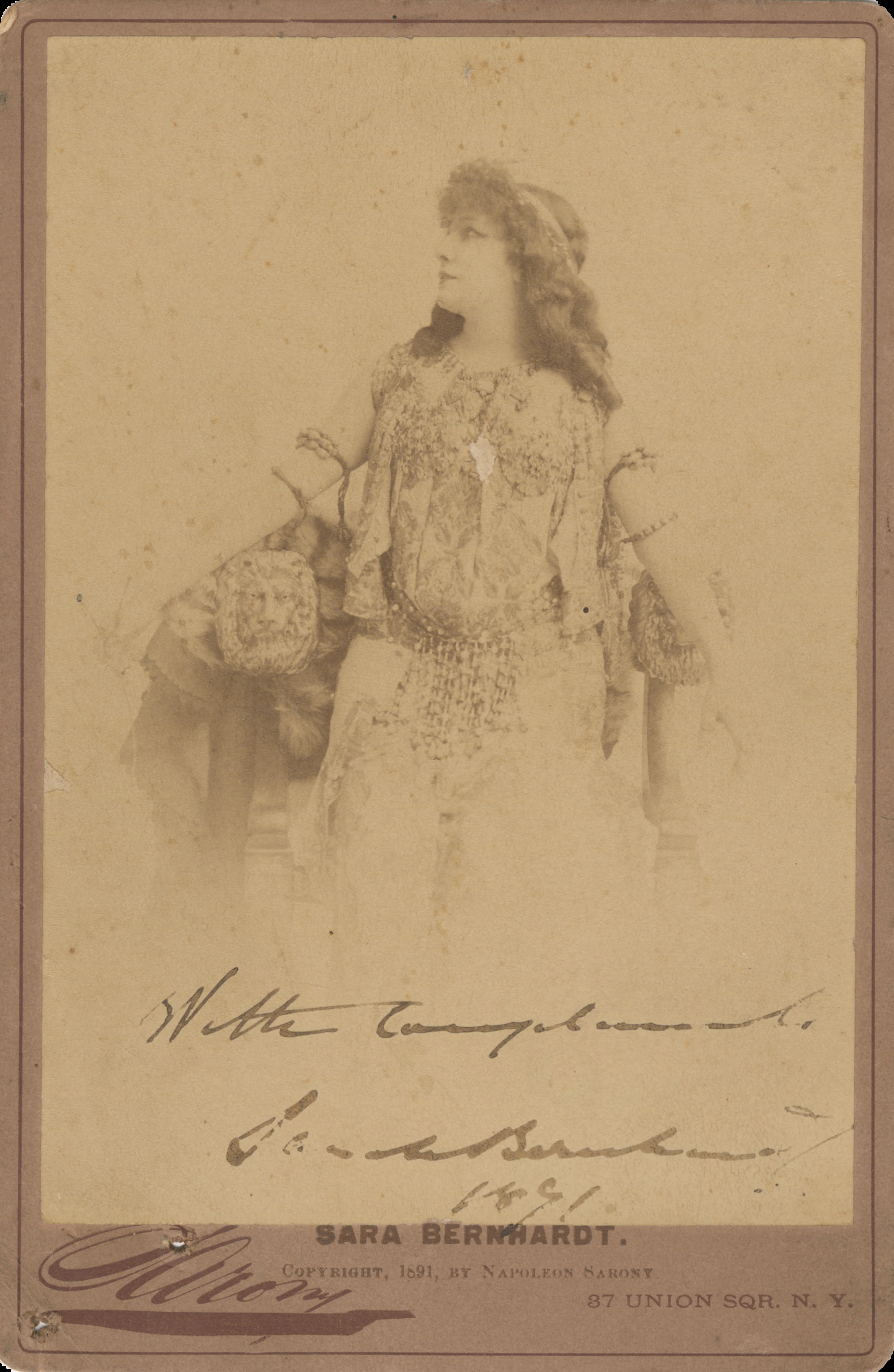
Sarah Bernhardt as Cleopatra, 1891
Sarah Bernhardt as Cleopatra, 1891

Sarah Bernhardt, c.1890
Sarah Bernhardt, c.1890

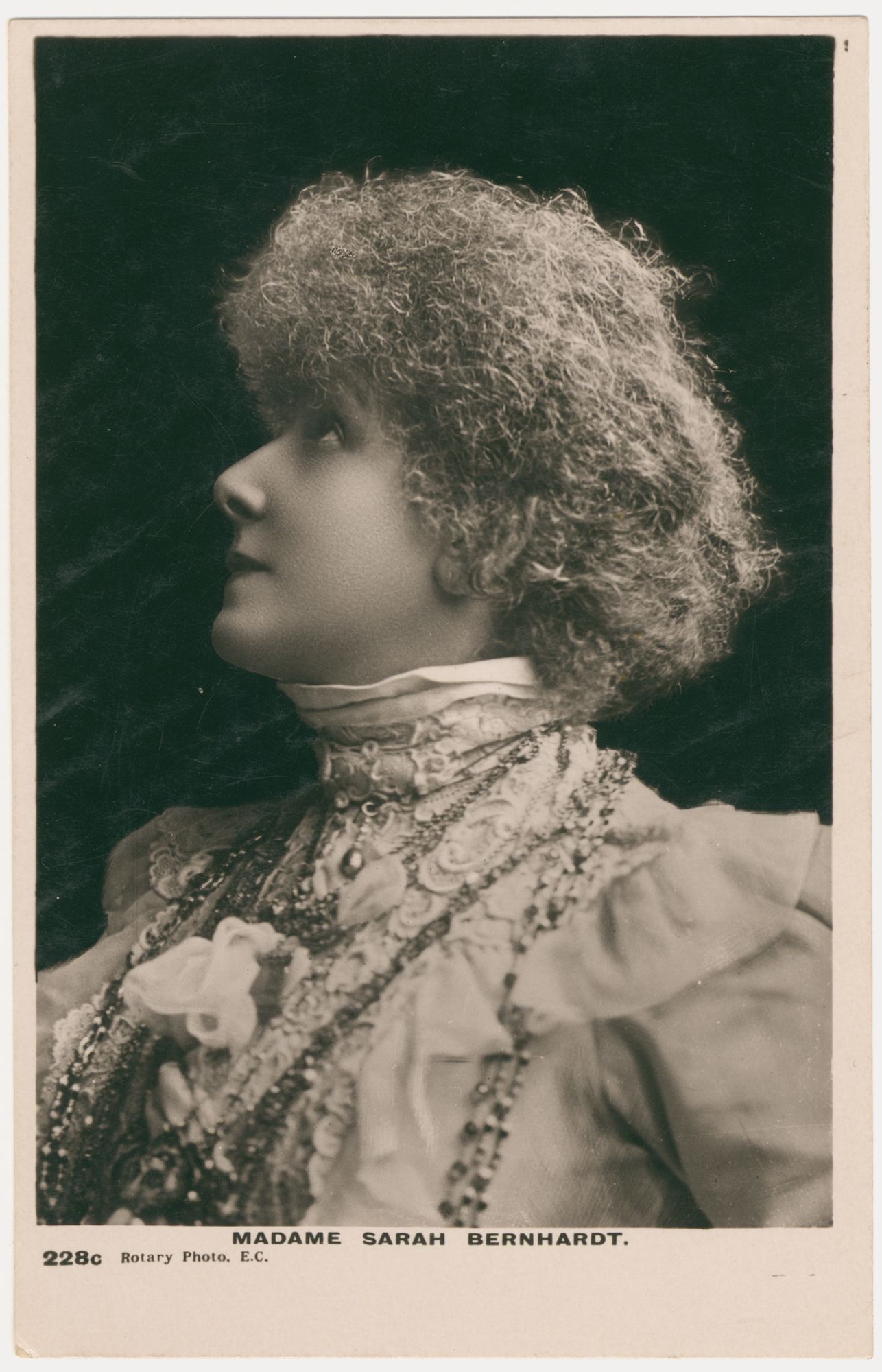
Sarah Bernhardt, 1898
Sarah Bernhardt, 1898

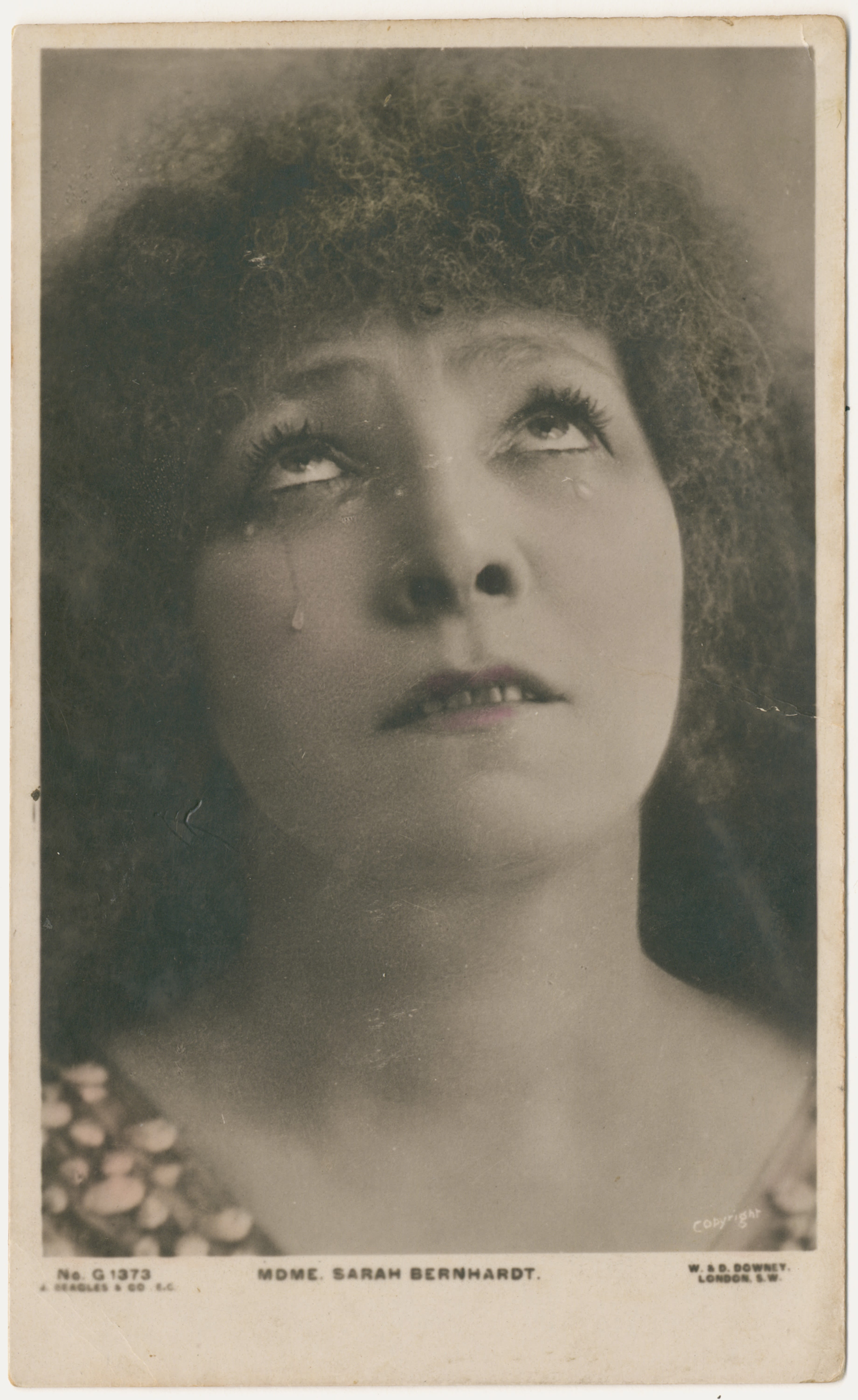
Sarah Bernhardt, c.1885
Sarah Bernhardt, c.1885

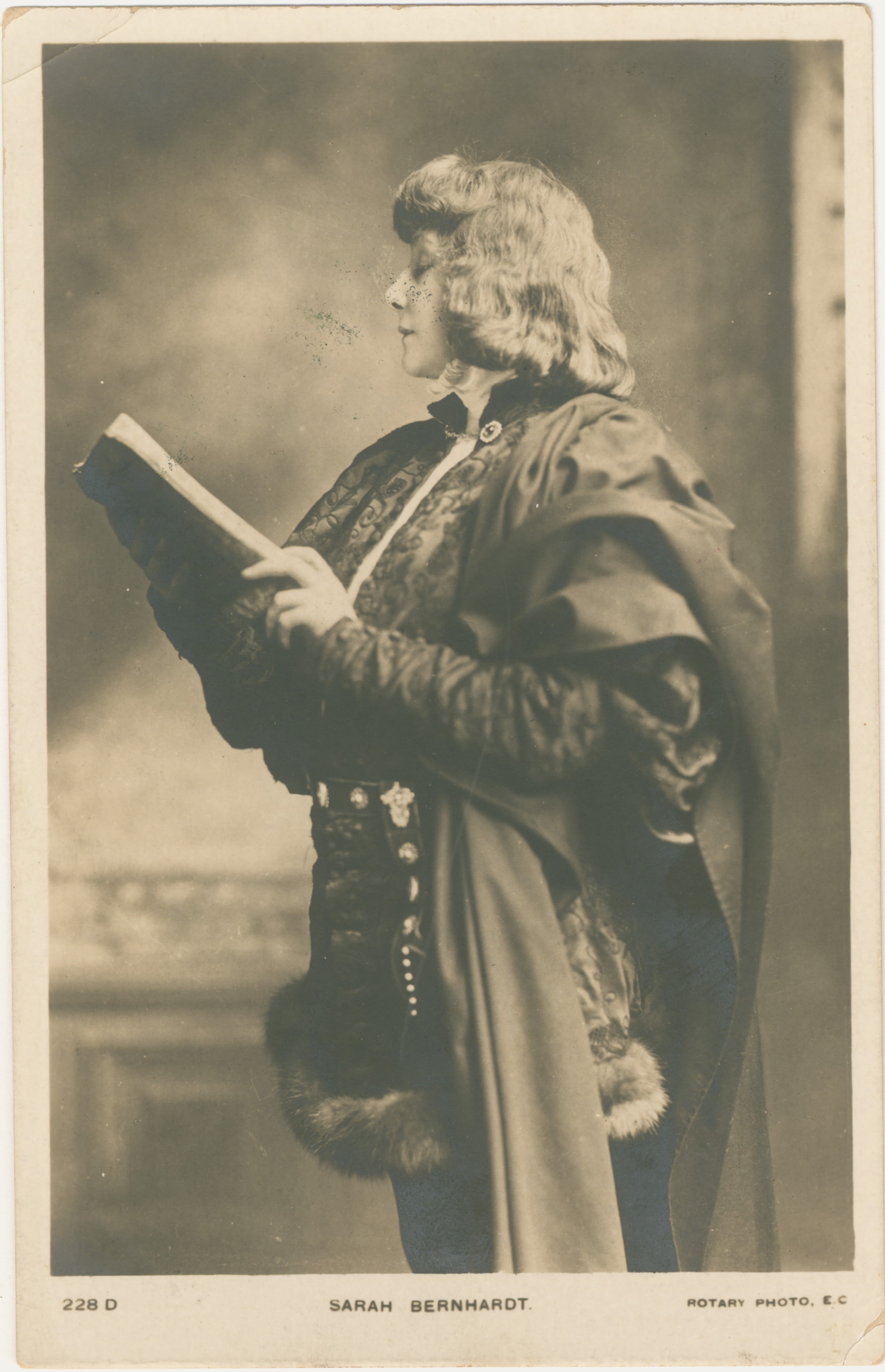
Sarah Bernhardt as Hamlet, 1899
Sarah Bernhardt as Hamlet, 1899
The Bernhardt Effect
In response to the hype and anticipation for Bernhardt's season, her manager ordered that a selection of opening night tickets in the dress circle and stalls to be sold by auction. Ticket auctions and 'scalpers' were new concepts introduced to Australia from American theatre. Some tickets for the Bernhardt season sold for as much as £13 (approximately £2500 today). Newspapers predicted that ticket scalpers were a one-off response to the hysteria of the season.
An example of this fan frenzy was recorded in a scrapbook collected by Lady Tait, which documents one of Bernhardt's performances in La Tosca, staged at the Princess Theatre in Melbourne.
This personal scrapbook reveals a first-hand account of excitement amongst audiences to witness the divine diva on stage.
This audience member had a front seat in the gallery and described Bernhardt's performance as 'A Masterpiece'.
The writer recalled the exhilaration at the theatre's ticket box and had 'performed some acrobatic feats on the stairs' in the attempt to witness Bernhardt on stage. They eventually succeeded in obtaining tickets after nearly losing half a coat!
While brief, accounts like these paint a rich picture of the mania Bernhardt created amongst Australian audiences during her tour.

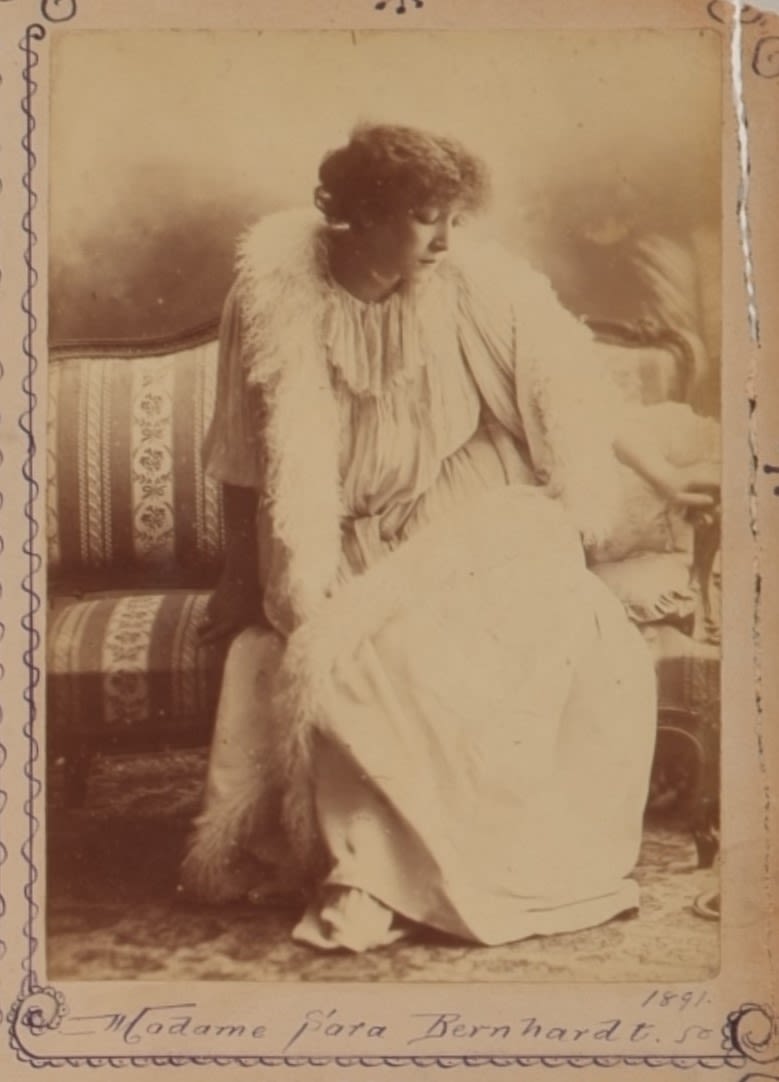
Sarah Bernhardt, 1891
Sarah Bernhardt, 1891

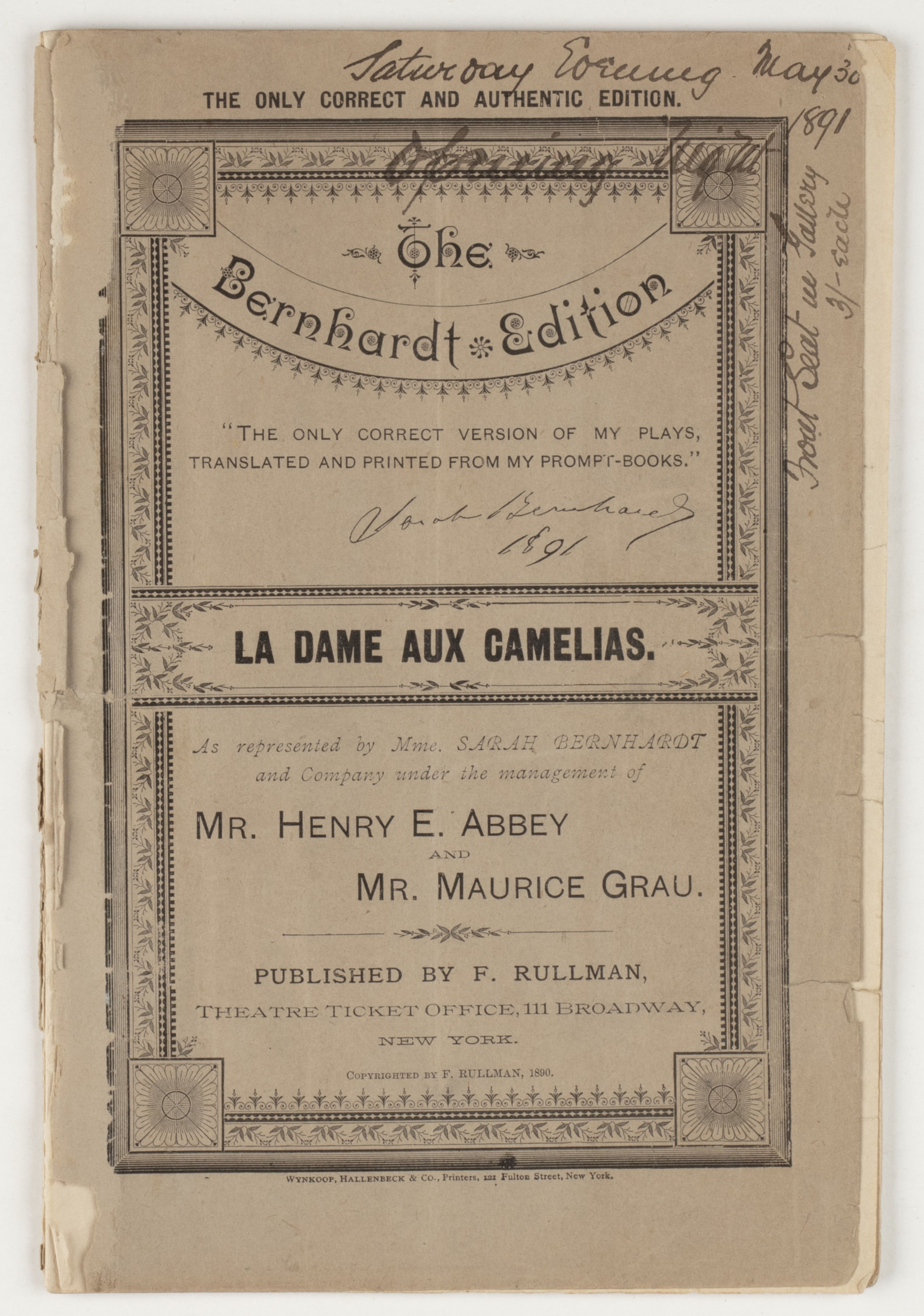
Collectable script for 'La Dame aux Camélias', The Bernhardt Edition, 1890
Collectable script for 'La Dame aux Camélias', The Bernhardt Edition, 1890

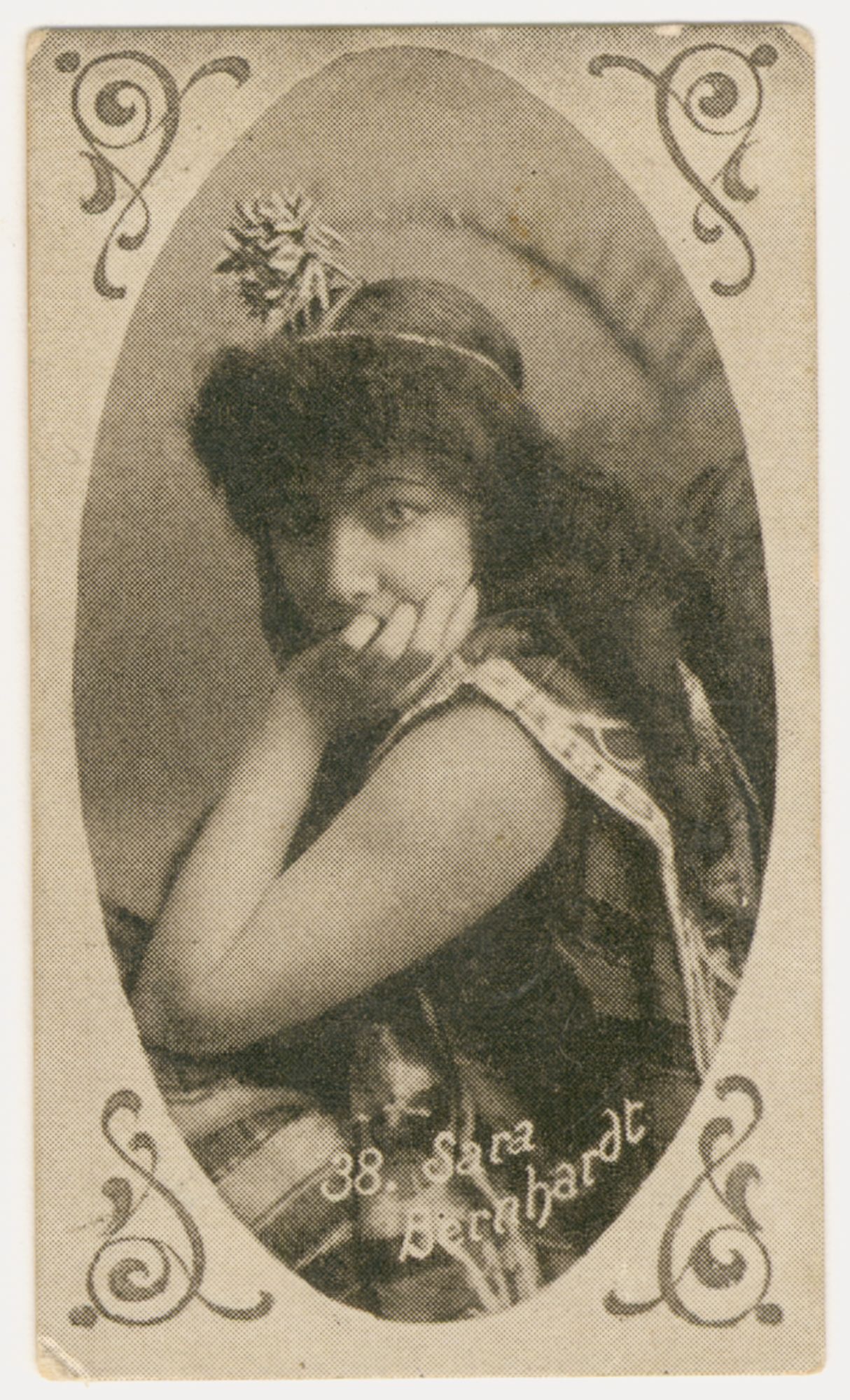
Sarah Bernhardt as Cleopatra, 1891
Sarah Bernhardt as Cleopatra, 1891
The Empress of the Theatre
A highlight of Bernhardt's tour was her captivating performance in La Dame aux Camélias. In Sydney, her self-designed costumes were described as works of art made from brocade and Chinese silk in soft colours – lemon, cream and pink – draped upon her graceful figure. Seemingly simple and classic, these costumes allowed Bernhardt's performance to shine on stage.
Following the theatrical death of her character, the diva was met with 'unparalleled enthusiasm of the audience and tumultuous applause'. She replied: 'I protest you are too kind. Still if you will have it so I must accept your homage. Take in return the artist. The best she has to give is yours, wholly and unreservedly'.
Limited to only 24 evening performances and four matinees, Bernhardt’s season was still not finalised when she arrived in Australia. She eclipsed the public's expectation by performing many of her beloved characters, but entirely in French. She nonetheless captivated the crowd with her exaggerated facial expressions, emotive voice, and magnetic stage presence, which was described as being spontaneous and impulsive.
Among the many cabinet cards and souvenirs sold during the season, the only authorised items of “merchandise” were The Bernhardt Editions of her playscripts. Printed in French with corresponding English translations, these certified copies became popular collectable items which added to her popularity and fame.


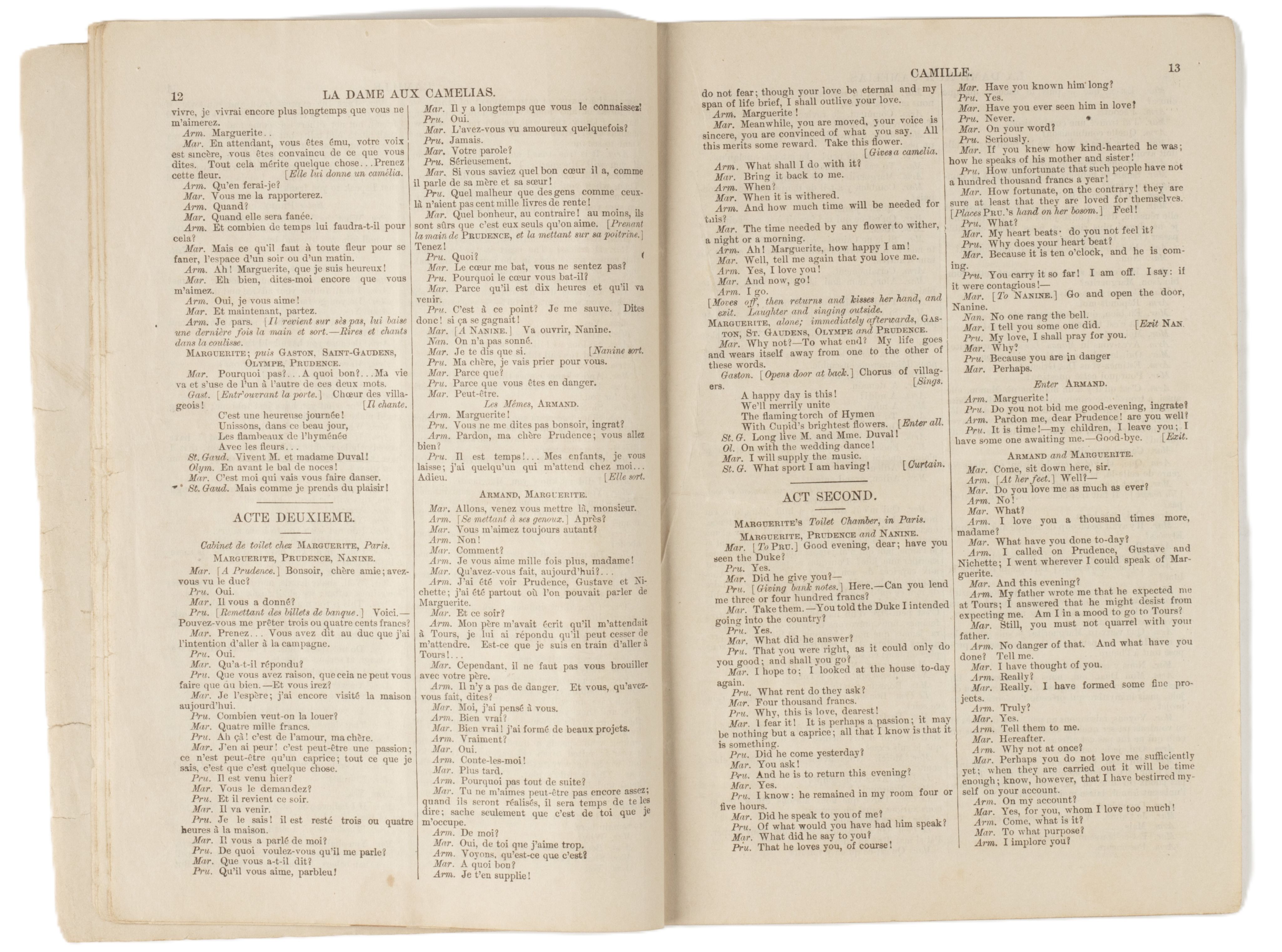
Collectable script for 'La Dame aux Camélias', The Bernhardt Edition, 1890
Collectable script for 'La Dame Aux Camelias', The Bernhardt Edition, 1890
In addition to being a pioneer of celebrity culture and performance, Bernhardt was an inspiration to many Australian performers. She met Australia's first internationally famous soprano, Nellie Melba, in Paris in 1889 and gave her advice on the role of Marguerite in Faust, a character made famous by both divas. According to Melba, Bernhardt exclaimed: 'You sing like an angel. I want to teach you to act like an angel too'. Bernhardt also showed Melba the importance of make-up in performance, stating: 'You have no idea how to do these things. You are too innocent. Take a lesson from me, the wicked one!'
'She is the supreme example to any youngster, of what heart, perseverance and hard work can achieve. It was the great Sarah, you know, who taught me to act Marguerite.'
Although she received praise and adoration from performers and audiences alike, not all Australians commented favourably on Bernhardt. Some critics dismissed her Cleopatra as straying too far from original interpretations. Yet this merely enhanced Bernhardt's appeal among fans and fuelled her passion for the stage. When asked to comment on being criticised, she responded: '…but I don’t mind when I am. I rather like it. It is a battle between them and me, in which I always come out best!'
The Immortal Swan
Anna Pavlova's monumental seasons in Australia

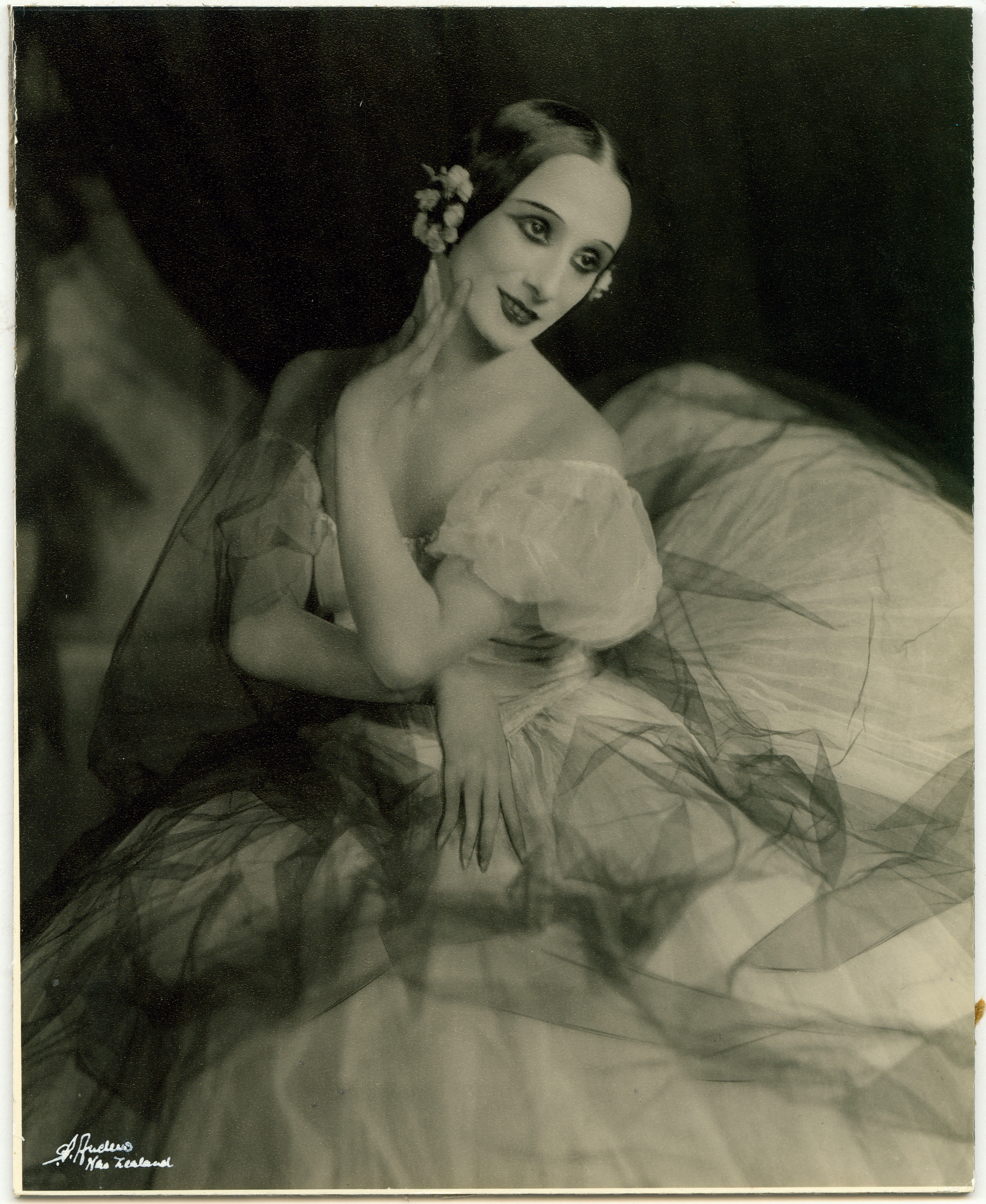
Russian prima ballerina Anna Pavlova (1881–1931) embarked on two extravagant tours to Australia in 1926 and 1929. Almost 100 years since her first visit, Pavlova remains one of the most extraordinary and famous ballet dancers in history. Her influential tours led to the establishment of ballet as a popular artform in Australia.
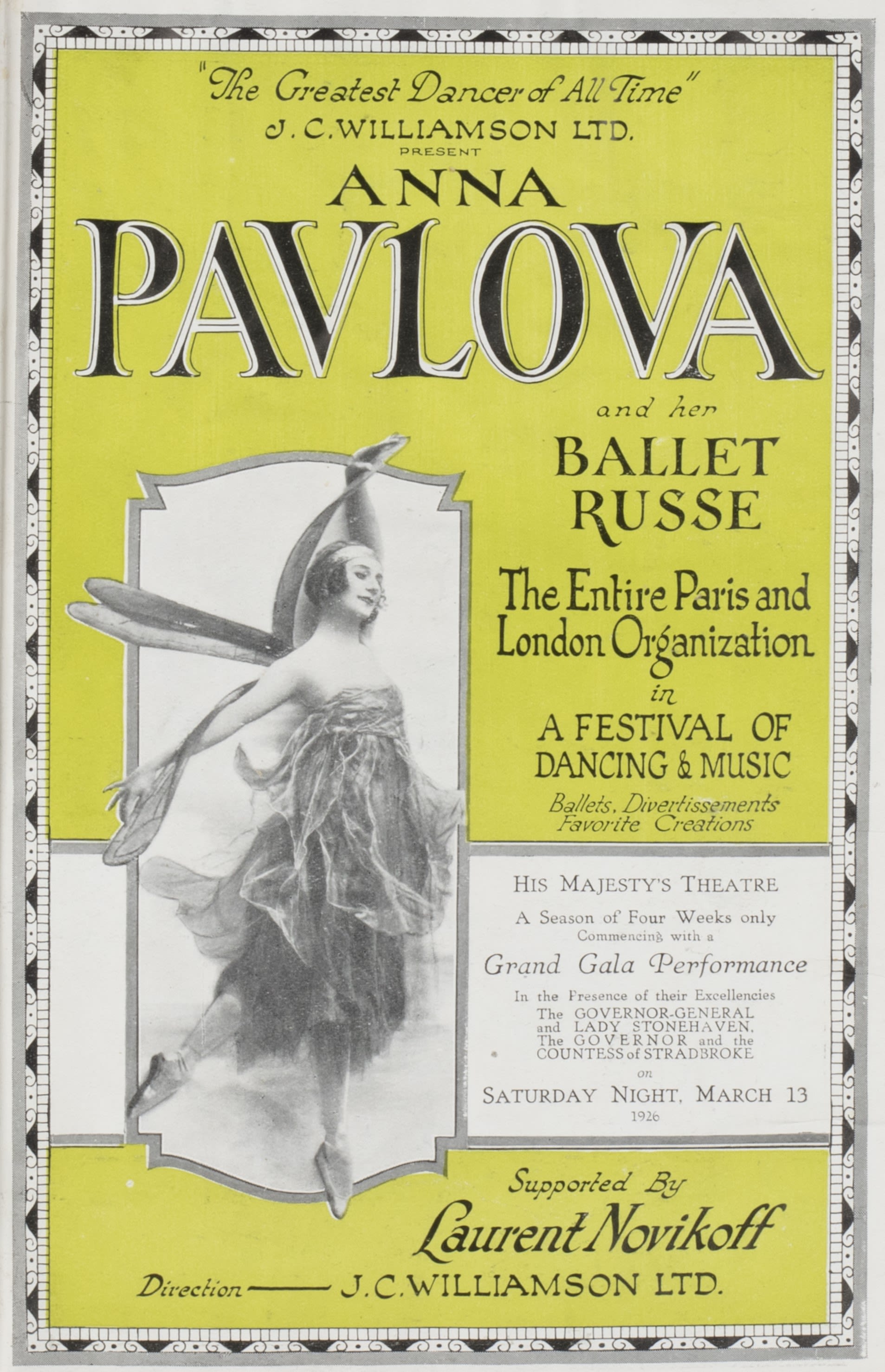
The news of Pavlova's first visit to Australia was rumoured in the press two years ahead of her arrival in 1926. Part of a larger international tour, the visit saw the ethereal ballerina perform in Melbourne, Sydney, Brisbane and Adelaide. Pavlova introduced modern Russian ballet to Australian audiences, who relied heavily on international tours presented by 'The Firm' for new theatrical experiences.

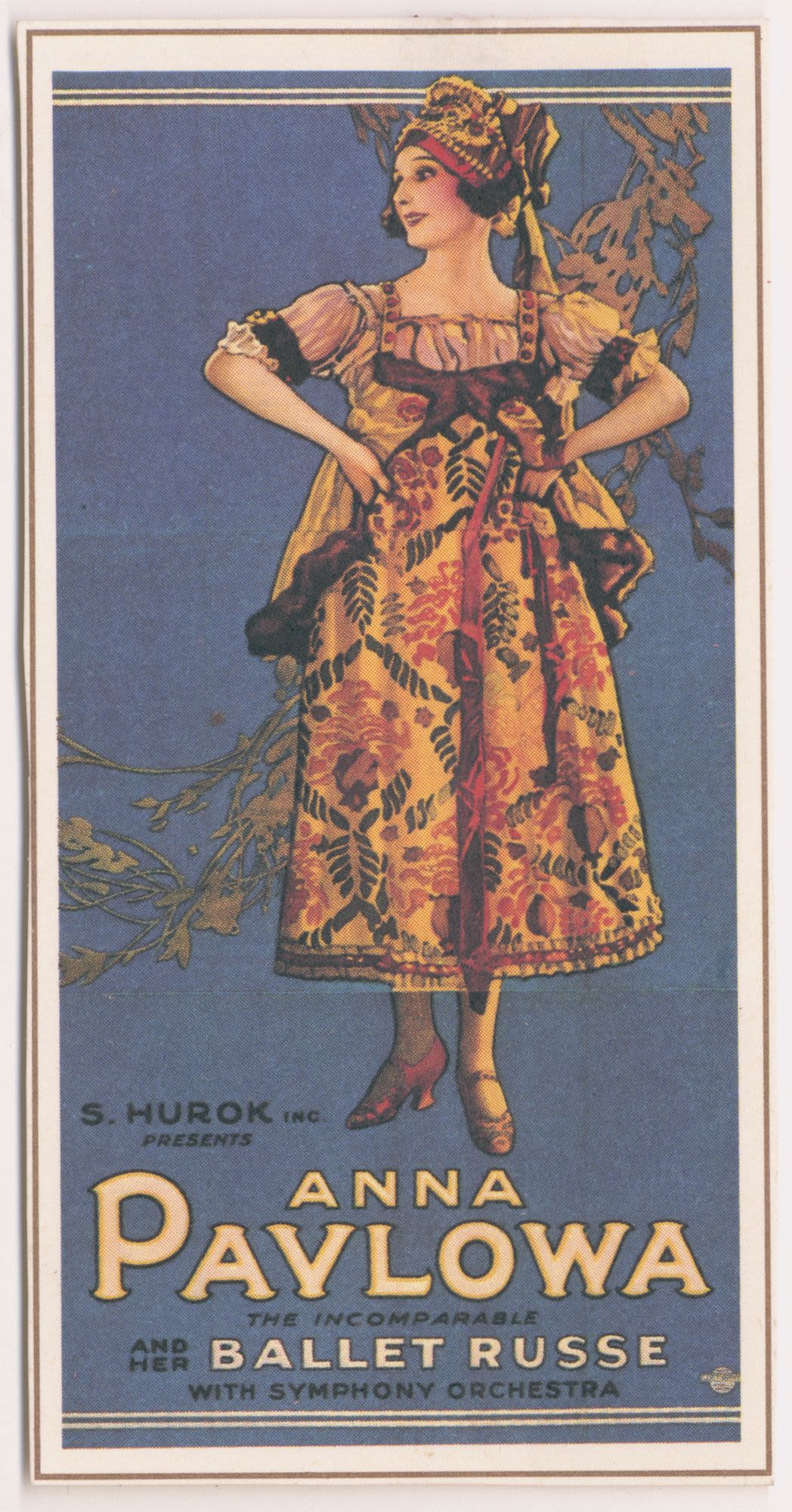
Card featuring Anna Pavlova and her Ballet Russe, c.1924
Card featuring Anna Pavlova and her Ballet Russe, c.1924
Formally a principal artist of the Russian Imperial Ballet, Pavlova was known for her magnificent performances in London and Paris. Like Bernhardt, she was at the height of her career and in her forties when she arrived in Australia. The season was billed as 'the most important event in theatrical history' and opened on 13 March 1926 with a sold-out gala performance at His Majesty’s Theatre, Melbourne. Avid admirers lined up hours before the box office opened at Allan’s Music on Collins Street to secure a coveted seat for the event. On arriving in Melbourne, Pavlova was met by a crowd of 10,000 people, all keen to view the world-famous dancer in the flesh.

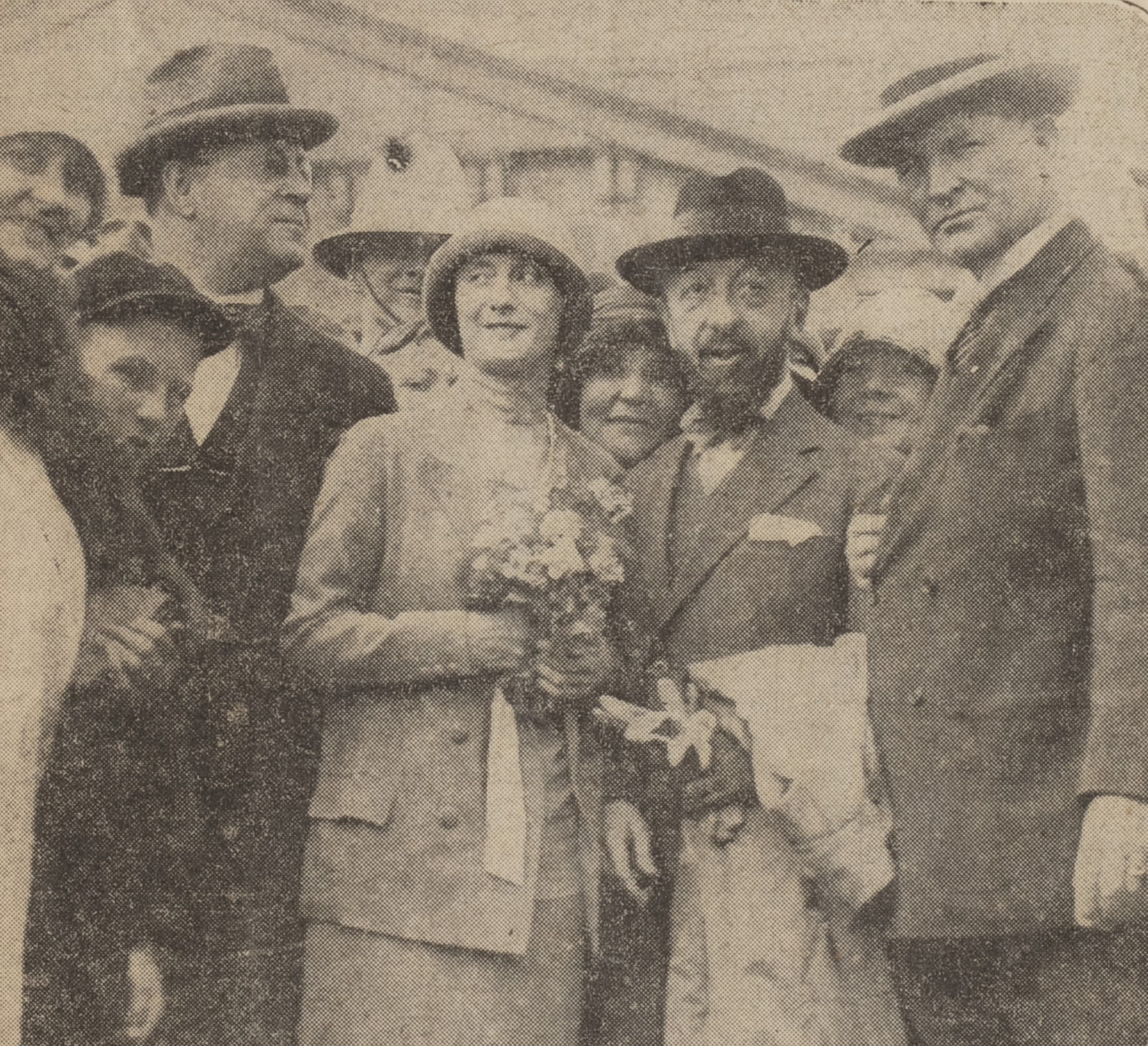
Anna Pavlova arriving at Spencer Street Station, Melbourne, 1926
Anna Pavlova arriving at Spencer Street Station, Melbourne, 1926
Pavlova brought approximately 50 performers and eight new productions to Australia, complete with scenery, costumes, and innovative lighting. Her subsequent 1929 tour was bigger and bolder, with 146 artists and new works added.
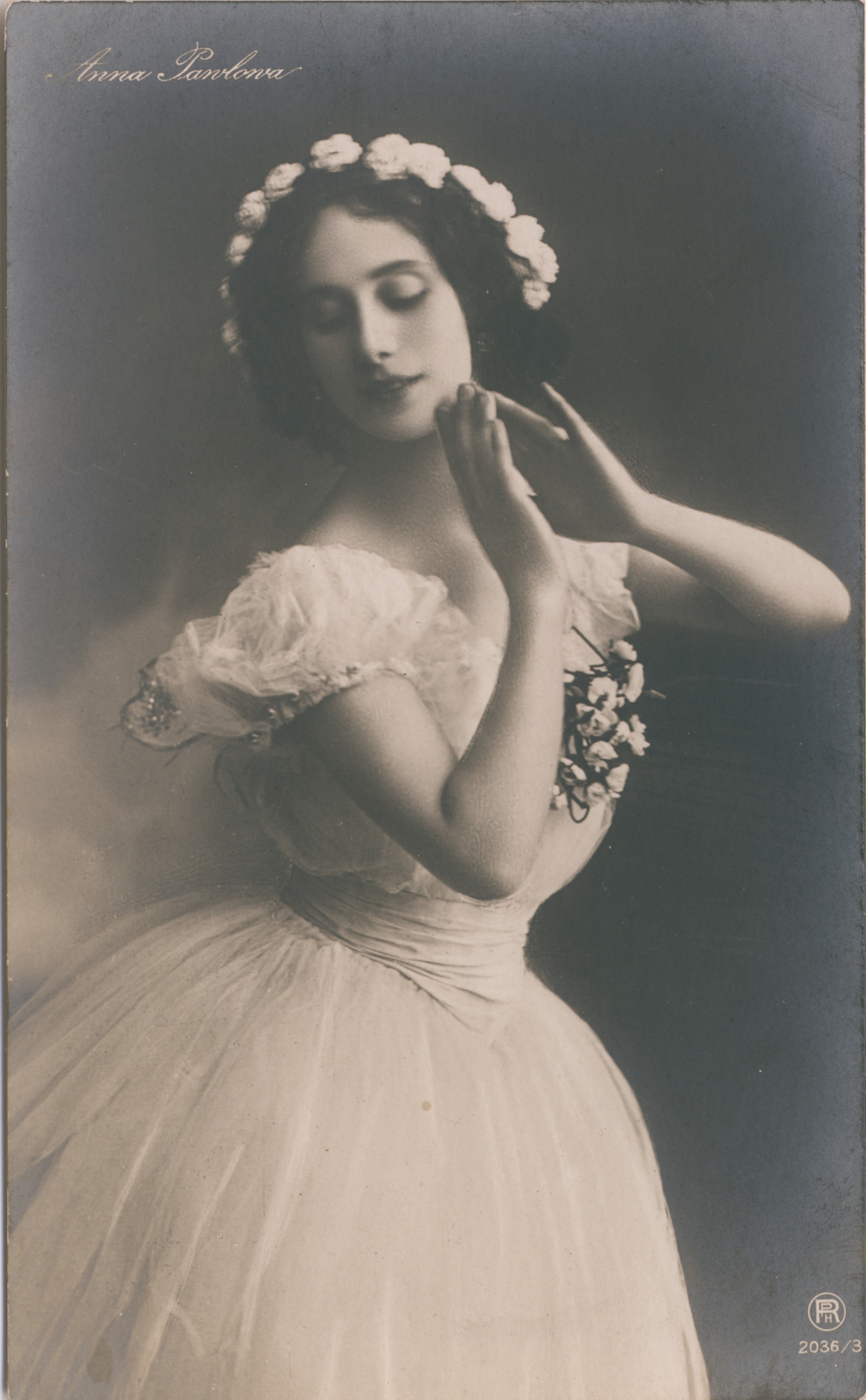
Although Pavlova was determined to share her talent all over the world, it was Melba who ultimately inspired her to visit Australia.
'It was Melba who told me I must come… Always she has said to me, “But you must see my Australia,” and at last I am here.'

Programme for Anna Pavlova and the Ballet Russe, 1926
Programme for Anna Pavlova and the Ballet Russe, 1926

Anna Pavlova in 'Giselle', 1926
Anna Pavlova in Giselle, 1926
Anna Pavlova in Giselle, 1926
Anna Pavlova in Giselle, 1926

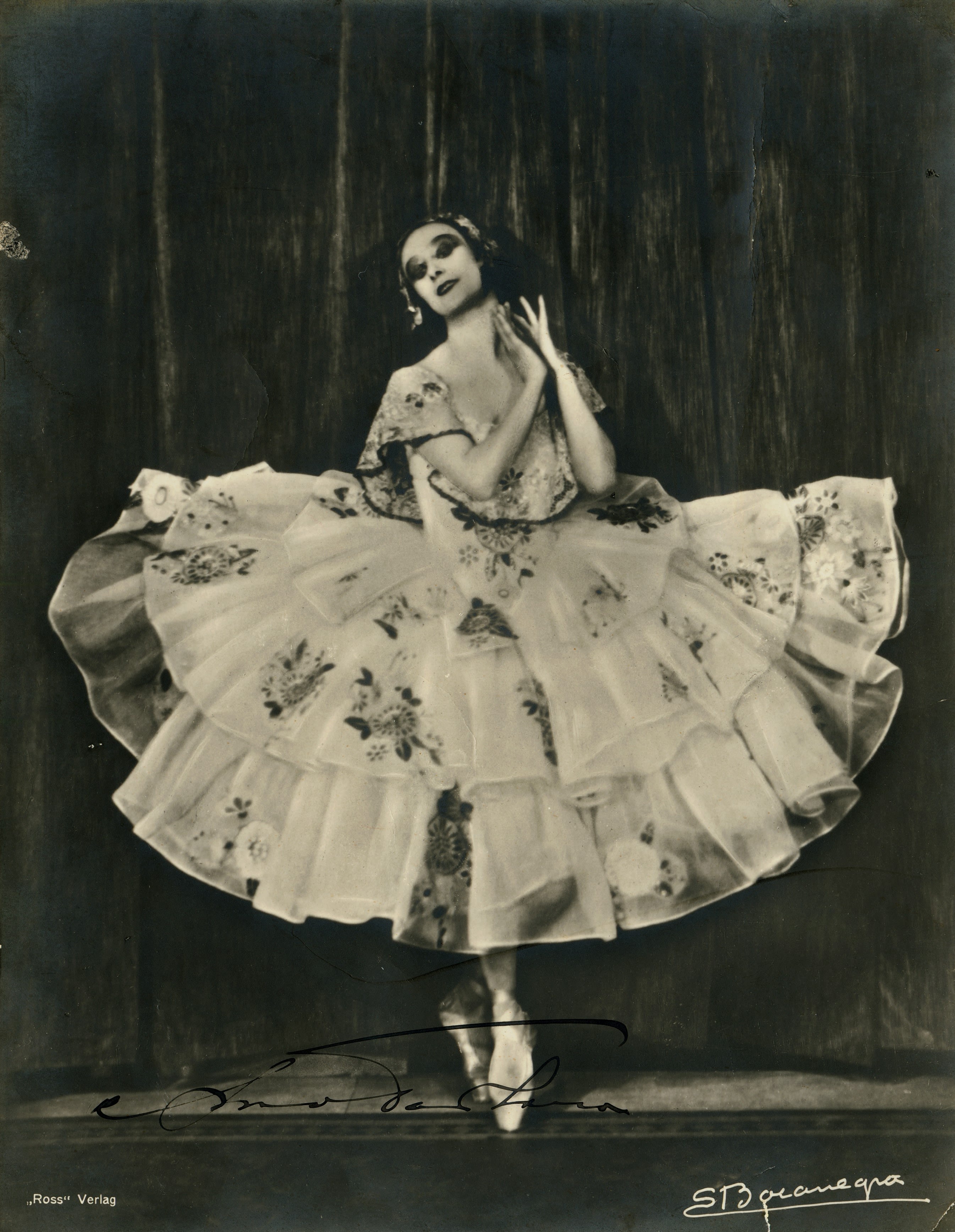
Anna Pavlova in 'Invitation to Dance', c.1917
Anna Pavlova in 'Invitation to Dance', c.1917


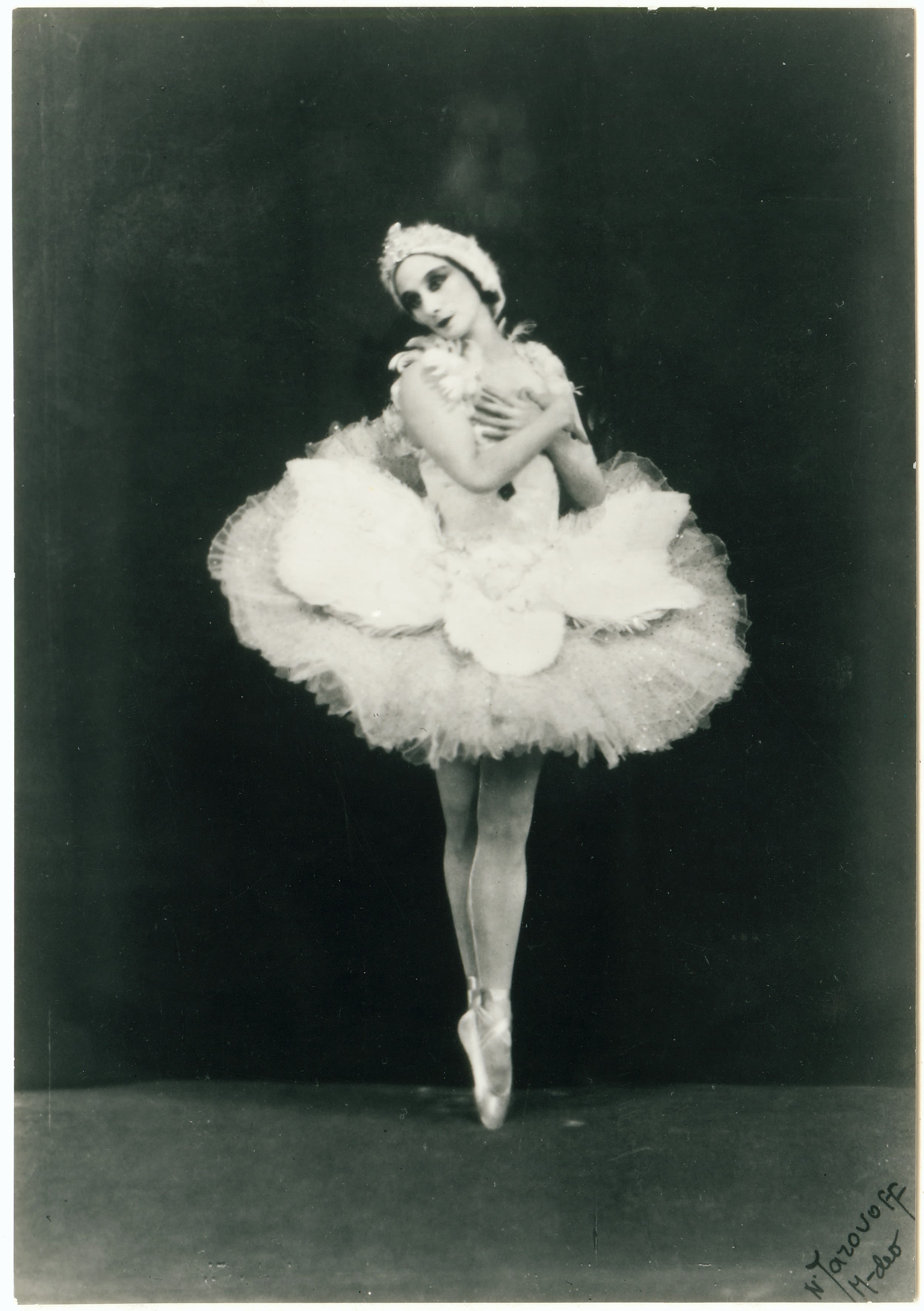
Anna Pavlova in 'Le Cygne' (The Dying Swan), c.1910
Anna Pavlova in 'Le Cygne' (The Dying Swan), c.1910
The Greatest Dancer of All Time
Pavlova was known for her grace and charm. She was mesmerising on stage and audiences were enthralled by her repertoire. From her rendition of the romantic ballet Giselle, to the one-act Amarilla, and Josef Bayer's magical The Fairy Doll, Pavlova opened up a new world of possibilities for ballet in Australia.
Pavlova's company was the first to present Don Quixote outside Russia, a ballet that has become a quintessential part of The Australian Ballet's repertoire.

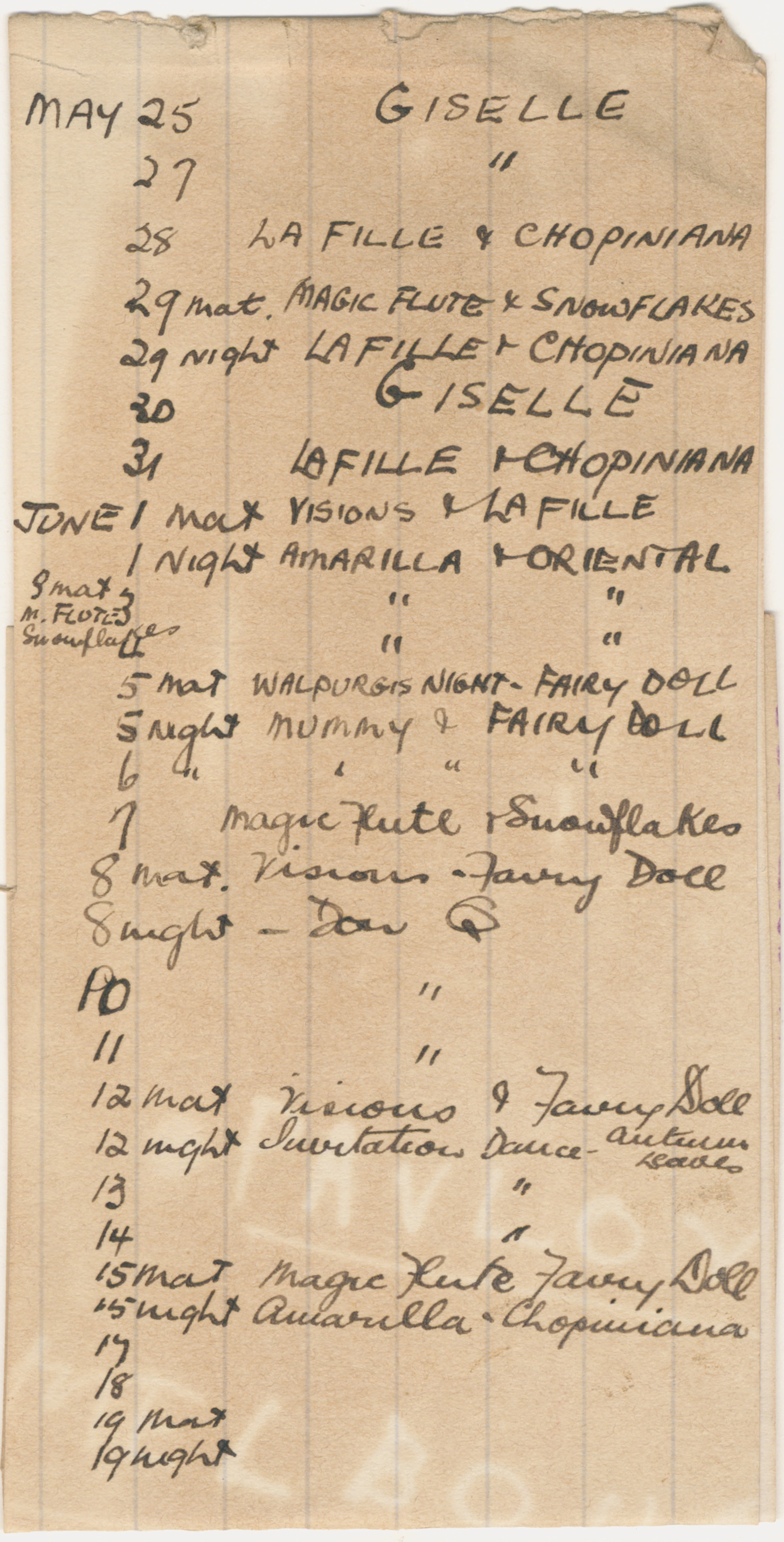
Handwritten programme for Anna Pavlova tour, Melbourne, 1929
Handwritten programme for Anna Pavlova tour, Melbourne, 1929
While Pavlova made many of these productions popular, it was her inimitable divertissement, The Dying Swan, that transfixed Australian audiences. Created for her by choreographer Mikhail Fokine in 1907, with music by Camille Saint-Saëns, this four-minute dance became synonymous with Pavlova. Legend has it that on her deathbed in 1931, she turned to her maid and declared: 'Get my swan costume ready'.

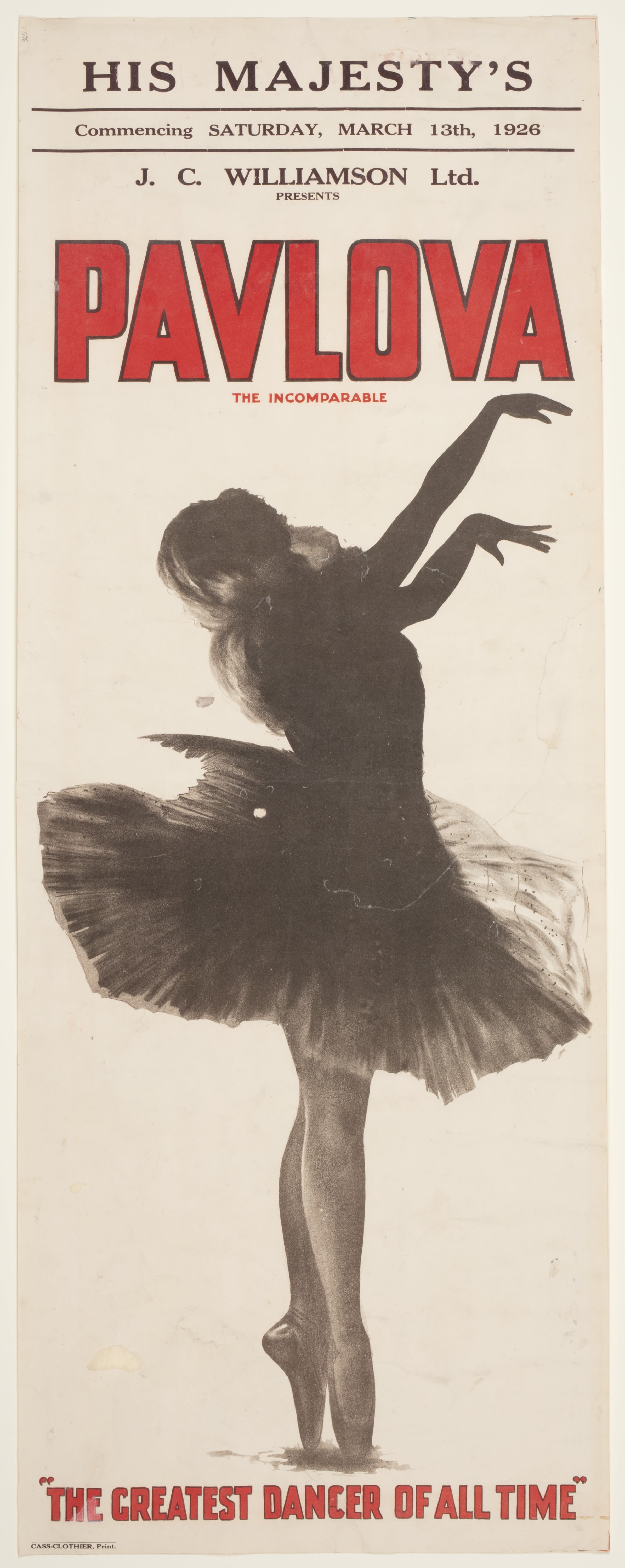
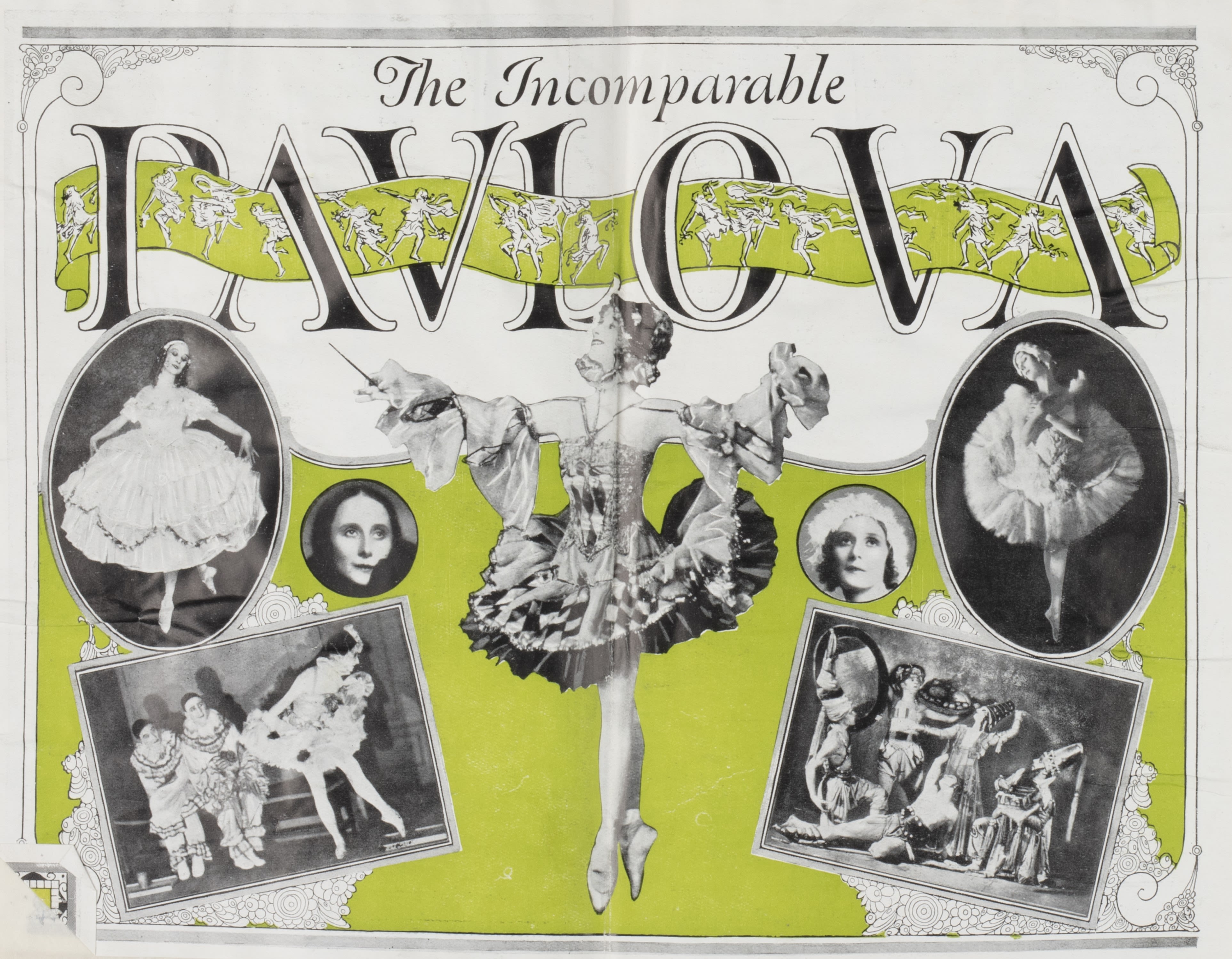
Poster for Anna Pavlova, 1926
The Incomparable Pavlova, 1926
Pavlova was a muse for many composers and choreographers, yet she also arranged her own ballets. The allegorical work Autumn Leaves captivated Australian audiences and was considered one of Pavlova's most ambitious and beautiful dances.
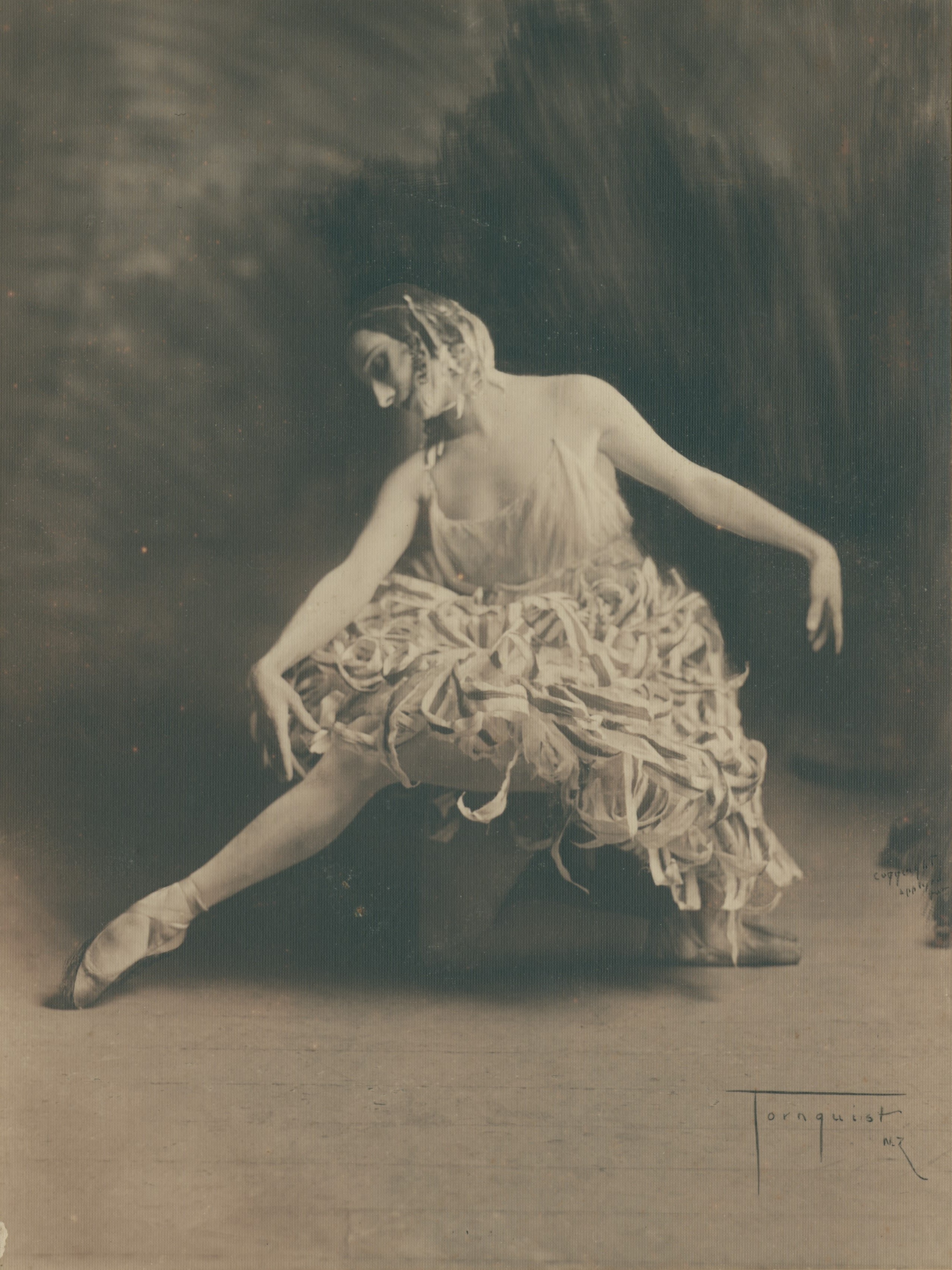
First performed in Rio de Janeiro in 1918, the narrative followed the life of a Chrysanthemum bloom – performed by Pavlova – torn from the arms of the Poet by the North Wind. This was set to two popular compositions by Polish-French composer Frédéric Chopin: the dramatic ‘Fantaisie-Impromptu’ and the poignant ‘Nocturne’ in F-sharp minor. Described as a 'Choreographic Poem in One Act', this work received outstanding reviews in Australia, with many claiming Pavlova's mystical presence remained on stage long after the curtain fell.
'What exactly is success? For me it is to be found not in applause, but in the satisfaction of feeling that one is realising one’s idea.'

Anna Pavlova as the Chrysanthemum in 'Autumn Leaves', c.1926
Anna Pavlova as the Chrysanthemum in 'Autumn Leaves', c.1926

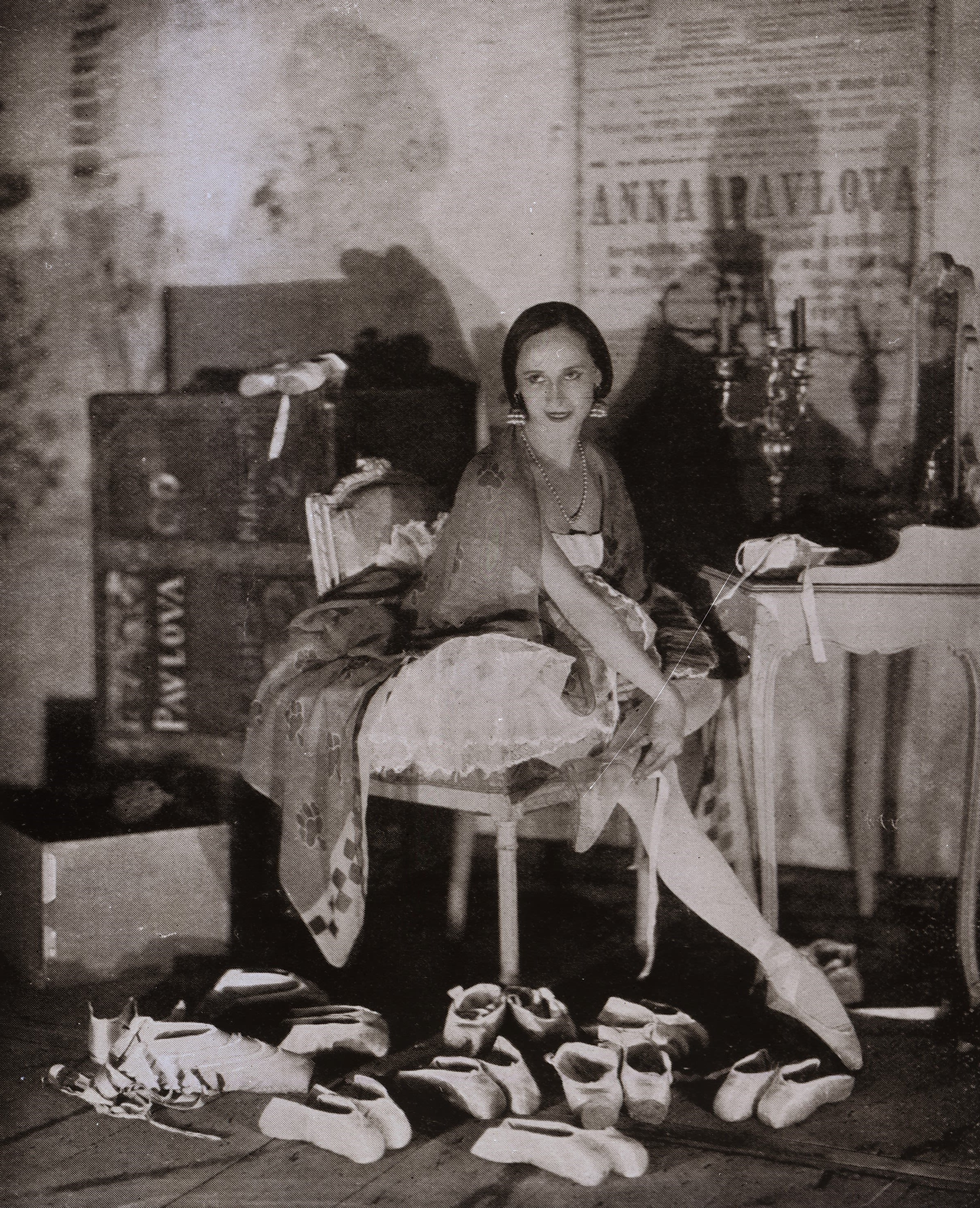
Anna Pavlova in her dressing room at the Théâtre des Champs-Élysées, Paris, c.1920
Anna Pavlova in her dressing room at the Théâtre des Champs-Élysées, Paris, c.1920
Passion and Devotion
Pavlova was not only renowned for her artistry and technique on stage; her personality and a strong work ethic also contributed to the dancer's star power.
'A true artist must devote herself wholly to her art and had no right to lead the life most women long for…'
Her modest, effortless beauty was paired with her determination and hard work. Interviews with Pavlova revealed she never cancelled a performance and that she practiced in front of a mirror for five hours a day prior to opening nights. Other reports claimed she worked as many as 16-hours a day. According to Pavlova, she was 'the hardest worked woman in the world'.

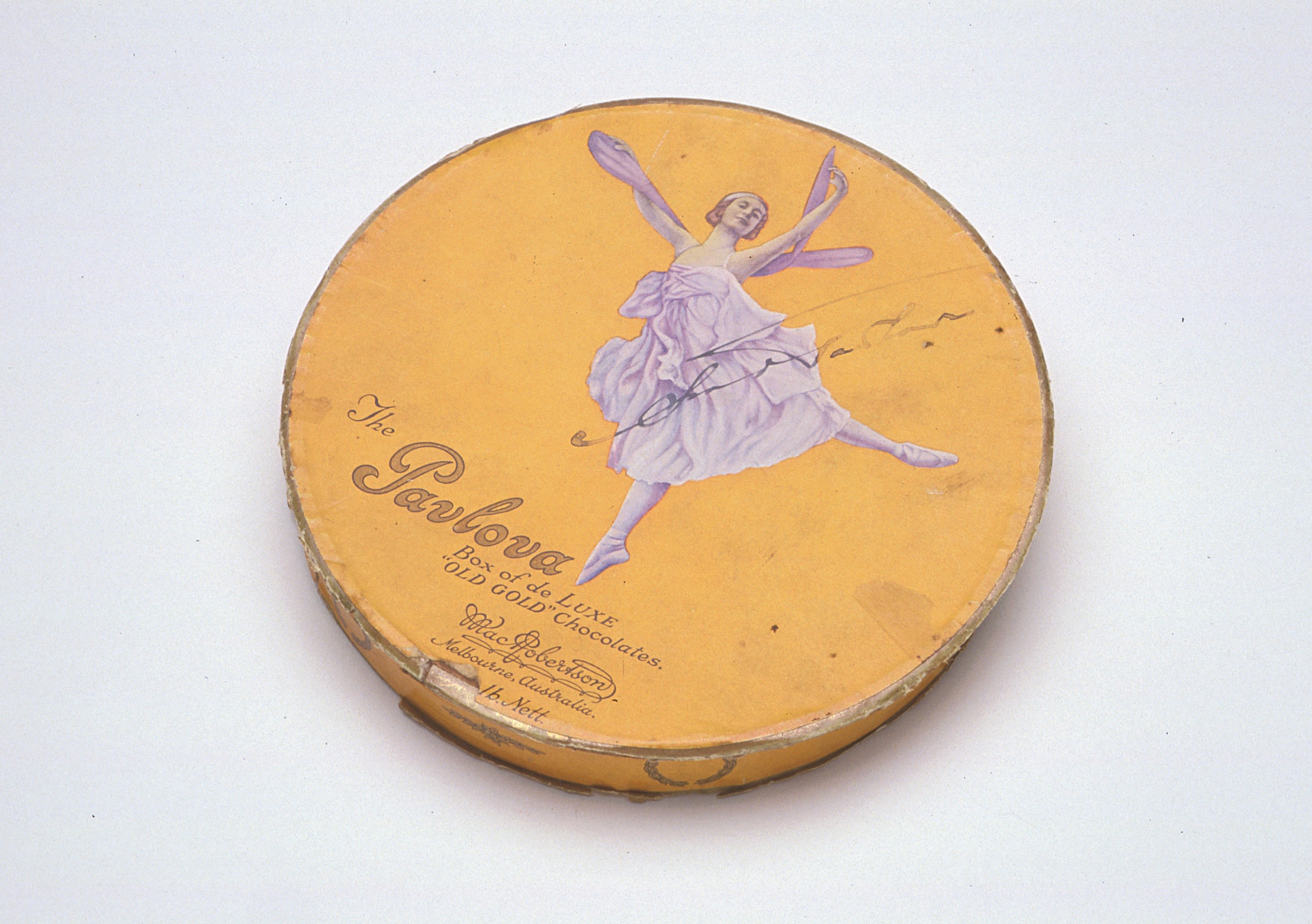
A Diva's Delight
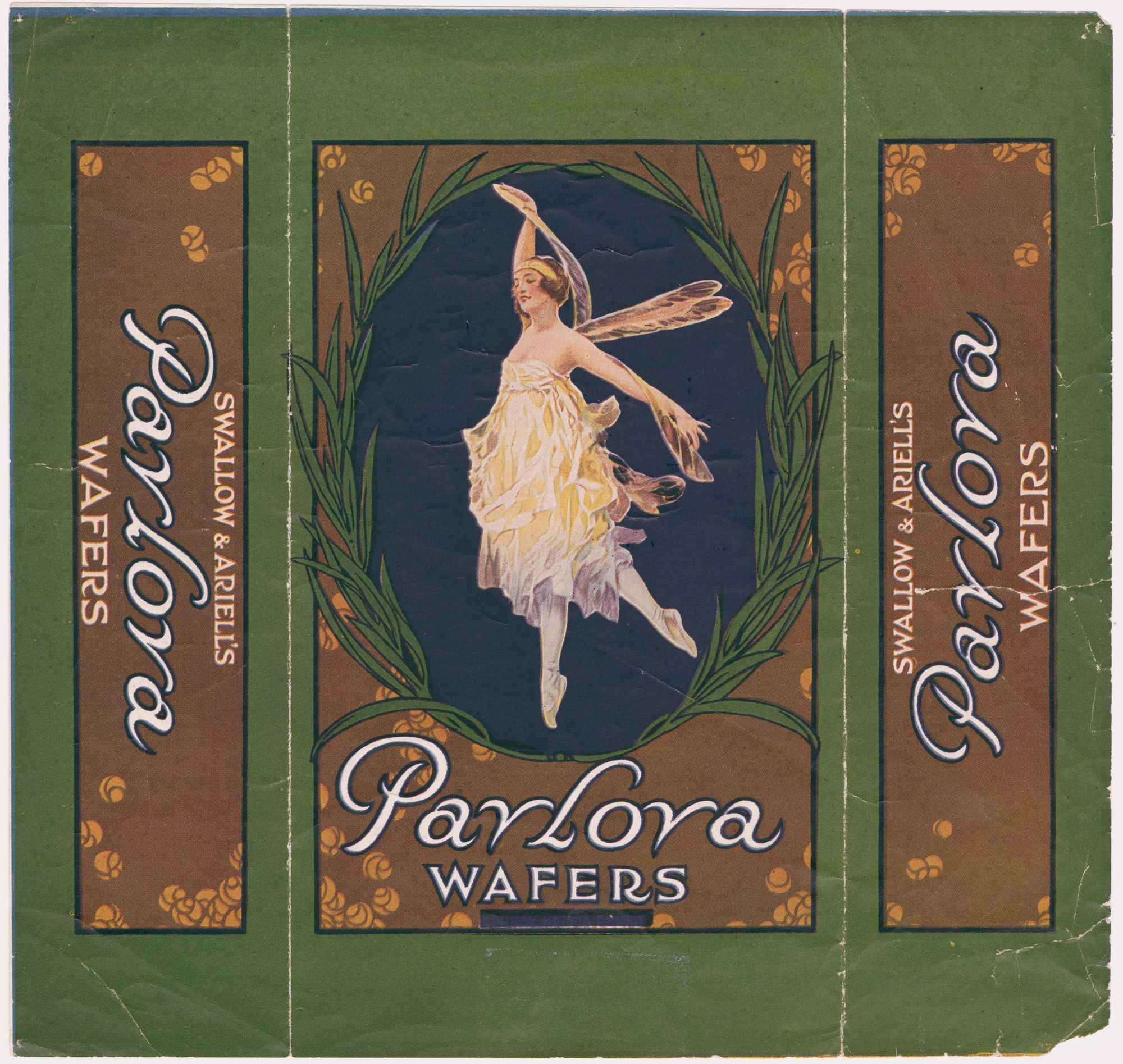
The influence of mass media and technological change in the roaring 1920s saw performers transform into powerful brands. Their star appeal was used to endorse commercial products and connect with consumers.
For Pavlova’s Australian tours, the nation's largest confectionery company at the time, MacRobertson Ltd, sold chocolates presented in a limited-edition box. Known colloquially as the 'Anna Pavlova specials', these were sold at theatres and local sweet stores during her tours. Fans could even leave their purchased chocolates at the theatre box office for Pavlova to sign.

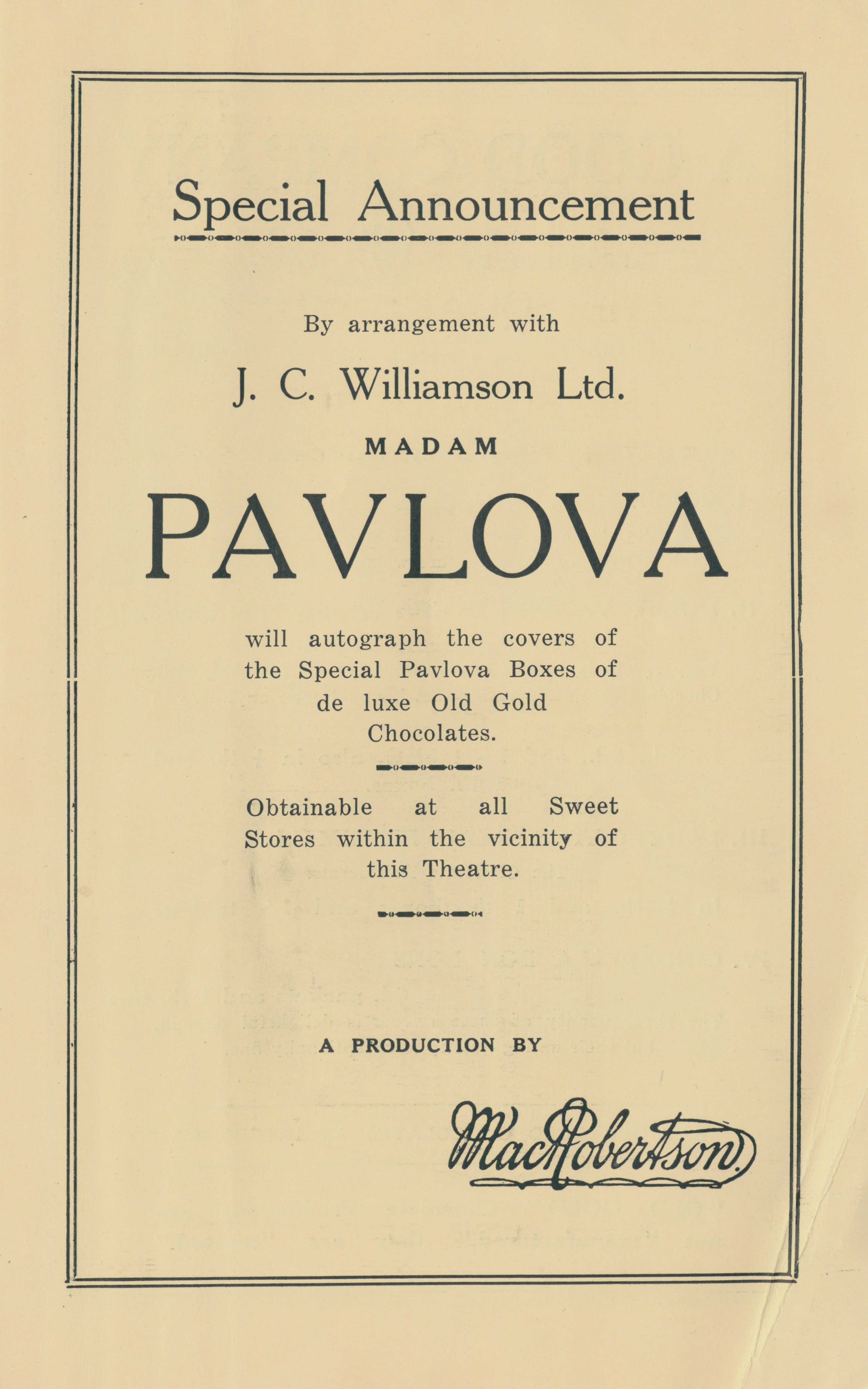
Advertisement for Special Pavlova Boxes of de luxe Old Gold Chocolates, c.1929
Advertisement for Special Pavlova Boxes of de luxe Old Gold Chocolates, c.1929
The chocolate box became a tangible memento of Pavlova's fleeting tours and an example of collaborations between visiting stars and local brands. Similar arrangements continue today with brand collaborations and merchandise sold by pop stars and other internationally renowned performers.

Grand Opera Diva
Toti Dal Monte and the Melba-Williamson Grand Opera Company

Nellie Melba, Melbourne's own opera diva, wielded her power behind the scenes with J.C. Williamson Ltd to present the best operatic performers to Australian audiences. Having established an illustrious career abroad, Melba partnered with Williamson's for three Grand Opera Seasons over 15 years in 1911, 1924 and 1928. This collaboration was one of the most extravagant enterprises in Australian entertainment in the early 20th century.

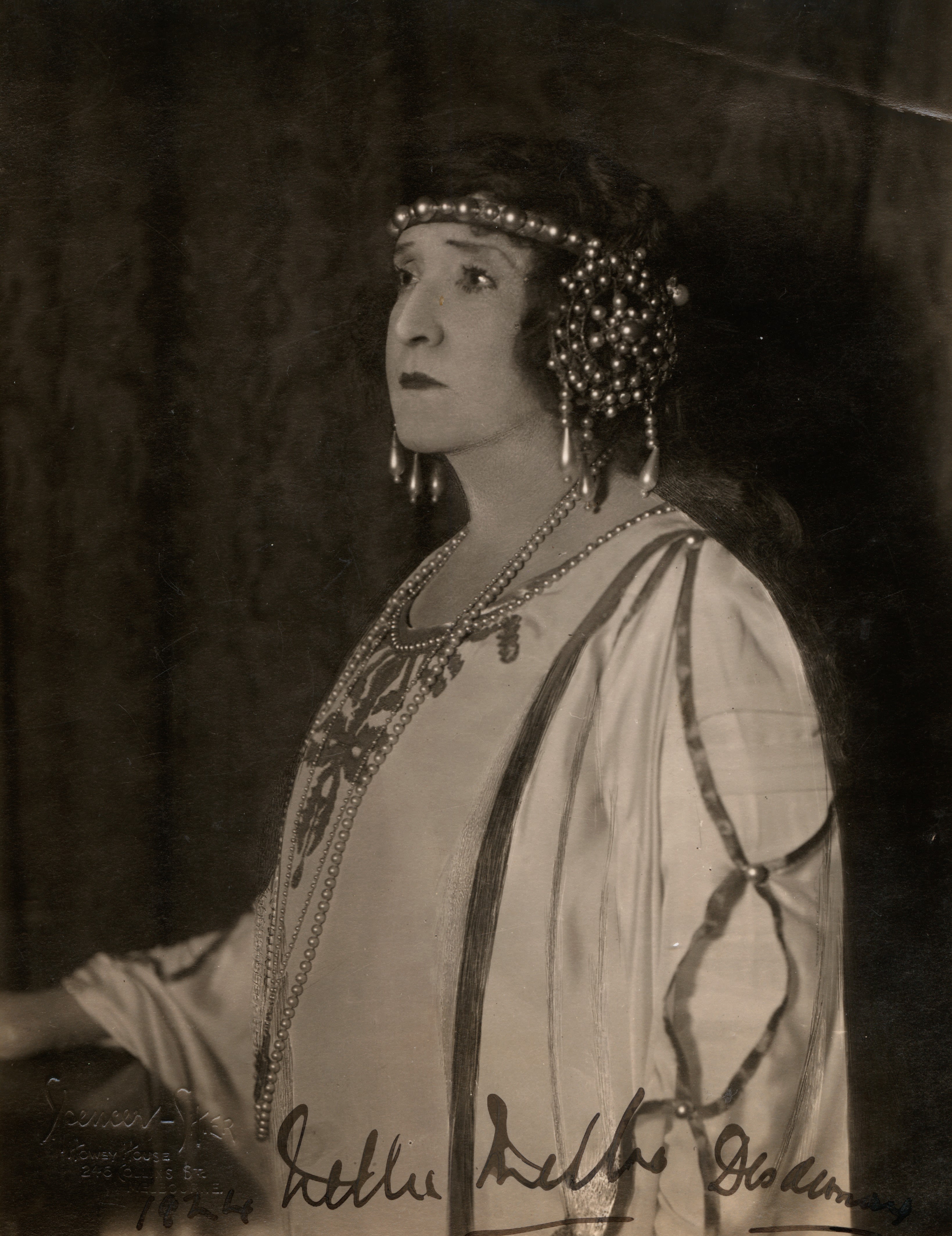
Dame Nellie Melba as Desdemona in 'Otello', 1924
Dame Nellie Melba as Desdemona in 'Otello', 1924
Referred to in the press as 'Dame Nellie Melba, producer!', her international status secured some of Europe's best performers who travelled the extraordinary distance to Australia to perform as principals in the company.
'Dame Nellie Melba and the Williamson firm have done a great service to this country in their present venture; and it is good to know that their efforts in the cause of Australian artistic development have met with remarkable success.'
For the 1924 season, Melba and director Nevin Tait travelled to the opera capitals of Europe including Milan, Rome, Paris, Madrid, Vienna, and Naples, to recruit for the company. They selected early career Italian prima donnas who were equipped to perform both signature repertoire and new productions. Among those chosen was emerging star Signorina Toti Dal Monte.

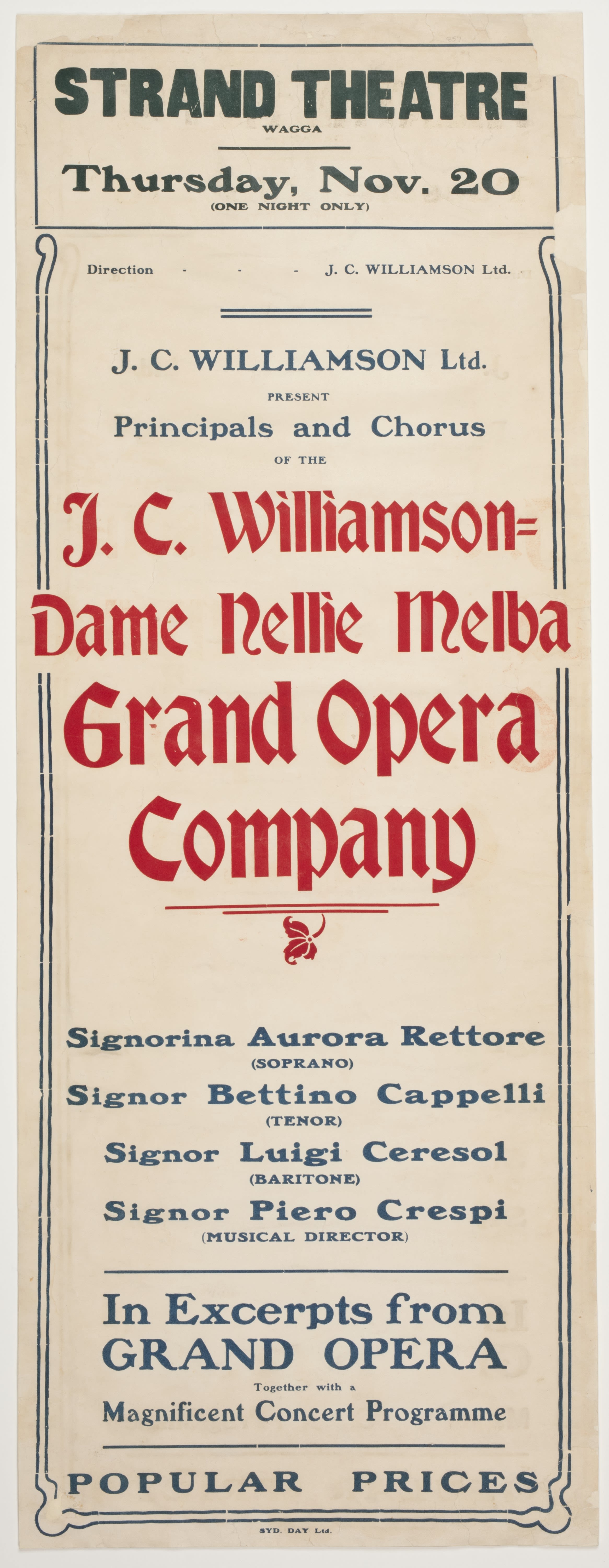
Poster for Williamson-Melba Grand Opera Company, Wagga Wagga, 1924
Poster for Williamson-Melba Grand Opera Company, Wagga Wagga, 1924

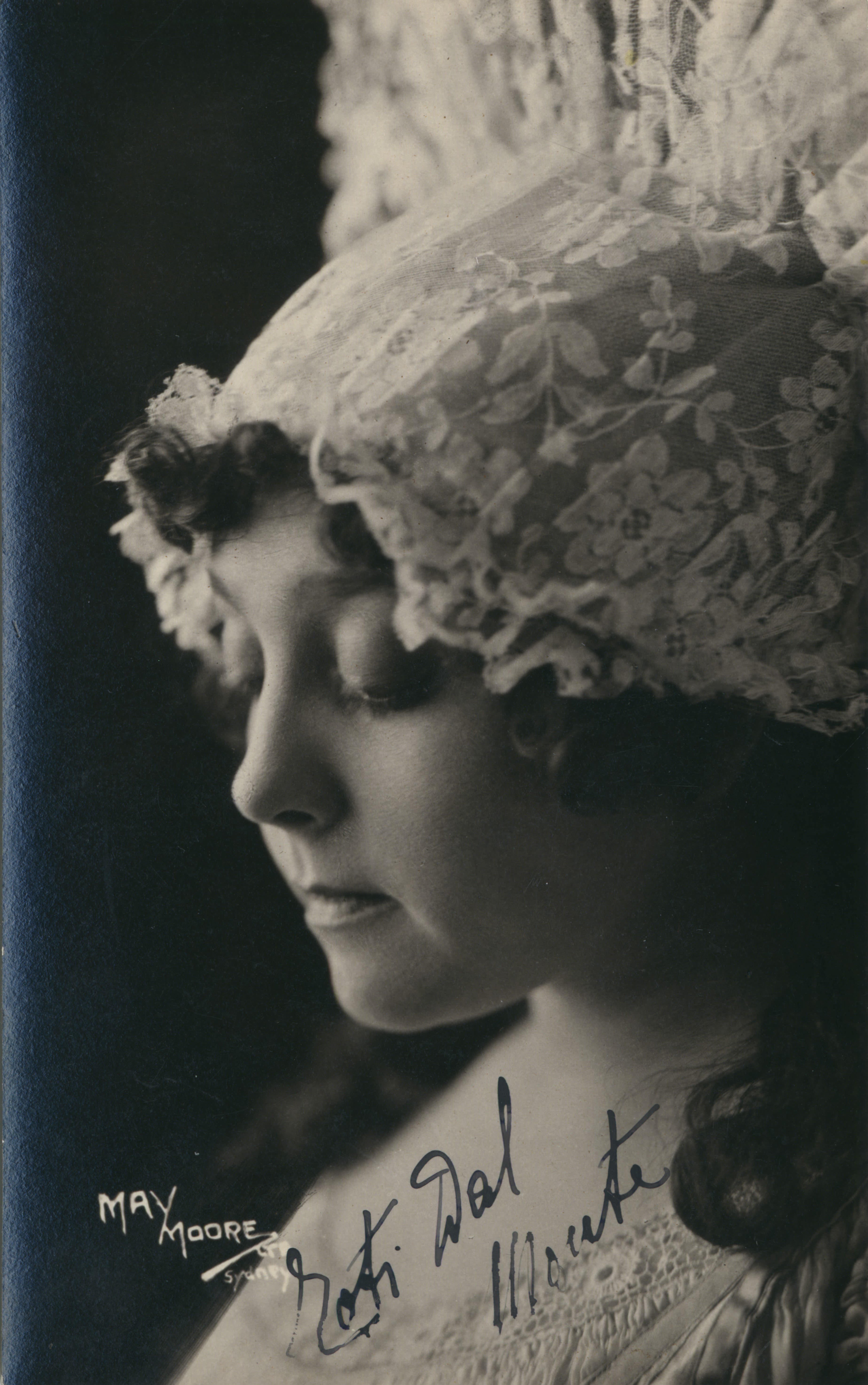

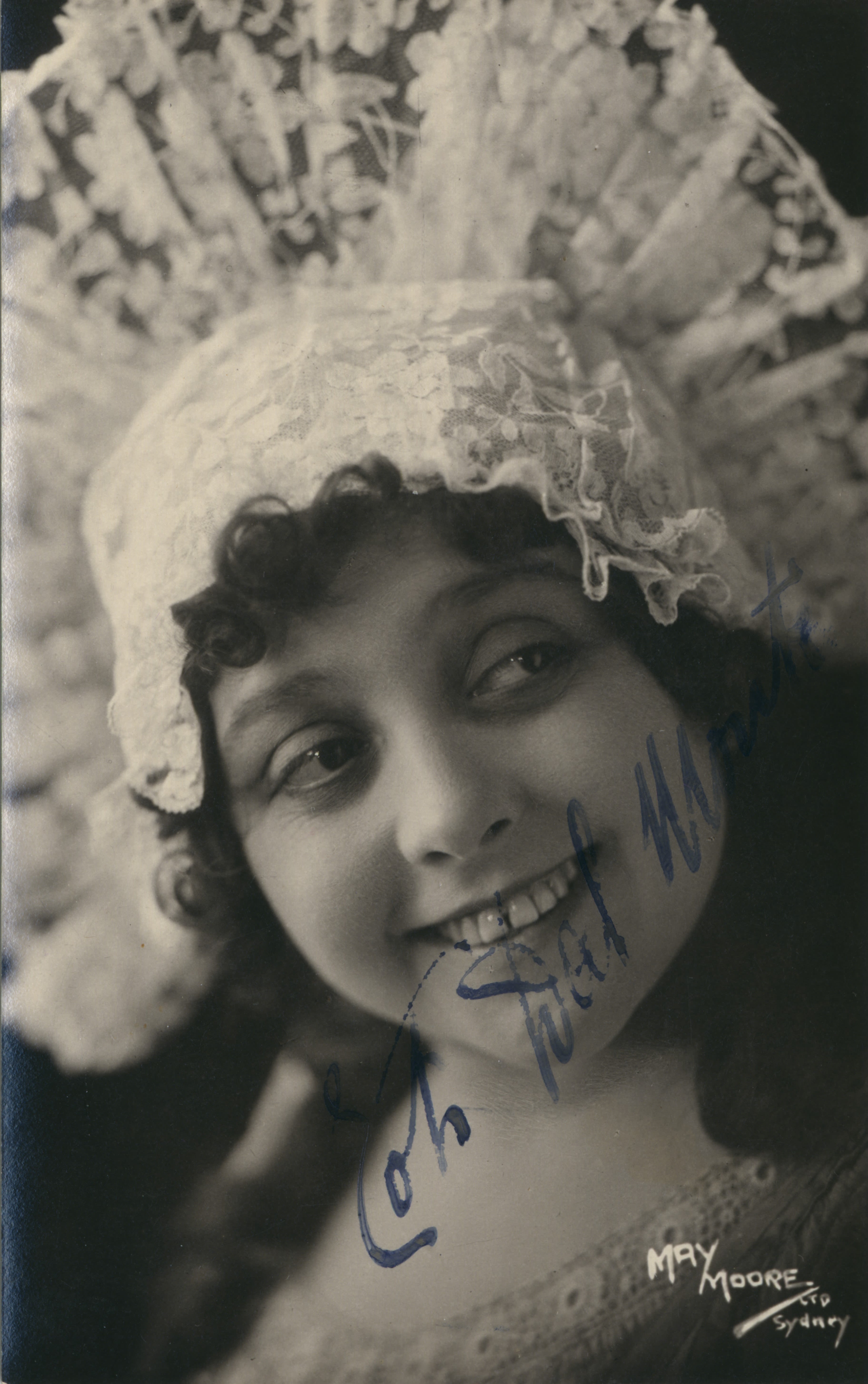

Toti Dal Monte in 'La Sonnambula', 1924
Toti Dal Monte in 'La Sonnambula', 1924
Toti Dal Monte in 'La Sonnambula', 1924
Toti Dal Monte in 'La Sonnambula', 1924

Toti Dal Monte in 'La Sonnambula', 1924
Toti Dal Monte in 'La Sonnambula', 1924
Toti Dal Monte in 'La Sonnambula', 1924
Toti Dal Monte in 'La Sonnambula', 1924

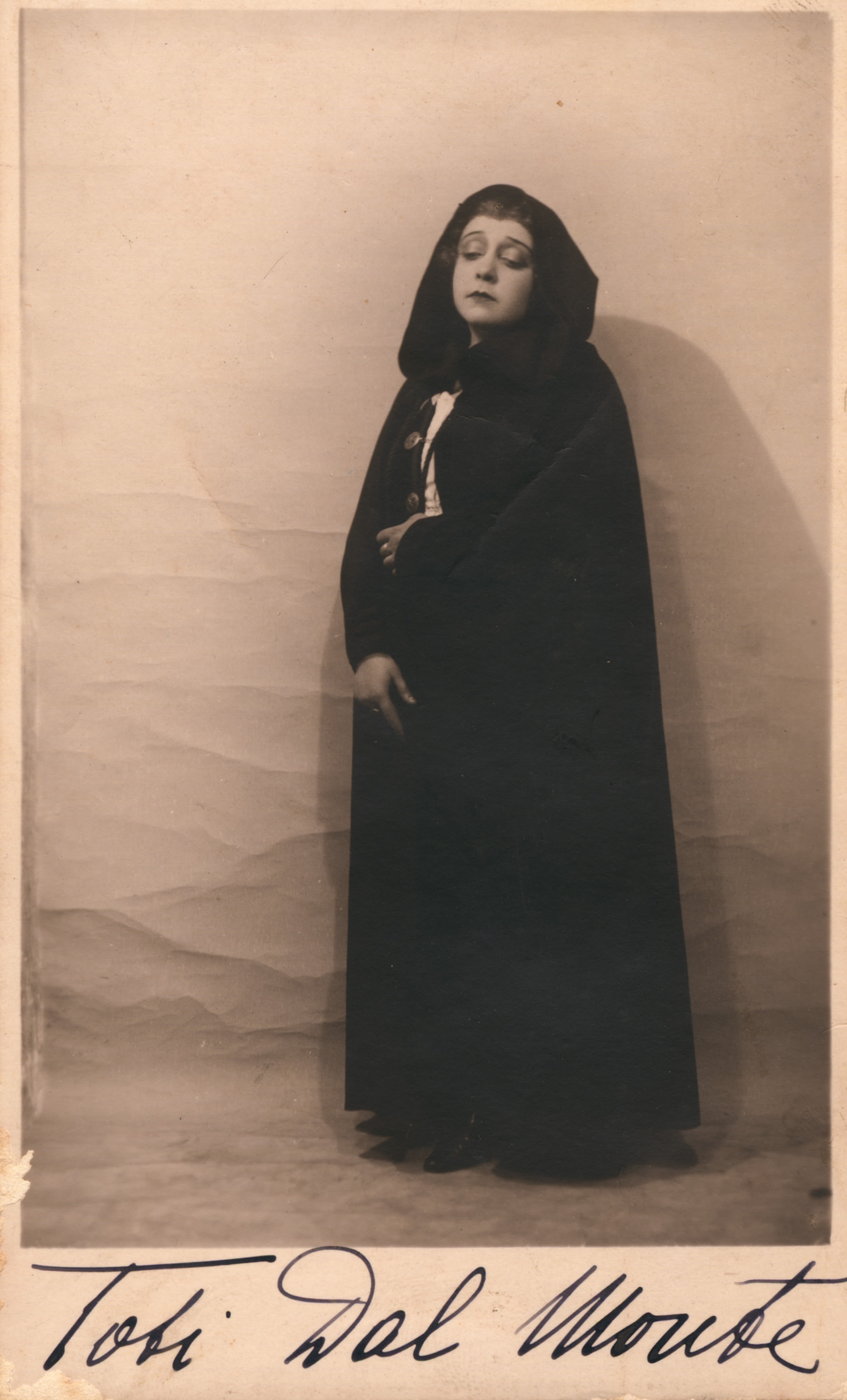
Toti Dal Monte, 1924
Toti Dal Monte, 1924
Magnificent Monte
The young coloratura soprano, born Antonietta Meneghel (1893–1975), studied singing at the Naples Conservatory before making a successful debut at Milan's La Scala in 1923. Before her first performances in London and Paris, the same year, Toti Dal Monte signed with the Melba-Williamson company.

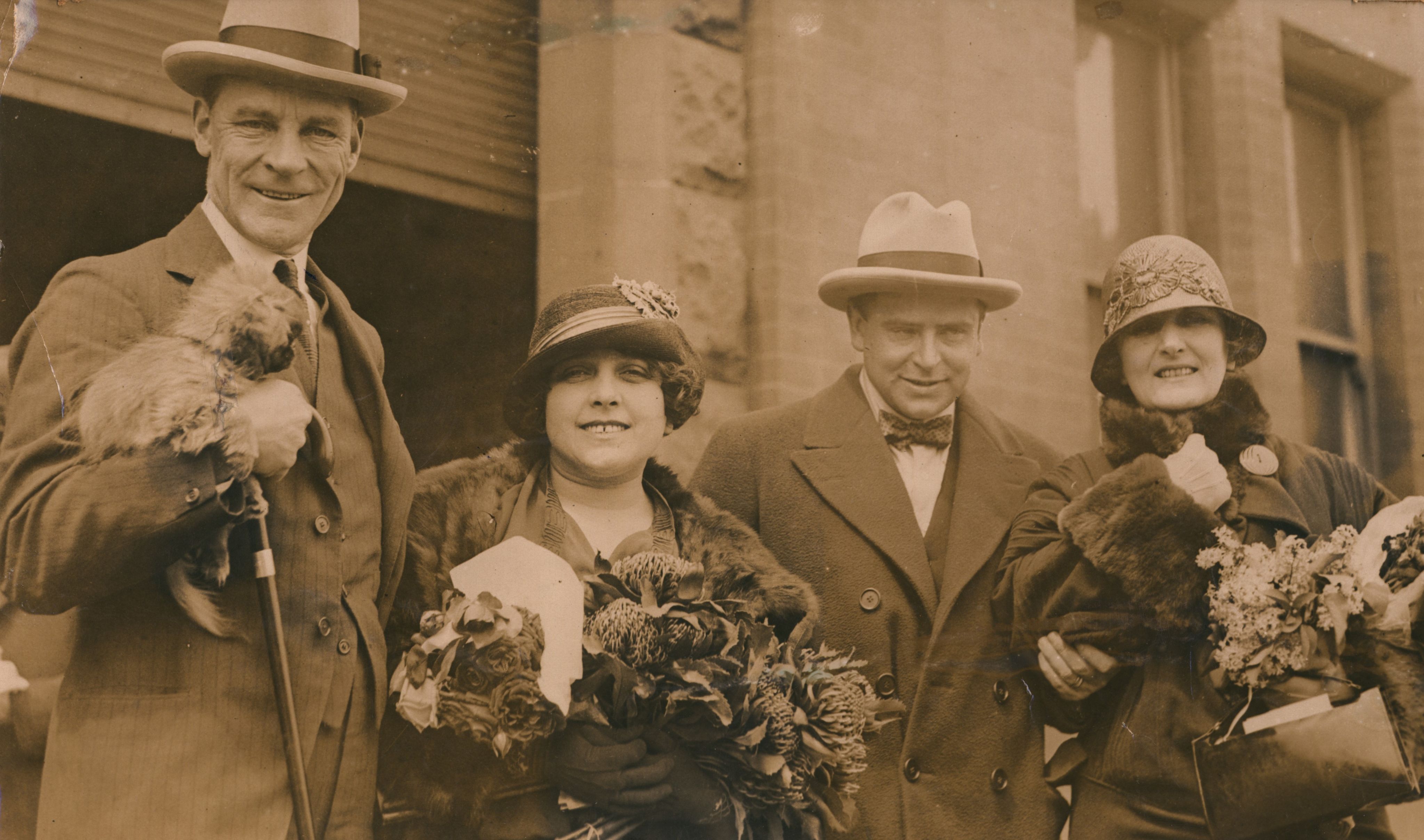
E.J. Tait (left) and Toti Dal Monte, c.1928
E.J. Tait (left) and Toti Dal Monte, c.1928
The 1924 season opened at His Majesty’s Theatre in Melbourne, where Melba introduced the young singer to Australian audiences. Dal Monte's performance of the mad scene in Lucia Di Lammermoor – a role closely associated with Melba – was met with triumphant applause on opening night.
'I am a proud woman tonight… because it is in a little measure through me that this great artist has come here.'
The Italian diva's newly acquired stardom in Australia was attributed to her vocal prowess, dramatic performances, and charming personality. She made a name for herself in performances of Gaetano Donizetti’s La Fille du Régiment (The Daughter of the Regiment) and Vincenzo Bellini’s La Sonnambula.
'The role which takes… the most out of me is Sonnambula. When I sing I am actually the person for the time being. I live the role, so to speak.'
Dal Monte was paid over £148 per performance during the 1924 season, an amount that eclipsed the salaries of all other performers in the company. By the 1928 season, Dal Monte received £675 per week, which reflected her star status.

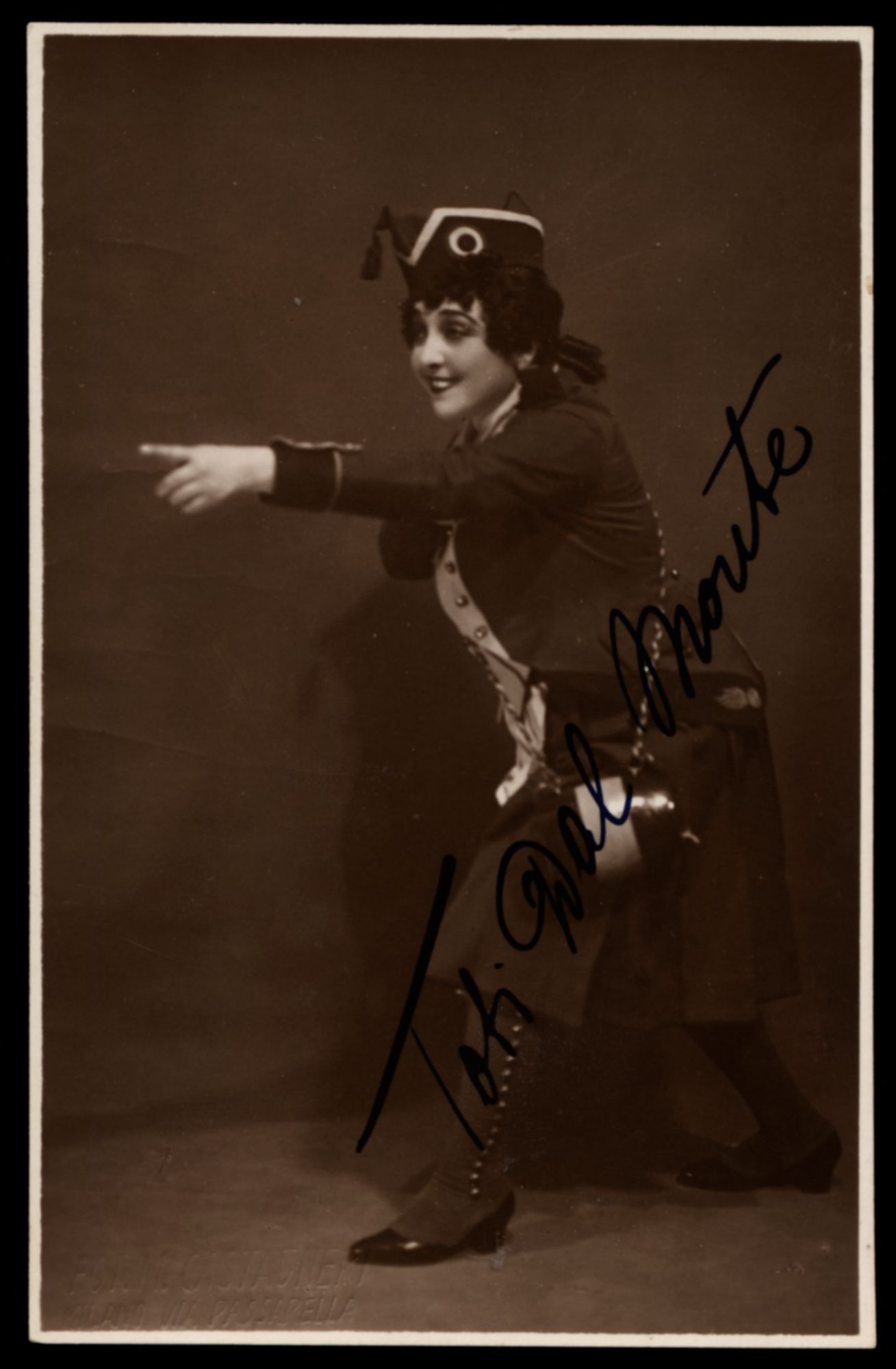
Toti Dal Monte in 'La Fille du Régiment', c.1924
Toti Dal Monte in 'La Fille du Régiment', c.1924
The success of the Melba-Williamson opera seasons in the 1920s can be attributed to both Dal Monte's rising stardom, and Melba's unparalleled experience and global fame. Dal Monte became Melba's protégé and their relationship was marked by mutual adoration and respect. They would attend each other's performances and throw bouquets on stage during standing ovations.

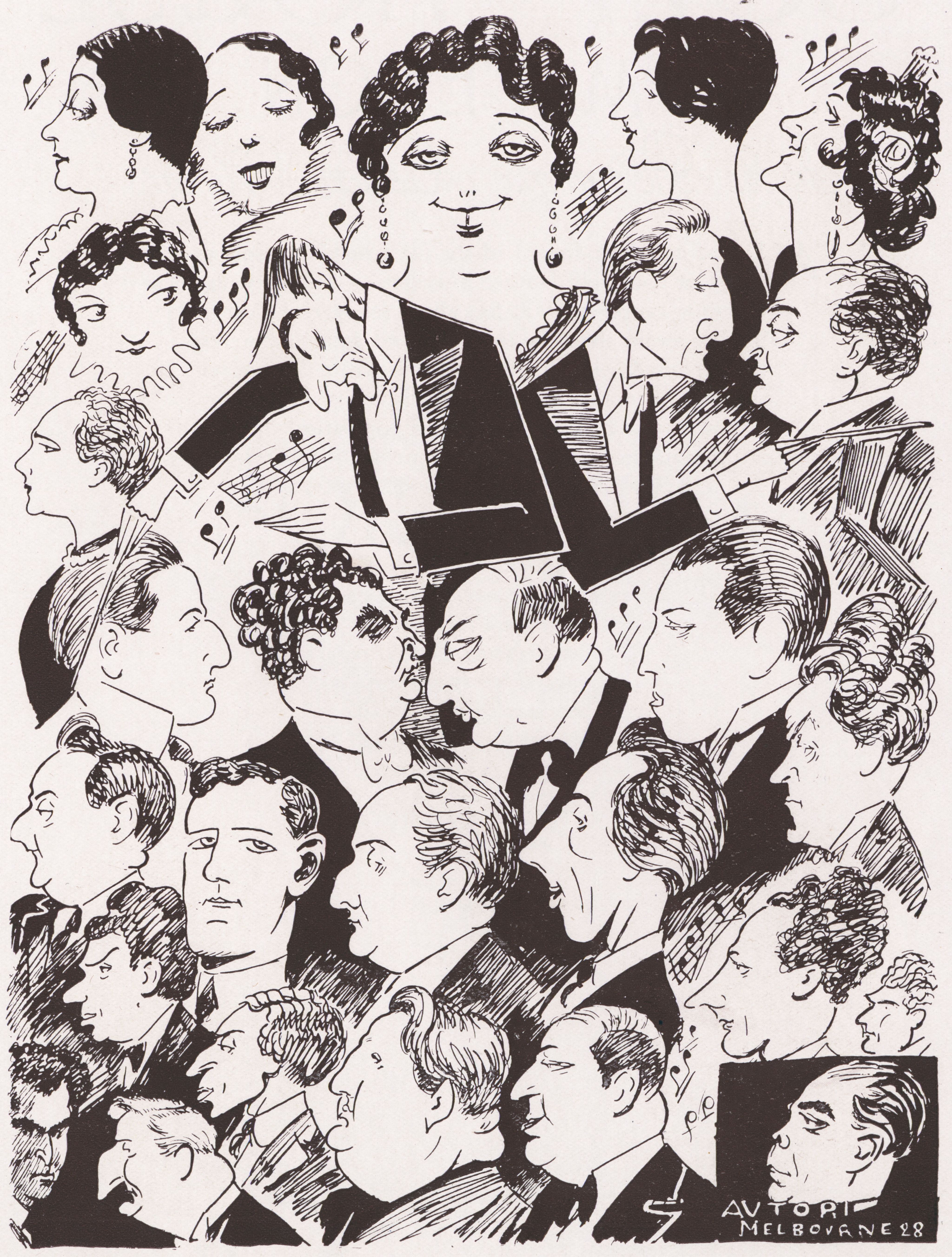
The Grandeur
As well as impressive performers, the Melba-Williamson Grand Opera Company presented the finest scenery and costumes on stages around Australia and New Zealand. The company toured to all major cities, but also smaller towns including Wagga Wagga and Toowoomba.
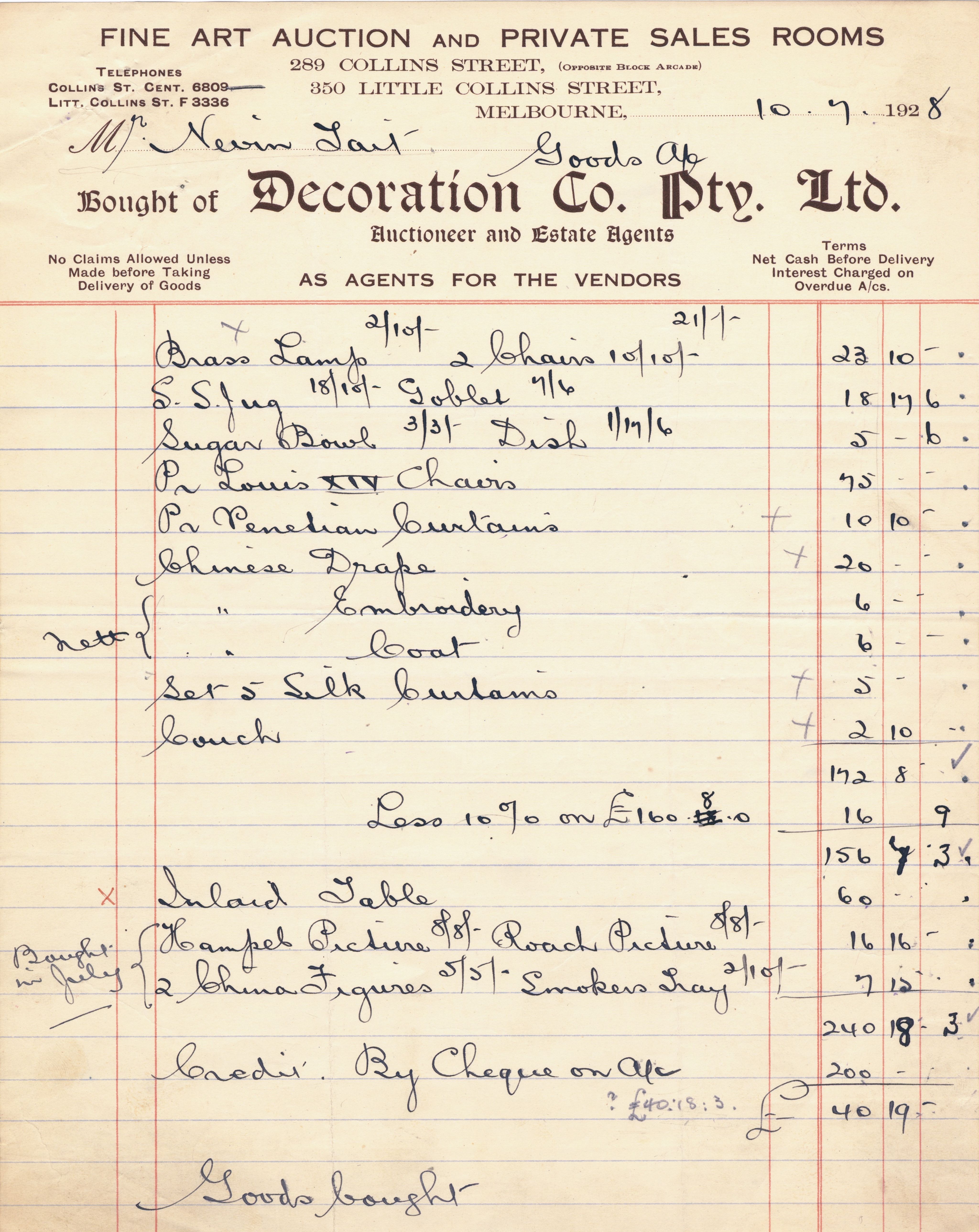
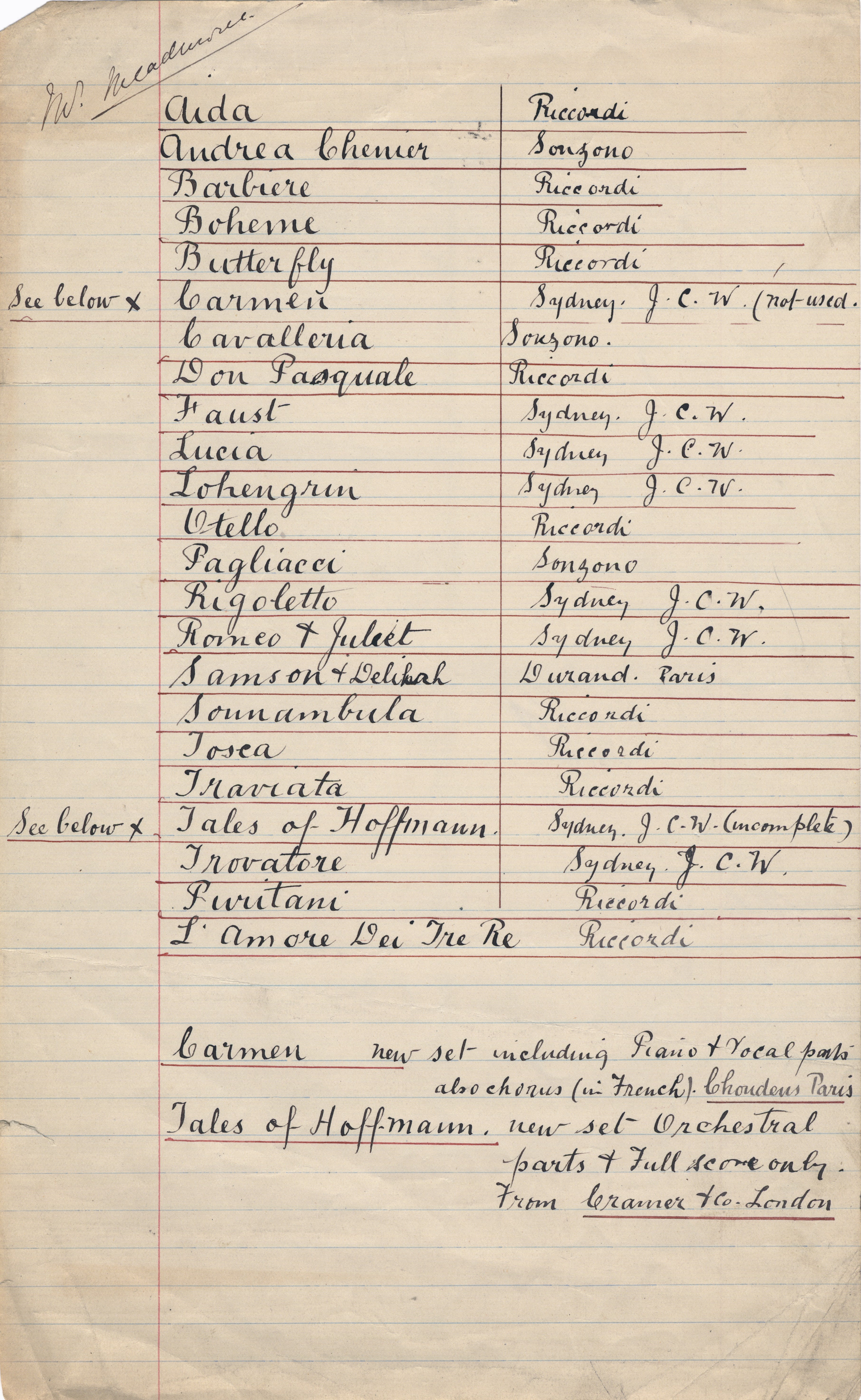
Financial and business documents in the J.C. Williamson Collection illuminate the costs associated with staging opera seasons of this calibre. The 1911 season cost at least £55,000, and exceeded £250,000 by the final tour in 1928. Melba received almost half of the profits for the 1911 and 1924 seasons.
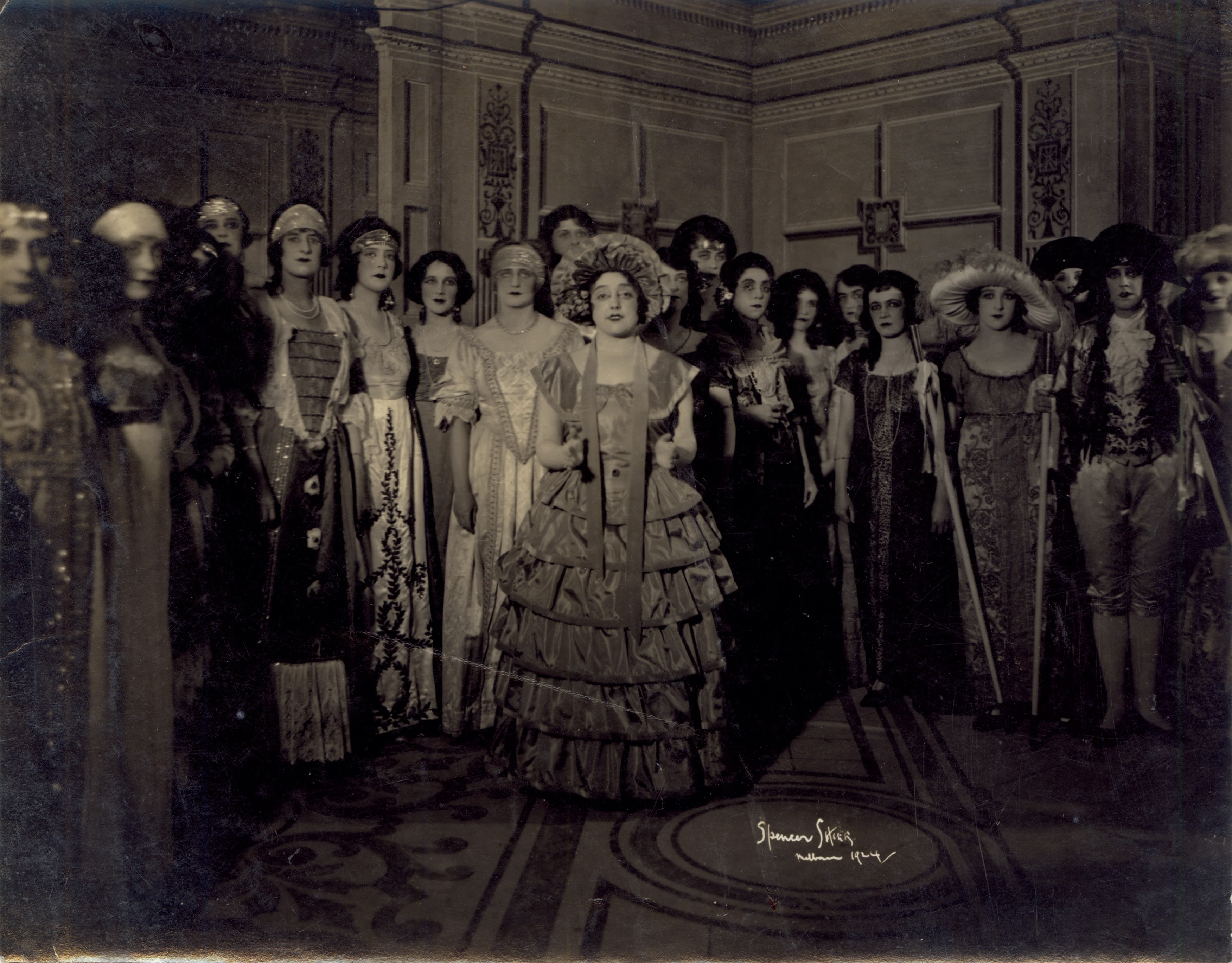
In 1924, the properties showcased on the seven-month tour were all transported from Italy to Australia. They included 3,000 kilograms of jewellery, plants, carts, vases, and instruments. A total of 1,569 costumes were made by the prestigious Italian fashion house Sartoria Teatrale Chiappa, the designers for La Scala's productions. These costumes were seen on stage for operas including the Australian premiere of Umberto Giordano’s Andrea Chénier, Jacques Offenbach's The Tales of Hoffmann, and special appearances by Melba performing her celebrated excerpts from La Bohème, Faust and Otello.


Titina the Tailless Toy Terrier
Toti Dal Monte was adored by Australian audiences, both on and off the stage. Her beloved dog and mascot, a tailless toy English terrier named Titina, became a crowd and company favourite during the 1928 season.
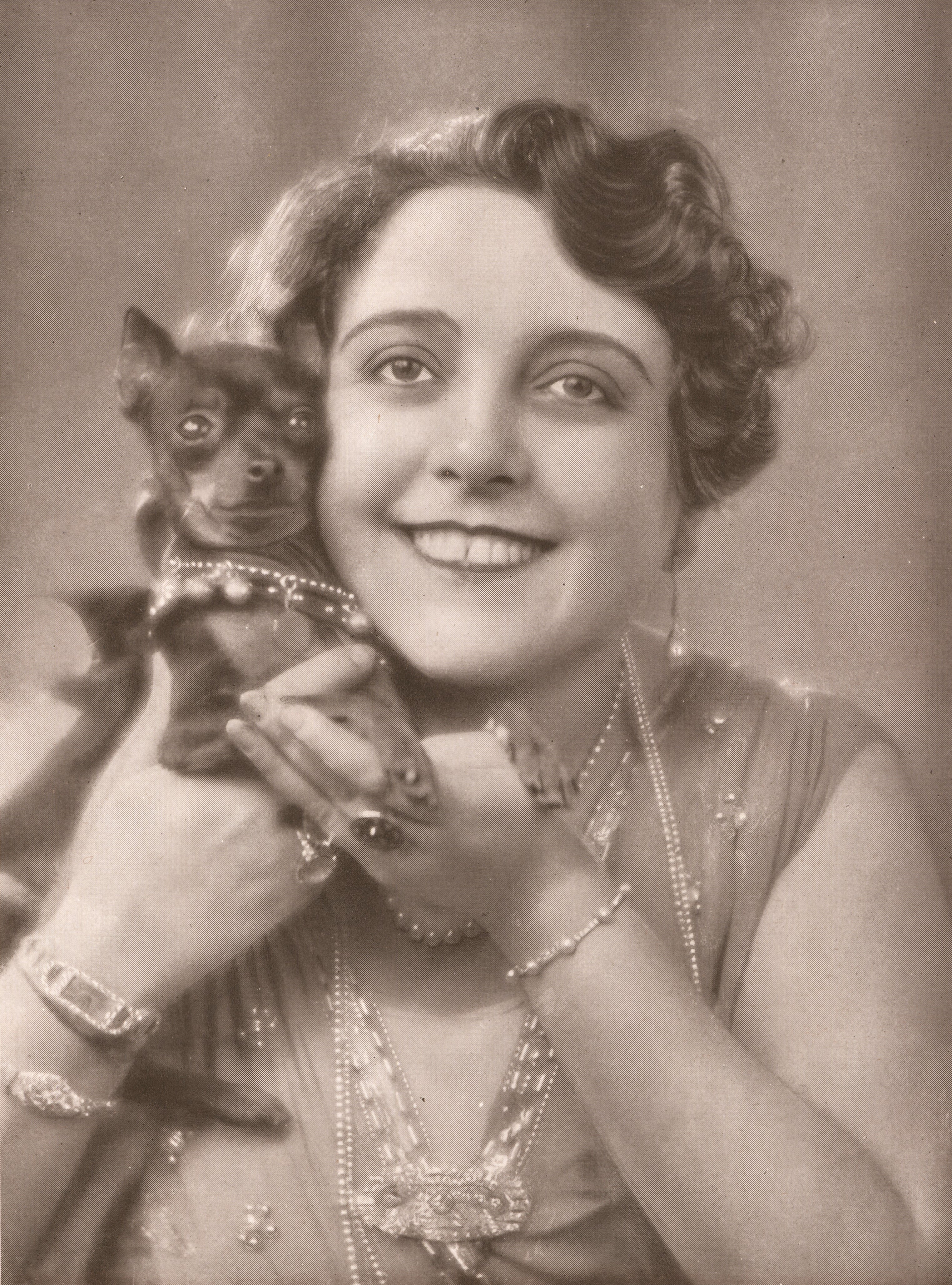
Cherished by the cast and crew, Titina was made an unofficial member of the company and resided at His Majesty’s Theatre in Melbourne. Titina caused delightful chaos in the wardrobe department and, according to humorous newspaper reports, was 'ready to take his part in The Daughter of the Regiment or The Barber of Seville.'

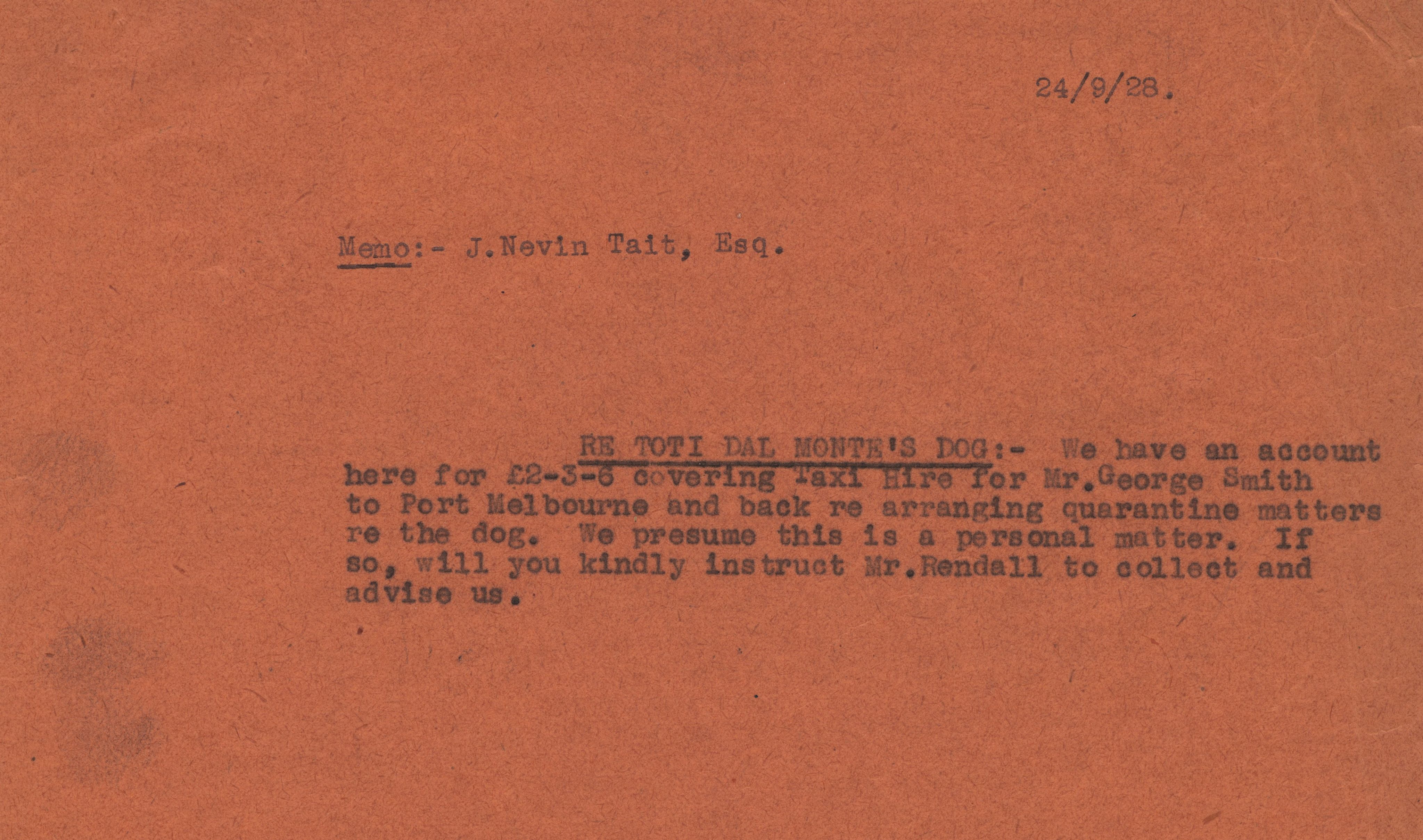
Memo regarding travel and quarantine arrangements for Toti Dal Monte's dog, 1928
Memo regarding travel and quarantine arrangements for Toti Dal Monte's dog, 1928
'There are thousands of other toy dogs in Australia who would give all they own for a slice of the good luck that has fallen to Titina.'

Toti Dal Monte and Titina, 1928
Toti Dal Monte and Titina, 1928


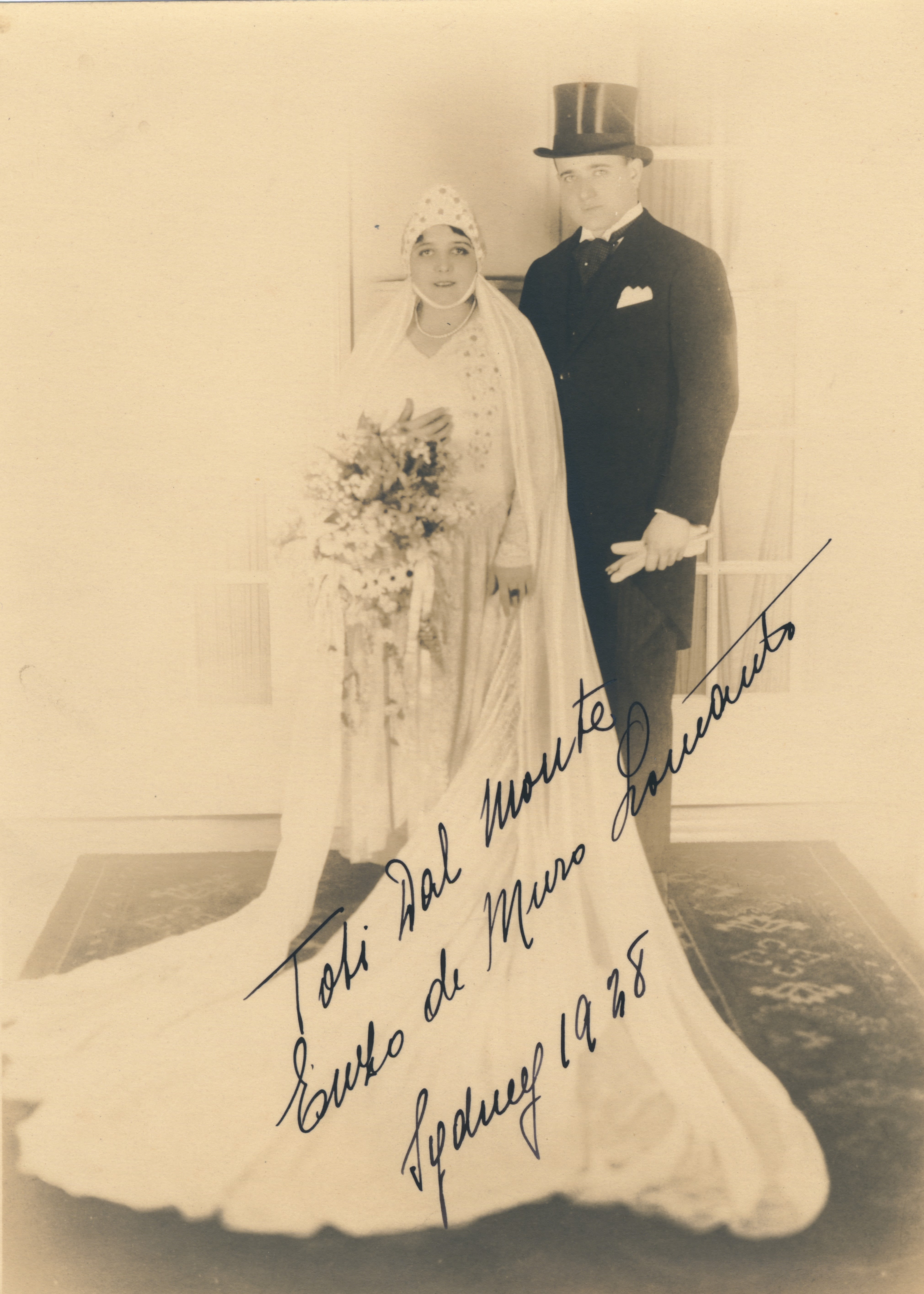
Toti Dal Monte and Enzo de Muro Lomato, Sydney, 1928
Toti Dal Monte and Enzo de Muro Lomato, Sydney, 1928
The Marriage of the Season
Dal Monte's established stardom in Australia was confirmed through the public's dramatic response to her wedding. On 23 August 1928, crowds gathered in Sydney to catch a glimpse of the diva's marriage to fellow principal artist, tenor Enzo de Muro Lomanto. The couple's romance had bloomed on the long voyage from Europe to Australia.
Amid the highly acclaimed opera season, the ceremony took place opposite Hyde Park at St Mary’s Cathedral. Reports claimed that 25,000 fans waited outside the church for over two hours before the bride was due to arrive, and between 4,000 to 6,000 wedding guests congregated inside the cathedral doors. The Chief Commissioner of Police established a large police presence to direct traffic, and barricades were erected for crowd control.
The prima donna arrived in a wedding gown constructed from over 14-metres of 'old and rare' Chantilly lace, with a five-metre train trailing behind. Her ninon headdress referenced the costume she wore as Marguerite in Faust.
'For one instant she glimpsed 25,000 heads, hats, and handkerchiefs fluttering and swirling down upon her; then she fled up the narrow carpet.'
The wedding was the event of the opera season. The matinee performance of Lohengrin was rescheduled to allow the artists to attend, and Nevin Tait walked the bride down the aisle. The wedding party included Charles Tait and fellow prima donna Lina Scavizzi. The ceremony was broadcast on radio stations 3LO and 2FC, which allowed listeners all over the country to experience the momentous occasion.
During her time in Australia, Toti Dal Monte's private and public life became intertwined. She was a sensation of the opera stage and an early 20th-century example of celebrity worship by fans across Australia.
'The first rule in opera is the first rule in life: see to everything yourself.'

CREDITS
This project has been made possible through generous philanthropic support of the living descendants of the Tait brothers. We gratefully acknowledge their unwavering dedication in making the J.C. Williamson Collection publicly accessible to inspire future generations.
The Australian Performing Arts Collection thanks the following donors: Mr Charles Tegner, Mr Nigel Tait, Mrs Sally Bell, Ms Isla Baring OAM, Sandra Forbes, and Mrs Caroline Shaw.
We also extend our thanks to Ann Seddon and Isla Shaw.
With special thanks to the following Collections and Exhibitions team members: Margot Anderson, Sandra Bruce, Carmela Lonetti, Loren Maganja, Margaret Marshall, and Fiona Wilson.
The exhibition, DIVA, is now showing at the Australian Museum of Performing Arts (AMPA). Find out more and book tickets here.
All items are from the Australian Performing Arts Collection, Arts Centre Melbourne.

Her Majesty's Theatre, Melbourne, 1963. Photograph by Laurie Richards. Gift of J.C. Williamson Theatres Ltd, 1978.
Her Majesty's Theatre, Melbourne, 1963. Photograph by Laurie Richards. Gift of J.C. Williamson Theatres Ltd, 1978.
J.C. Williamson, c.1874, in a carte-de-visite album of theatrical performers, c.1860-70s. Purchased, 1992.
J.C. Williamson, c.1874, in a carte-de-visite album of theatrical performers, c.1860-70s. Purchased, 1992.
Lady Viola Tait (née Wilson) as Josephine in 'H.M.S. Pinafore', c.1940. Photograph by S.J. Hood. Gift of Isla Baring, Ann Seddon and Sally Bell, 2006.
Lady Viola Tait (née Wilson) as Josephine in 'H.M.S. Pinafore', c.1940. Photograph by S.J. Hood. Gift of Isla Baring, Ann Seddon and Sally Bell, 2006.

Maggie Moore, c.1874, in a carte-de-visite album of theatrical performers, c.1860-70s. Purchased, 1992.
Maggie Moore, c.1874, in a carte-de-visite album of theatrical performers, c.1860-70s. Purchased, 1992.

Illustration of Maggie Moore and J.C. Williamson as Lizzie and John Stofel in 'Struck Oil', Australasian Sketcher, 1874. Purchased, 1991.
Newspaper illustration of Maggie Moore and J.C. Williamson in 'Struck Oil', 1874. Purchased, 1991.

Cabinet card featuring Maggie Moore, c.1880. Photograph by Wrigglesworth & Binns. Gift of Sally Bell, 2021.
Cabinet card featuring Maggie Moore, c.1880. Photograph by Wrigglesworth & Binns. Gift of Sally Bell, 2021.
Illustration of the Theatre Royal, Melbourne, 1875. Transferred from the Dennis Wolanski Library, Sydney Opera House, 1997.
Illustration of the Theatre Royal, Melbourne, 1875. Transferred from the Dennis Wolanski Library, Sydney Opera House, 1997.
Programme for 'Struck Oil', Theatre Royal, Melbourne, 1874, in a scrapbook compiled by William Gardiner, 1859-1937. Gift of Isla Baring, Ann Seddon and Sally Bell, 2006.
Programme for 'Struck Oil', Theatre Royal, Melbourne, 1874, in a scrapbook compiled by William Gardiner, 1859-1937. Gift of Isla Baring, Ann Seddon and Sally Bell, 2006.

Trading card featuring Maggie Moore, c.1878. Gift of Isla Baring, Ann Seddon and Sally Bell, 2006.
Trading card featuring Maggie Moore, c.1878. Gift of Isla Baring, Ann Seddon and Sally Bell, 2006.

Trading card featuring J.C. Williamson, c.1878. Gift of Isla Baring, Ann Seddon and Sally Bell, 2006.
Trading card featuring J.C. Williamson, c.1878. Gift of Isla Baring, Ann Seddon and Sally Bell, 2006.

Handwritten script for 'Struck Oil', 1874. Gift of Sally Bell, 2021.
Handwritten script for 'Struck Oil', 1874. Gift of Sally Bell, 2021.

Handwritten scripts for 'Struck Oil', Act I and II, 1874. Gift of Sally Bell, 2021.
Handwritten scripts for 'Struck Oil', Act I and II, 1874. Gift of Sally Bell, 2021.

Maggie Moore, 1891, in an album depicting performers associated with J.C. Williamson Ltd, c.1895. Gift of Lady Viola Tait, 1979.
Maggie Moore, 1891, in an album depicting performers associated with J.C. Williamson Ltd, c.1895. Gift of Lady Viola Tait, 1979.
Programme for 'Little Jack Sheppard', The Maggie Moore Dramatic and Burlesque Company, 1894. Gift of Sally Bell, 2021.
Programme for 'Little Jack Sheppard', The Maggie Moore Dramatic and Burlesque Company, 1894. Gift of Sally Bell, 2021.

Maggie Moore, c.1890, from an album depicting performers associated with J.C. Williamson Ltd, c.1895. Gift of Lady Viola Tait, 1979.
Maggie Moore, c.1890, from an album depicting performers associated with J.C. Williamson Ltd, c.1895. Gift of Lady Viola Tait, 1979.

Programme for 'Struck Oil', Her Majesty's Theatre, Melbourne, 1893. Gift of Frank Van Straten, 1980.
Programme for 'Struck Oil', Her Majesty's Theatre, Melbourne, 1893. Gift of Frank Van Straten, 1980.
Letter from J.C. Williamson to Lynch and McDonald, 1894. Gift of Ann Seddon, Isla Baring and Sally Bell, 2006.
Letter from J.C. Williamson to Lynch and McDonald, 1894. Gift of Ann Seddon, Isla Baring and Sally Bell, 2006.

Programme for 'Struck Oil', Gaiety Theatre, Melbourne, 1902. Gift of Ann Seddon, Isla Baring and Sally Bell, 2006.
Programme for 'Struck Oil', Gaiety Theatre, Melbourne, 1902. Gift of Ann Seddon, Isla Baring and Sally Bell, 2006.

Programme for 'Struck Oil', 1909. Gift of Mr and Mrs Coleman, 1984.
Programme for 'Struck Oil', 1909. Gift of Mr and Mrs Coleman, 1984.

Sarah Bernhardt as Cleopatra, 1891, from an album depicting performers associated with J.C. Williamson Ltd, c.1895. Gift of Lady Viola Tait, 1979.
Sarah Bernhardt as Cleopatra, 1891, from an album depicting performers associated with J.C. Williamson Ltd, c.1895. Gift of Lady Viola Tait, 1979.

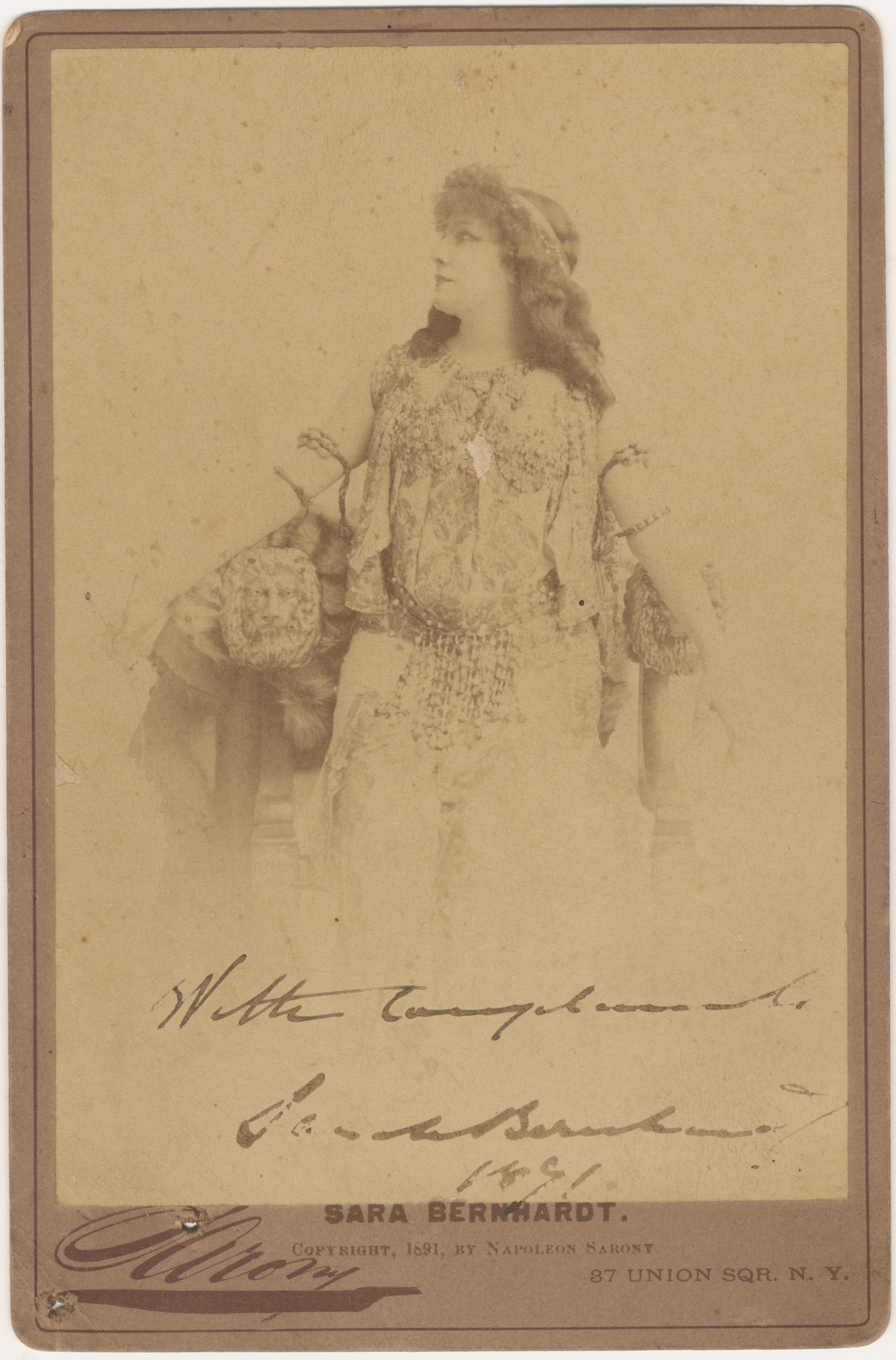
Cabinet card of Sarah Bernhardt as Cleopatra, 1891. Photograph by Napoleon Sabony, New York. Gift of the Estate of Christopher Wood, 2016.
Cabinet card of Sarah Bernhardt as Cleopatra, 1891. Photograph by Napoleon Sabony, New York. Gift of the Estate of Christopher Wood, 2016.

Cigarette card featuring Sarah Bernhardt, c.1890. Gift of Jack Rogerson, 1992.
Cigarette card featuring Sarah Bernhardt, c.1890. Gift of Jack Rogerson, 1992.
Postcard of Sarah Bernhardt as Hamlet, c.1899. Rotary Photographic Co. Ltd. Purchased, 1993.
Postcard of Sarah Bernhardt as Hamlet, c.1899. Rotary Photographic Co. Ltd. Purchased, 1993.
Postcard of Sarah Bernhardt, c.1885. Photograph by W. & D. Downey.
Postcard of Sarah Bernhardt, c.1885. Photograph by W. & D. Downey.
Postcard of Sarah Bernhardt, 1898. Rotary Photographic Co. Ltd. The Barrasford Family Collection, 1985.
Postcard of Sarah Bernhardt, 1898. Rotary Photographic Co. Ltd. The Barrasford Family Collection, 1985.

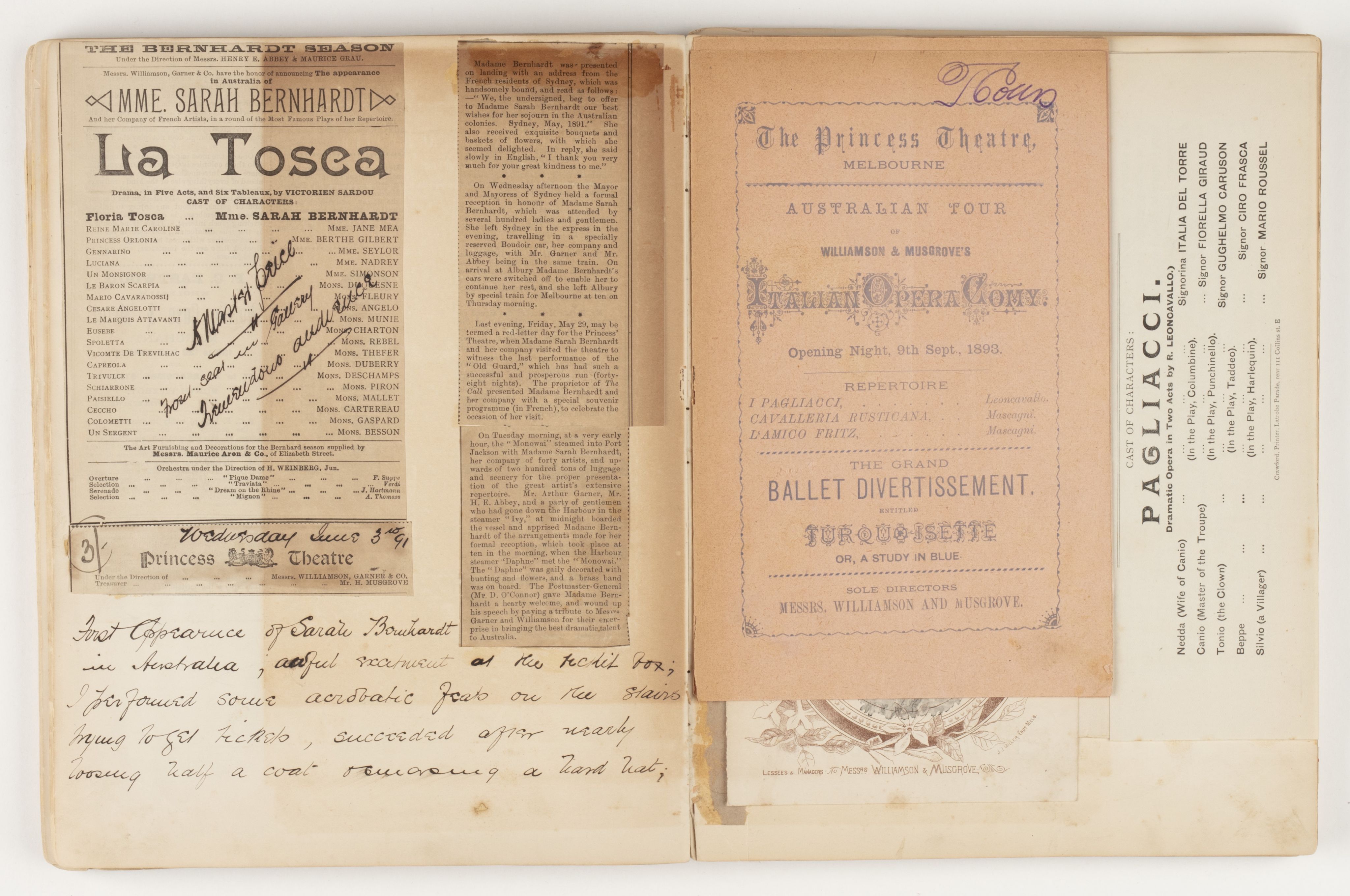
Scrapbook containing programmes and newspaper clippings relating to theatre productions, Melbourne, 1891-98. Gift of Isla Baring, Ann Seddon and Sally Bell, 2006.
Scrapbook containing programmes and newspaper clippings relating to theatre productions, Melbourne, 1891-98. Gift of Isla Baring, Ann Seddon and Sally Bell, 2006.

Sarah Bernhardt, 1891, in an album depicting performers associated with J.C. Williamson Ltd, c.1895. Gift of Lady Viola Tait, 1979.
Sarah Bernhardt, 1891, in an album depicting performers associated with J.C. Williamson Ltd, c.1895. Gift of Lady Viola Tait, 1979.
Collectable script for 'La Dame aux Camélias', The Bernhardt Edition, 1890. Published by F. Rullman, New York. Gift of Isla Baring, Ann Seddon and Sally Bell, 2006.
Collectable script for 'La Dame aux Camélias', The Bernhardt Edition, 1890. Published by F. Rullman, New York. Gift of Isla Baring, Ann Seddon and Sally Bell, 2006.

Cigarette card featuring Sarah Bernhardt as Cleopatra, 1891. Gift of Jack Rogerson, 1993.
Cigarette card featuring Sarah Bernhardt as Cleopatra, 1891. Gift of Jack Rogerson, 1993.

Anna Pavlova in costume for 'Une Soiree de Chopin', c.1926. Photograph by S. Andrew. Gift of The Australian Ballet, 1998.
Anna Pavlova in costume for 'Une Soiree de Chopin', c.1926. Photograph by S. Andrew. Gift of The Australian Ballet, 1998.
Obj.A

Programme for Anna Pavlova and the Ballet Russe, J.C. Williamson Ltd, 1926, in a scrapbook documenting the Anna Pavlova season. Gift of J.C. Williamson Theatres Ltd, 1978.
Programme for Anna Pavlova and the Ballet Russe, J.C. Williamson Ltd, 1926, in a scrapbook documenting the Anna Pavlova season. Gift of J.C. Williamson Theatres Ltd, 1978.
Card featuring Anna Pavlova and her Ballet Russe, c.1924. Gift of Mr Luciano Sita, 1989.
Card featuring Anna Pavlova and her Ballet Russe, c.1924. Gift of Mr Luciano Sita, 1989.
Anna Pavlova arriving at Spencer Street Station, 1926, in a scrapbook documenting the Anna Pavlova season. Gift of J.C. Williamson Theatres Ltd, 1978.
Anna Pavlova arriving at Spencer Street Station, 1926, in a scrapbook documenting the Anna Pavlova season. Gift of J.C. Williamson Theatres Ltd, 1978.

Postcard of Anna Pavlova in 'Giselle', 1926. Distributed by Rotophot Berlin. Gift of J.C. Williamson Theatres Ltd, 1978.
Anna Pavlova in Giselle, 1926

Anna Pavlova in 'Invitation to the Dance', c.1917. Photograph by S. Bocanegra. Gift of The Australian Ballet, 1998.
Anna Pavlova in 'Invitation to the Dance', c.1917. Photograph by S. Bocanegra. Gift of The Australian Ballet, 1998.

Flyer for 'The Incomparable Pavlova', 1926, in a scrapbook documenting the Anna Pavlova season. Gift of J.C. Williamson Theatres Ltd, 1978.
Flyer for 'The Incomparable Pavlova', 1926, in a scrapbook documenting the Anna Pavlova season. Gift of J.C. Williamson Theatres Ltd, 1978.

Anna Pavlova performing in 'Le Cygne' (The Dying Swan), c.1910. Photograph by Nicolas Yarovoff. Gift of The Australian Ballet, 1998.
Anna Pavlova performing in 'Le Cygne' (The Dying Swan), c.1910. Photograph by Nicolas Yarovoff. Gift of The Australian Ballet, 1998.
Handwritten programme for Anna Pavlova tour, Melbourne, 1929. Gift of The Australian Ballet, 1998.
Handwritten programme for Anna Pavlova tour, Melbourne, 1929. Gift of The Australian Ballet, 1998.

Poster for Anna Pavlova, J.C. Williamson Ltd, 1926. Gift of J.C. Williamson Theatres Ltd, 1981.
The Incomparable Pavlova, 1926

Anna Pavlova as the Chrysanthemum in 'Autumn Leaves', c.1926. Photograph by Richard Tornquist. Gift of Sharon Cook, 1999.
Anna Pavlova as the Chrysanthemum in 'Autumn Leaves', c.1926. Photograph by Richard Tornquist. Gift of Sharon Cook, 1999.

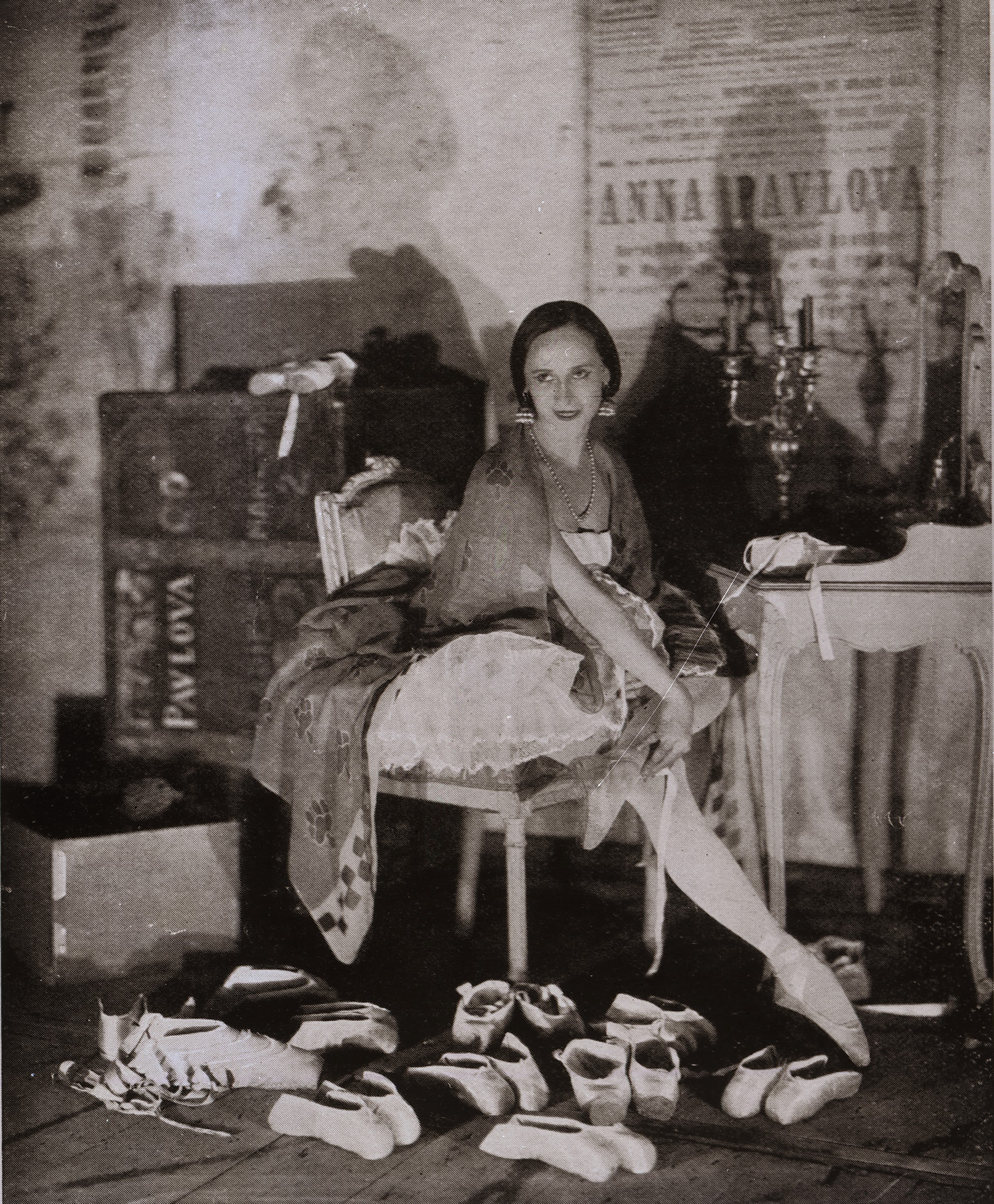
Anna Pavlova in her dressing room at the Théâtre des Champs-Élysées, Paris, c.1920. Photograph by Hulton Deutsch. Gift of The Australian Ballet, 1998.
Anna Pavlova in her dressing room at the Théâtre des Champs-Élysées, Paris, c.1920. Photograph by Hulton Deutsch. Gift of The Australian Ballet, 1998.

Chocolate box signed by Anna Pavlova, c.1929. Manufactured by MacRobertson Ltd. Gift of Mary Edmonson, 1983.
Chocolate box signed by Anna Pavlova, c.1929. Manufactured by MacRobertson Ltd. Gift of Mary Edmonson, 1983.
Advertisement for Special Pavlova Boxes of de luxe Old Gold Chocolates, in a programme for 'Invitation to the Dance', J.C. Williamson Ltd, 1929. Gift of The Australian Ballet, 1998.
Advertisement for Special Pavlova Boxes of de luxe Old Gold Chocolates, in a programme for 'Invitation to the Dance', J.C. Williamson Ltd, 1929. Gift of The Australian Ballet, 1998.

Wrapper from a packet of Swallow & Ariell's Pavlova Wafers, c.1929. Gift of The Australian Ballet, 1998.
Wrapper from a packet of Swallow & Ariell's Pavlova Wafers, c.1929. Gift of The Australian Ballet, 1998.

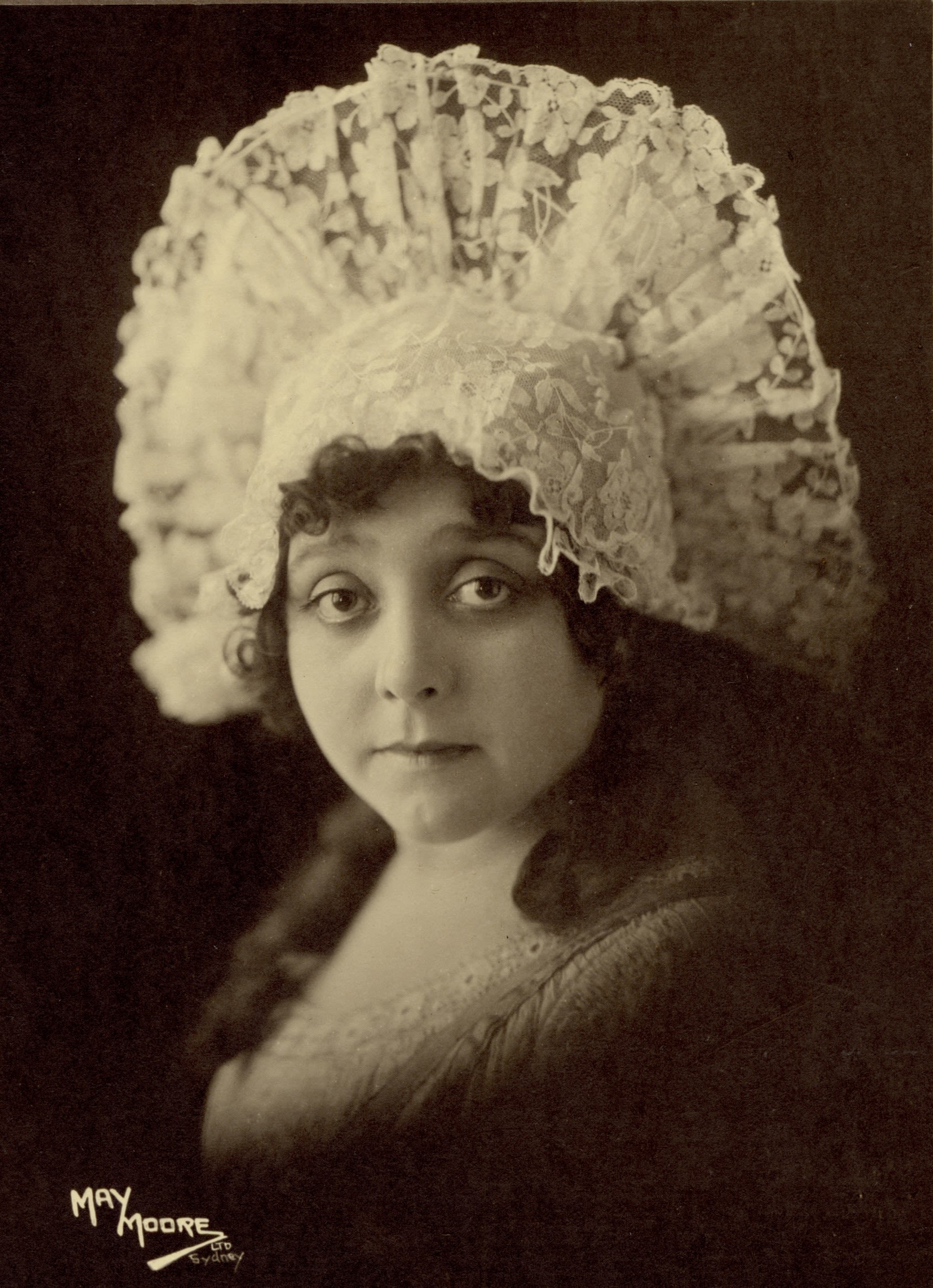
Toti Dal Monte in 'La Sonnambula', 1924. Photograph by May Moore. Transferred from the Dennis Wolanski Library, Sydney Opera House, 1997.
Toti Dal Monte in 'La Sonnambula', 1924. Photograph by May Moore. Transferred from the Dennis Wolanski Library, Sydney Opera House, 1997.
Poster for Williamson-Melba Grand Opera Company, Wagga Wagga, 1924. Gift of J.C. Williamson Theatres Ltd, 1981.
Poster for Williamson-Melba Grand Opera Company, Wagga Wagga, 1924. Gift of J.C. Williamson Theatres Ltd, 1981.
Nellie Melba as Desdemona in 'Otello', 1924. Photograph by Spencer Shier. Transferred from the Dennis Wolanski Library, Sydney Opera House, 1997.
Nellie Melba as Desdemona in 'Otello', 1924. Photograph by Spencer Shier. Transferred from the Dennis Wolanski Library, Sydney Opera House, 1997.

Toti Dal Monte in 'La Sonnambula', 1924. Photograph by May Moore. Gift of The Kilburn Family, 2014.
Toti Dal Monte in 'La Sonnambula', 1924. Photograph by May Moore. Gift of The Kilburn Family, 2014.

Toti Dal Monte in 'La Sonnambula', 1924. Photograph by May Moore. Gift of The Kilburn Family, 2014.
Toti Dal Monte in 'La Sonnambula', 1924. Photograph by May Moore. Gift of The Kilburn Family, 2014.
E.J. Tait (left) and Toti Dal Monte, c.1928. Gift of Isla Baring, Ann Seddon and Sally Bell, 2006.
E.J. Tait (left) and Toti Dal Monte, c.1928. Gift of Isla Baring, Ann Seddon and Sally Bell, 2006.
Toti Dal Monte in 'The Daughter of the Regiment', 1928. Gift of The Kilburn Family, 2014.
Toti Dal Monte in 'The Daughter of the Regiment', 1928. Gift of The Kilburn Family, 2014.

Toti Dal Monte, c.1924. Gift of Isla Baring, Ann Seddon and Sally Bell, 2006.
Toti Dal Monte, c.1924. Gift of Isla Baring, Ann Seddon and Sally Bell, 2006.

Cartoon of the Williamson-Melba Opera Company, 1928. Illustration by Fernando Autori. Souvenir programme for the Williamson-Melba Grand Opera Season, Melbourne, 1928. Gift of Pamela, Lady Vestey, 1981.
Cartoon of the Williamson-Melba Opera Company, 1928. Illustration by Fernando Autori. Souvenir programme for the Williamson-Melba Grand Opera Season, Melbourne, 1928. Gift of Pamela, Lady Vestey, 1981.

List of properties purchased by Nevin Tait for the Williamson-Melba Grand Opera Season, 1928. Gift of J.C. Williamson Theatres Ltd, 1978.
List of properties purchased by Nevin Tait for the Williamson-Melba Grand Opera Season, 1928. Gift of J.C. Williamson Theatres Ltd, 1978.

Toti Dal Monte as Olympia in 'The Tales of Hoffmann', Melba-Williamson Opera Season, 1924. Photograph by Spencer Shier.
Toti Dal Monte as Olympia in 'The Tales of Hoffmann', Melba-Williamson Opera Season, 1924. Photograph by Spencer Shier.

Toti Dal Monte and her dog Titina, 1928. Souvenir programme for the Williamson-Melba Grand Opera Season, Melbourne, 1928. Gift of Pamela, Lady Vestey, 1981.
Toti Dal Monte and her dog Titina, 1928. Souvenir programme for the Williamson-Melba Grand Opera Season, Melbourne, 1928. Gift of Pamela, Lady Vestey, 1981.
Memo regarding travel and quarantine arrangements for Toti Dal Monte's dog, 1928. Gift of J.C. Williamson Theatres Ltd, 1978.
Memo regarding travel and quarantine arrangements for Toti Dal Monte's dog, 1928. Gift of J.C. Williamson Theatres Ltd, 1978.

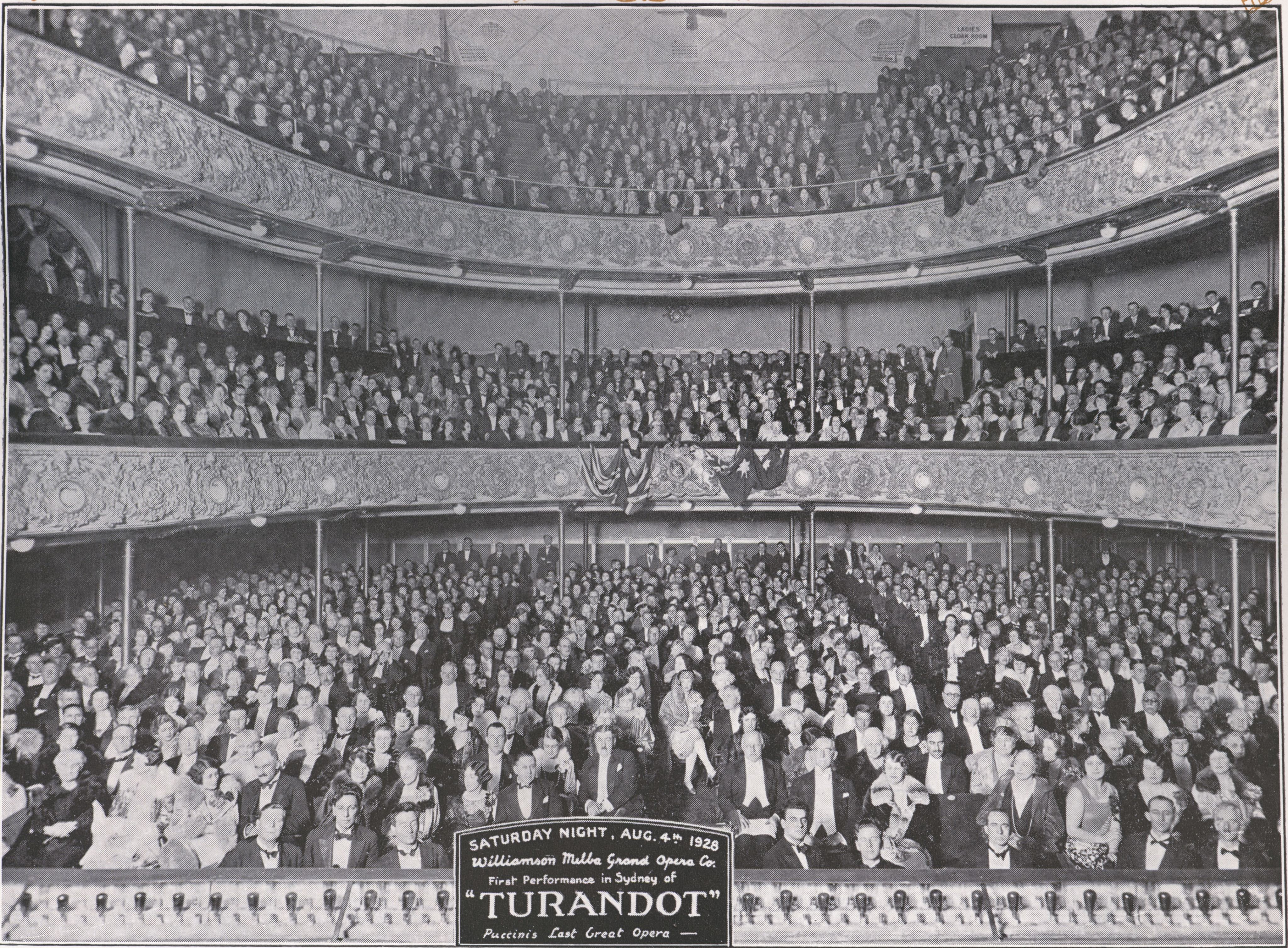
Audience at the opening performance of 'Turandot', Sydney, 1928. Souvenir programme for the Williamson-Melba Grand Opera Season, Melbourne, 1928. Gift of Pamela, Lady Vestey, 1981.
Audience at the opening performance of 'Turandot', Sydney, 1928. Souvenir programme for the Williamson-Melba Grand Opera Season, Melbourne, 1928. Gift of Pamela, Lady Vestey, 1981.

Toti Dal Monte and Enzo de Muro Lomato, Sydney, 1928. Gift of The Kilburn Family, 2014.
Toti Dal Monte and Enzo de Muro Lomato, Sydney, 1928. Gift of The Kilburn Family, 2014.

Handwritten programme for the Melba-Williamson Grand Opera Season, 1924. Gift of J.C. Williamson Theatres Ltd, 1978.
Handwritten programme for the Melba-Williamson Grand Opera Season, 1924. Gift of J.C. Williamson Theatres Ltd, 1978.
 Built with Shorthand